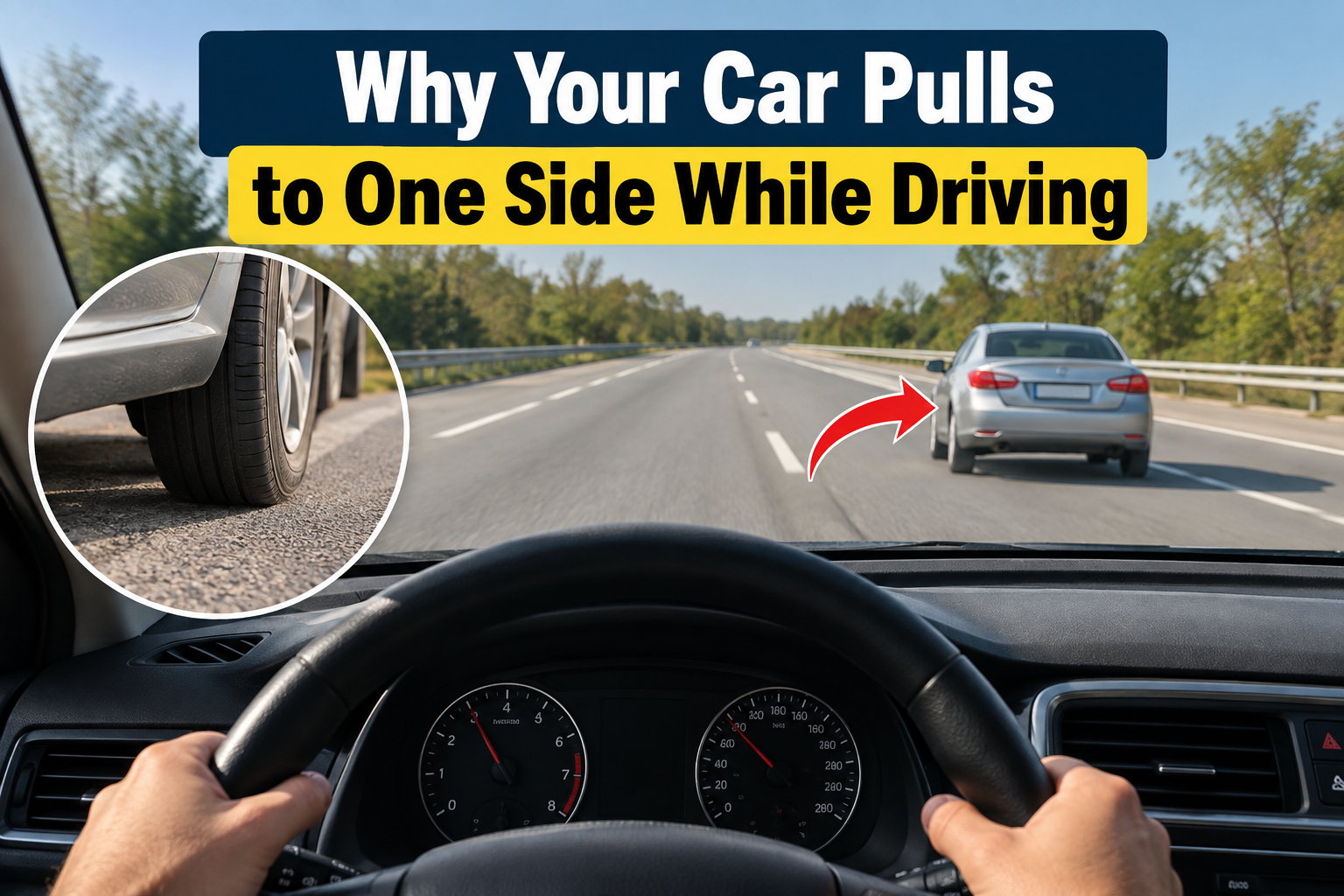
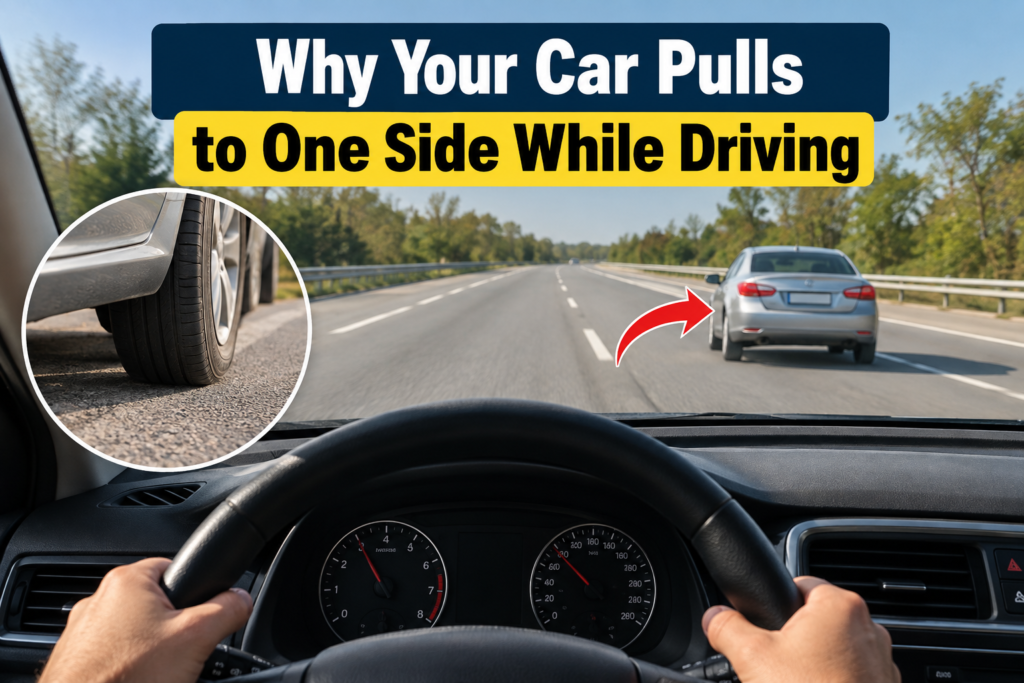
Driving should feel smooth, stable, and predictable. When you hold the steering wheel straight, your car should normally continue in the same direction without constantly needing correction. If your vehicle begins drifting or pulling toward the left or right side of the road, something may need attention.
A car pulling to one side while driving is a common problem, but the cause is not always the same. Sometimes the issue is as simple as uneven tire pressure. In other cases, the problem can involve wheel alignment, brakes, suspension components, tires, or steering parts.
Understanding the possible causes can help you recognize the problem early and avoid unnecessary repairs. It can also improve driving comfort, tire life, fuel efficiency, and overall vehicle safety.
In this guide, I will explain the most common reasons why your car pulls to one side while driving, how you can identify the likely cause, and what you should do to correct the problem.
What Does It Mean When a Car Pulls to One Side?
When a car pulls to one side, the vehicle does not naturally maintain a straight path. You may notice that the steering wheel needs constant correction to keep the car centered in the lane.
For example, if you loosen your grip slightly and the car quickly moves toward the left or right, there may be an issue affecting steering balance.
However, not every small movement indicates a mechanical problem. Many roads are slightly sloped toward the side to help rainwater drain away. This road design can cause a vehicle to gently drift.
A mechanical problem usually causes a stronger or more consistent pull.
The important thing is to notice when the problem happens.
Does the car pull all the time?
Does it pull only when braking?
Does it pull during acceleration?
Does the steering wheel sit off center?
Does the vehicle drift only at highway speeds?
These details can help identify the cause.
1. Incorrect Tire Pressure
One of the easiest causes to check is tire pressure.
If one front tire has significantly less air than the tire on the opposite side, the rolling resistance between the two tires becomes uneven. The car may begin pulling toward the tire with lower pressure.
For example, if the front left tire is underinflated, the vehicle may gradually drift toward the left side.
Incorrect tire pressure can also cause several other problems, including poor fuel economy, uneven tire wear, reduced handling, and increased tire temperature.
Check the recommended tire pressure listed in your vehicle owner’s manual or on the information label usually located near the driver’s door.
Always check tire pressure when the tires are relatively cool because driving heats the tires and temporarily increases pressure.
After adjusting all four tires to the recommended level, test drive the vehicle again.
If the pulling disappears, tire pressure was probably the cause.
2. Wheel Alignment Problems
Wheel alignment is one of the most common reasons a car pulls to one side while driving.
Wheel alignment refers to the angles at which the wheels sit relative to the road and vehicle suspension.
These angles include camber, caster, and toe.
When the alignment is correct, the tires roll evenly and the car tracks straight. When one or more alignment angles move outside the recommended range, the vehicle may begin drifting.
Alignment can change after hitting potholes, driving over large road bumps, striking a curb, or traveling frequently on rough roads.
Normal wear in suspension components can also gradually affect alignment.
Signs of incorrect wheel alignment include:
The car pulls left or right.
The steering wheel appears crooked while driving straight.
The tires show uneven wear.
The steering feels unstable.
The vehicle requires constant steering correction.
A professional wheel alignment machine can measure the angles accurately and adjust them according to manufacturer specifications.
If your tires are wearing unevenly, it is important to correct alignment quickly because damaged tire tread cannot be restored.
3. Uneven Tire Wear
Even when tire pressure and wheel alignment are correct, uneven tire wear can make the vehicle pull.
Tires do not always wear at exactly the same rate.
One tire may have more tread than another, especially if tires were replaced at different times or rotation intervals were ignored.
A tire with irregular wear may produce different traction and rolling resistance compared with the tire on the other side.
Look carefully at the tire tread.
Check whether one side is more worn than the other.
Also look for unusual patterns such as cupping, feathering, or bald areas.
If the tread difference between the front tires is significant, tire replacement or rotation may be necessary.
However, uneven tire wear is often a symptom of another problem. Before installing new tires, make sure the suspension and wheel alignment are checked.
Otherwise, the new tires may develop the same wear pattern.
4. Tire Construction Differences
Sometimes a vehicle begins pulling after new tires are installed even though the wheel alignment appears correct.
This can happen because tires are not always perfectly identical internally.
Small differences in tire construction can cause a condition sometimes called radial pull.
The belts and internal structure of one tire may create slightly more directional force than another.
A technician may diagnose this problem by changing the position of the tires and observing whether the direction of the pull changes.
If the vehicle starts pulling toward the opposite side after switching the front tires, one tire may be responsible.
Using matching tires of the same size, type, tread design, and similar wear level can help reduce this problem.
5. Brake Caliper Problems
If your car pulls to one side mainly when braking, the braking system should be inspected.
One common cause is a sticking brake caliper.
Brake calipers press the brake pads against the brake rotor when you press the brake pedal.
If one caliper sticks, it may continue applying pressure even after the brake pedal is released.
This creates extra resistance on one wheel.
The vehicle may then pull toward the side with the sticking brake.
You may also notice additional symptoms.
One wheel may become unusually hot.
There may be a burning smell near the wheel.
Fuel consumption may increase.
The car may feel slower than normal.
The brake pads on one side may wear much faster.
A damaged caliper should be repaired quickly because excessive heat can damage the brake pads, brake rotor, wheel bearing, and surrounding components.
6. Uneven Brake Force
A car may also pull during braking if one side of the braking system produces more braking force than the other.
Several problems can cause this condition.
One brake pad may be contaminated or worn.
A caliper piston may not move correctly.
A brake hose may be restricted.
One rotor may have an unusual surface condition.
When braking force becomes uneven, the vehicle tends to move toward the side producing stronger braking force.
This can become especially noticeable during hard braking.
Because braking problems directly affect vehicle control, they should be inspected by a qualified technician rather than ignored.
7. Suspension Component Wear
The suspension system helps keep the wheels positioned correctly while allowing them to move over bumps.
Many suspension parts can affect how the vehicle tracks.
These include control arms, bushings, ball joints, tie rods, springs, and struts.
If one component becomes worn or damaged, the position of a wheel may change.
For example, a worn control arm bushing can allow the wheel to move slightly when accelerating, braking, or turning.
This movement can cause the car to pull or feel unstable.
Suspension problems may also produce noises.
You may hear knocking, clunking, squeaking, or rattling when driving over rough surfaces.
If the vehicle pulls and also makes unusual suspension noises, a detailed inspection may be necessary.
8. Steering System Problems
The steering system is responsible for transferring your steering wheel movement to the front wheels.
Wear in steering components can affect stability and directional control.
Tie rods are especially important because they connect parts of the steering system to the wheels.
If a tie rod becomes worn or loose, wheel alignment can change while the vehicle is moving.
The car may wander instead of maintaining a straight path.
Other steering components can also contribute to pulling.
A mechanic can check the steering system for excessive movement, damaged joints, and worn components.
Ignoring steering wear can eventually create a serious safety concern.
9. Damaged Wheel or Rim
A wheel can become bent after hitting a deep pothole, road obstacle, or curb.
Even a small amount of wheel damage can affect how the tire contacts the road.
You may notice pulling along with steering vibration.
A bent wheel may also cause the tire to lose air slowly.
During inspection, a technician can rotate the wheel and check for visible movement or distortion.
Minor wheel damage may sometimes be repaired, while severe damage usually requires wheel replacement.
10. Wheel Bearing Problems
Wheel bearings allow the wheels to rotate smoothly while supporting the weight of the vehicle.
As wheel bearings wear, they can develop looseness or increased friction.
A damaged wheel bearing may affect how the car travels along the road.
However, pulling is usually not the only symptom.
You may also hear humming, grinding, or growling noises that become louder with speed.
The sound may change when turning.
Wheel bearing problems should not be ignored because severe bearing failure can affect wheel stability.
11. Uneven Vehicle Loading
Sometimes the cause is not mechanical.
If a vehicle is carrying a heavy load concentrated on one side, the weight distribution can affect how it handles.
This is particularly noticeable in smaller vehicles.
For example, heavy equipment or luggage stored mostly on one side of the trunk may slightly change suspension height and tire loading.
Remove unnecessary cargo and distribute heavy items evenly when possible.
Then test the vehicle again.
If the pulling disappears, uneven weight distribution may have contributed to the problem.
12. Road Surface and Road Crown
Before assuming something is wrong with your vehicle, consider the road.
Many roads are intentionally higher in the center and lower near the edges.
This design is known as road crown.
Its purpose is to allow rainwater to drain away from the center of the road.
Because of this slope, a vehicle may naturally move slightly toward the side.
A small amount of drift can therefore be normal.
To determine whether the road is causing the problem, test the vehicle carefully on several safe, flat roads.
If the car consistently pulls in the same direction regardless of the road surface, a vehicle problem is more likely.
13. Incorrect Caster Angle
Caster is one of the important wheel alignment angles.
It affects steering stability and the ability of the steering wheel to return toward the center after a turn.
If there is a significant caster difference between the left and right sides, the car may pull toward one side.
Caster problems usually require professional alignment equipment to diagnose.
Some vehicles allow caster adjustment, while others may require suspension repair before the correct angle can be restored.
A caster difference can sometimes appear after collision damage or suspension component replacement.
14. Camber Differences
Camber describes how much the top of a wheel tilts inward or outward when viewed from the front of the vehicle.
If the left and right wheels have different camber measurements, the car may pull.
Too much positive or negative camber can also cause uneven tire wear.
A wheel alignment inspection can identify whether camber is outside manufacturer specifications.
Sometimes camber adjustment is possible.
In other cases, worn or damaged suspension components must be repaired before the alignment can be corrected.
15. Accident or Chassis Damage
If a vehicle has been involved in a previous accident, structural damage can occasionally cause persistent pulling.
Even after visible body repairs are completed, suspension mounting points or structural areas may remain slightly misaligned.
This can make normal wheel alignment difficult.
If the vehicle continues pulling despite correct tires, brakes, suspension, and alignment settings, previous structural damage should be considered.
A specialist can measure the vehicle structure and compare it with factory specifications.
How to Diagnose a Car That Pulls to One Side
You can begin with a few simple observations.
First, check all tire pressures.
Next, inspect the tire tread for uneven wear or visible damage.
Then notice when the pulling happens.
If the vehicle pulls constantly, tires or alignment may be responsible.
If it pulls mainly during braking, the brake system may need inspection.
If the pulling changes during acceleration or cornering, suspension components may be involved.
Also observe the steering wheel position.
If the steering wheel is not centered while the car travels straight, alignment is a strong possibility.
However, diagnosing steering and suspension problems can become complicated. Professional equipment is often needed to measure wheel alignment and inspect worn components accurately.
Is It Safe to Drive a Car That Pulls to One Side?
The answer depends on the cause and severity.
A very slight drift caused by road slope may be normal.
Strong or sudden pulling should not be ignored.
If the cause is low tire pressure, tire damage, a sticking brake caliper, worn suspension parts, or steering problems, continuing to drive could increase the risk of tire failure or loss of control.
If your car suddenly begins pulling strongly, reduce your speed and inspect the vehicle as soon as it is safe to do so.
Avoid high speed driving until the cause has been identified.
Can Wheel Alignment Fix a Car Pulling to One Side?
Wheel alignment can fix the problem when incorrect alignment angles are responsible.
However, alignment is not a universal solution.
If a mechanic performs an alignment without checking tire condition or suspension components, the pulling may continue.
A proper inspection should normally include tires, steering parts, suspension components, wheel condition, and brakes when necessary.
Once worn parts are repaired, alignment can then be performed accurately.
How Much Tire Pressure Difference Can Cause Pulling?
There is no single pressure difference that affects every vehicle in exactly the same way.
Vehicle weight, tire size, tire construction, and suspension design all influence how sensitive a car is to tire pressure differences.
Even a relatively small difference can sometimes affect steering feel.
The best approach is not to compare tires only with each other.
Instead, adjust each tire to the pressure recommended by the vehicle manufacturer.
Regular pressure checks can prevent many handling and tire wear problems.
Why Does My Car Pull After Getting New Tires?
If pulling begins immediately after new tires are installed, several possibilities should be checked.
Tire pressure may not be equal.
Wheel alignment may already have been incorrect.
One tire may have an internal construction difference.
The wheels may not have been installed properly.
The previous tires may also have hidden an existing alignment issue because they had developed a wear pattern matching the old suspension angles.
Ask the tire shop to inspect pressure, alignment, wheel installation, and tire condition.
Why Does My Car Pull Only When I Brake?
Pulling that appears mainly when pressing the brake pedal usually points toward the braking system.
Possible causes include a sticking caliper, uneven brake pad condition, damaged brake hose, contaminated brake surface, or different braking force between the left and right wheels.
Because brakes are essential for vehicle safety, this problem deserves immediate attention.
How to Prevent Your Car From Pulling to One Side
Regular maintenance can reduce the chance of steering and alignment problems.
Check tire pressure at least once a month.
Rotate tires according to your vehicle maintenance schedule.
Inspect tires for uneven wear.
Avoid hitting potholes and curbs whenever possible.
Have wheel alignment checked if the steering wheel becomes crooked.
Inspect suspension components when unusual noises appear.
Do not ignore brake pulling.
Replace damaged or worn tires promptly.
Small problems are usually easier and less expensive to repair when they are found early.
Final Thoughts
A car pulling to one side while driving can have many causes, ranging from simple tire pressure differences to more serious brake or suspension problems.
Start with the easiest things to check.
Inspect the tire pressure, tire condition, and wheel alignment.
If the car pulls mainly during braking, have the braking system inspected.
If the vehicle also produces noises, vibrations, uneven tire wear, or unstable steering, the suspension and steering system may need professional attention.
The important thing is not to ignore a noticeable change in how your vehicle handles.
Your car should feel stable and predictable when driving on a reasonably flat road. If you constantly have to correct the steering wheel just to maintain a straight path, something deserves inspection.
Finding the cause early can protect your tires, improve driving comfort, reduce unnecessary repair costs, and help keep your vehicle safe on the road.
Frequently Asked Questions
Why is my car suddenly pulling to the right?
A sudden pull to the right can result from low tire pressure, tire damage, brake problems, suspension damage, or a significant alignment change. Check the tires first. If the problem appeared suddenly or feels severe, have the vehicle inspected before continuing normal driving.
Why does my car pull left even after wheel alignment?
If the alignment measurements are correct but the car still pulls, the cause may involve tire construction, uneven tire wear, brake drag, suspension wear, or road crown. Switching tire positions can sometimes help identify a tire related pull.
Can bad tires make a car pull to one side?
Yes. Uneven wear, different tread depths, internal tire defects, incorrect pressure, or mismatched tires can all affect how the vehicle tracks.
Does low tire pressure cause steering pull?
Yes. A tire with lower pressure can produce more rolling resistance and may cause the vehicle to drift toward that side.
Can bad brakes cause a car to pull?
Yes. A sticking brake caliper or uneven braking force can cause strong pulling, especially when the brake pedal is pressed.
How do I know if my wheel alignment is bad?
Common signs include uneven tire wear, a crooked steering wheel, vehicle drifting, unstable handling, and constant steering correction.
Should I get an alignment after replacing tires?
An alignment is not automatically required every time tires are replaced, but it is a good idea to have the alignment checked if the previous tires showed uneven wear or if the vehicle does not drive straight.
Can suspension problems cause steering pull?
Yes. Worn control arms, bushings, ball joints, tie rods, springs, or other suspension components can change wheel position and cause the vehicle to pull.
Is a slight pull normal?
A very slight drift may occur because of road crown or wind. A strong or consistent pull on different roads usually deserves inspection.
What should I check first if my car pulls to one side?
Start by checking tire pressure and tire condition. These are simple checks and commonly cause steering pull. If the tires look normal, the next step is usually a wheel alignment and suspension inspection.