Learning how to park a car is one of the most important skills for every new driver. Driving on an open road may feel easier because the vehicle keeps moving, but parking requires more control, better judgment, and patience. For beginners, even a simple parking space can sometimes look difficult.
The good news is that parking becomes much easier with practice. Once you understand basic positioning, steering, mirrors, speed control, and distance judgment, parking starts to feel natural.
These parking tips for beginner drivers are based on basic driving principles that are commonly explained in driving guides and training books. The purpose is to help new drivers understand parking in a practical and simple way.
Why Parking Feels Difficult for Beginners
Many beginner drivers struggle with parking because they are still learning the size and movement of their vehicle.
When sitting inside a car, it can be difficult to judge exactly where the front bumper, rear bumper, and wheels are located. A beginner may also feel nervous when another vehicle is waiting nearby.
Parking requires several things to happen at the same time. You need to control the steering wheel, check mirrors, watch nearby vehicles, judge distance, and move slowly.
This can feel overwhelming in the beginning.
However, after regular practice, your brain becomes familiar with the dimensions of your vehicle. You gradually learn how much steering is required and how the car responds when moving forward or backward.
Always Slow Down Before Parking
One of the most important parking tips for beginner drivers is simple.
Move slowly.
Parking should never be rushed.
A slow moving vehicle gives you more time to observe your surroundings and correct mistakes. If the car is moving too fast, even a small steering mistake can place the vehicle in the wrong position.
When entering a parking area, reduce your speed early.
Keep your foot ready on the brake and allow the vehicle to move gently.
Slow movement gives you better control.
It also makes parking safer for pedestrians and other drivers.
Check Your Surroundings Before Entering a Parking Space
Before turning into any parking space, look carefully around your vehicle.
Check for pedestrians, bicycles, motorcycles, shopping carts, poles, walls, and other vehicles.
Parking areas often contain many unexpected obstacles.
Children may suddenly walk behind a vehicle. Another car may begin reversing from a nearby space. A pedestrian may cross behind you while looking at a phone.
This is why parking requires constant observation.
Use your mirrors, but also turn your head when necessary.
Mirrors provide useful information, but they may not show everything around the vehicle.
Understand the Size of Your Car
Every vehicle has different dimensions.
A small hatchback is usually easier to park than a large SUV, but the basic parking principles remain similar.
Beginner drivers should spend some time learning the size of their own vehicle.
Try to understand:
Where the front of the car ends
Where the rear bumper ends
How wide the vehicle is
How much space is required to turn
How the rear of the vehicle moves while steering
You can practice this in a quiet parking area.
Choose an empty space and slowly position your car between parking lines. Get out and look at the actual position of the vehicle.
This simple exercise helps improve distance judgment.
Use Your Mirrors Correctly
Mirrors are extremely important while parking.
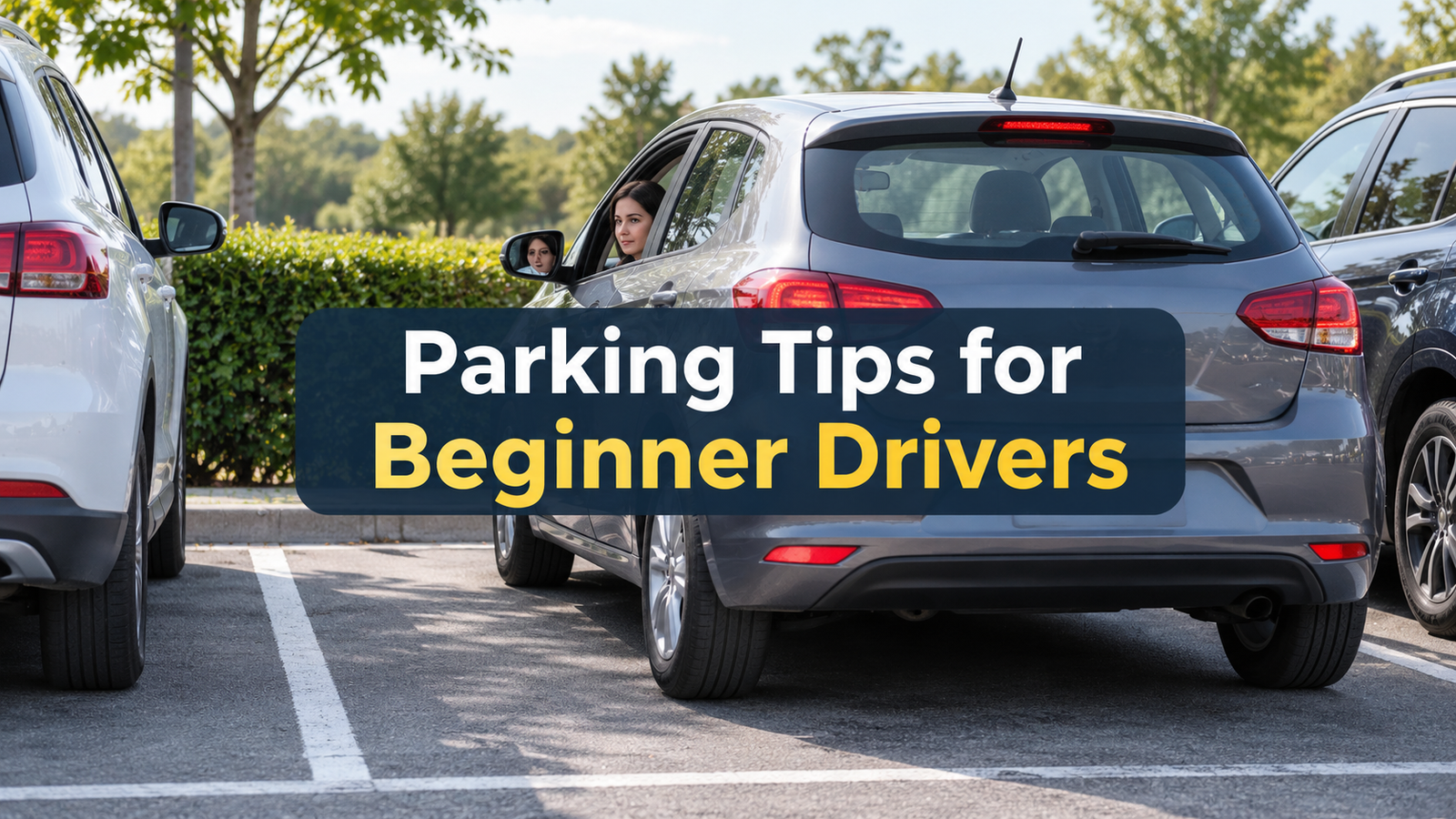
Your side mirrors help you see the parking lines, nearby vehicles, and obstacles beside the car.
Your rearview mirror helps you monitor the area behind you.
Before driving, make sure your mirrors are properly adjusted.
During parking, check them frequently instead of staring in only one direction.
For example, when reversing into a parking space, check your left mirror, right mirror, rearview mirror, and the area behind the vehicle.
Continuous observation helps reduce the risk of hitting something.
Do Not Depend Only on Parking Sensors
Modern vehicles often have parking sensors and reversing cameras.
These features can make parking easier, especially for beginner drivers.
However, drivers should not depend completely on technology.
Sensors may not detect every object correctly.
Small poles, low objects, certain surfaces, or unusual obstacles may sometimes be difficult for the system to recognize.
A reversing camera also shows only part of the area behind the vehicle.
Use parking technology as an additional tool.
Your own observation should always remain the main source of information.
Practice Straight Parking First
Straight parking is usually the easiest type of parking for beginners.
This method is commonly used in shopping centers, offices, schools, and public parking areas.
When approaching the space, position your vehicle slightly away from the parking row.
Move forward slowly until the front of your vehicle reaches a suitable turning point.
Turn the steering wheel toward the parking space.
Enter the space slowly.
As the car becomes straight between the lines, gradually straighten the steering wheel.
Move forward until the vehicle is properly positioned.
Avoid parking too close to another vehicle.
Try to keep similar space on both sides.
Check Your Final Position
After parking, take a few seconds to check your position.
Look through your mirrors and windows.
Make sure your vehicle is reasonably centered inside the parking space.
If you are too close to one side, correct the position.
There is nothing wrong with adjusting the car.
Beginner drivers sometimes feel embarrassed when they need to reverse and try again.
There is no reason to feel embarrassed.
Correcting your position is better than leaving the vehicle badly parked.
Even experienced drivers sometimes make adjustments.
Learn How to Reverse Into a Parking Space
Reverse parking can initially feel more difficult, but many drivers eventually find it very useful.
When reversing, the front wheels guide the direction while the rear of the vehicle enters the space.
Start by positioning your vehicle slightly ahead of the parking space.
Check for traffic and pedestrians.
Select reverse gear.
Move slowly while turning the steering wheel toward the space.
Watch both side mirrors.
As the vehicle moves into the space, check the parking lines and nearby cars.
When the vehicle becomes straight, straighten the steering wheel and continue reversing slowly.
Stop when you have enough space behind the vehicle.
Reverse parking often makes leaving the parking space easier because you can drive forward with better visibility.
Keep Your Steering Movements Smooth
Beginner drivers sometimes turn the steering wheel very quickly because they are nervous.
Try to avoid sudden steering movements.
Turn the steering wheel smoothly and deliberately.
Watch how the car responds.
If the vehicle is not positioned correctly, stop for a moment and think about the direction you need to move.
Parking is easier when every action is calm and controlled.
There is usually no need to make fast corrections.
Learn Parallel Parking Step by Step
Parallel parking is one of the skills that many beginner drivers fear.
However, parallel parking becomes easier when you understand the basic sequence.
Start by finding a space that is comfortably longer than your vehicle.
Position your car beside the vehicle parked in front of the empty space.
Keep a safe distance between the vehicles.
Check your mirrors and surroundings.
Begin reversing slowly.
Turn the steering wheel toward the parking space.
Continue moving backward until your vehicle enters the space at an angle.
Then adjust the steering in the opposite direction so the front of the car moves into line with the curb.
Once the vehicle is parallel with the curb, straighten the steering wheel.
Move slightly forward or backward if necessary.
The exact reference points may vary depending on the size and design of your vehicle.
Practice in a quiet area using cones before trying parallel parking in busy traffic.
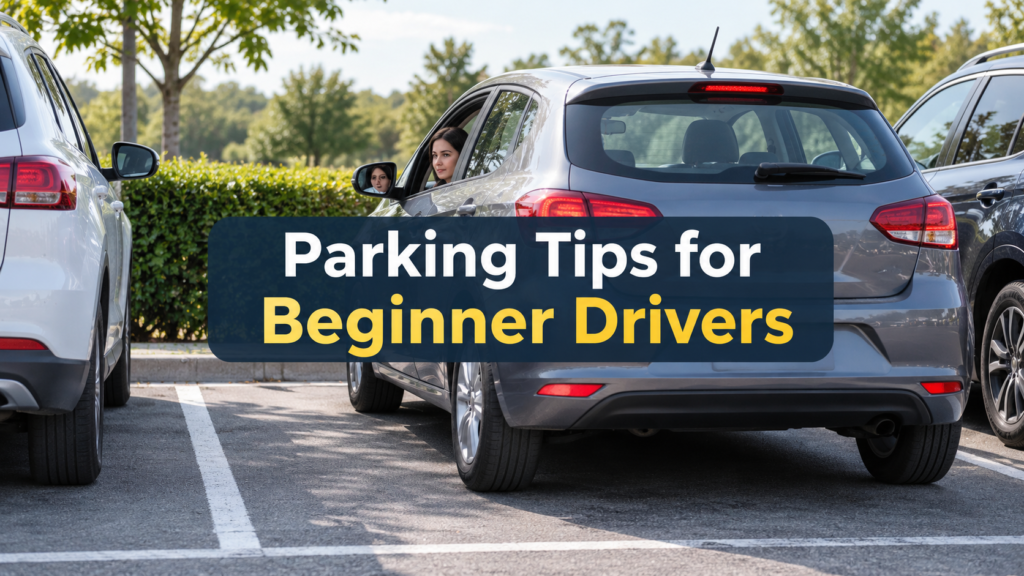
Do Not Park Too Close to Other Vehicles
Leaving enough space between cars is good parking behavior.
If you park too close to another vehicle, the driver may have difficulty opening the door.
You may also increase the chance of scratches or door damage.
Try to park in the center of the marked space.
When parking beside larger vehicles, leave enough room for doors to open safely.
Good parking is not only about placing your vehicle inside the lines.
It is also about respecting the space of other road users.
Watch the Front of the Car While Turning
When turning into a parking space, beginners often focus only on the direction they want to go.
However, the front corner of the vehicle can move outward during a turn.
This is important when parking near another car, wall, pillar, or barrier.
Check the front of the vehicle while turning.
Move slowly enough to stop immediately if the space becomes too tight.
This is especially important when driving larger vehicles.
Be Extra Careful While Reversing
Reversing requires more attention because visibility behind the vehicle is limited.
Before reversing, check the entire area.
Look through the rear window if possible.
Check both side mirrors.
Check your reversing camera if your vehicle has one.
Move slowly.
If you become unsure about the distance, stop.
You can get out of the vehicle and check your surroundings if necessary.
It is better to spend a few extra seconds checking than to risk damaging the vehicle.
Use Parking Lines as a Guide
Parking lines are extremely helpful for beginner drivers.
Use them to judge the position and angle of your vehicle.
While entering a space, check both side mirrors.
Try to keep your car approximately equal distance from both lines.
If one line appears much closer than the other, your vehicle may not be centered.
You can then adjust your position.
Over time, you will become better at judging alignment without thinking about it.
Practice in an Empty Parking Area
Practice is the fastest way to improve parking skills.
Find a quiet and safe parking area where there is little traffic.
Use empty spaces or traffic cones.
Practice entering spaces from different directions.
Practice reversing.
Practice straight parking.
Practice parallel parking.
Practice correcting your position.
Repeating the same movements helps develop muscle memory.
After enough practice, steering and distance judgment become much more natural.
Avoid Distractions While Parking
Parking may happen at low speed, but distractions can still cause accidents.
Avoid using your phone while parking.
Lower the music volume if necessary.
Ask passengers to give you a moment if they are talking loudly.
Your attention should remain on the surroundings.
Parking areas often contain pedestrians and vehicles moving in unpredictable directions.
A few seconds of full concentration can prevent unnecessary problems.
Stay Calm When Other Drivers Are Waiting
One of the biggest challenges for beginner drivers is pressure from other drivers.
You may feel nervous when another vehicle is waiting behind you.
Do not allow pressure to make you rush.
Complete the parking maneuver safely.
If necessary, stop and reposition your car.
Most drivers understand that parking takes time.
Your priority should be safety and control.
Rushing because someone is waiting can lead to poor decisions.
Choose Easier Parking Spaces When Possible
Beginner drivers do not always need to choose the closest parking space.
A slightly farther space may be easier and safer.
Look for spaces with fewer vehicles around them.
Avoid very tight spaces until your parking confidence improves.
You can gradually attempt more difficult parking situations as your skills develop.
Choosing an easier space is not a weakness.
It is simply a sensible way to build experience.
Be Careful Near Curbs
Curbs can damage tires and wheels if the vehicle gets too close.
While parking beside a curb, move slowly and check your distance.
Avoid rubbing the tire against the curb.
When parallel parking, try to position the vehicle reasonably close without touching it.
Learning the correct distance takes practice.
Remember to Use the Parking Brake
After parking, secure the vehicle properly.
Place the transmission in the appropriate parking position according to your vehicle type.
Apply the parking brake when required.
This is especially important when parking on a slope.
A properly secured vehicle should not move after you leave it.
Always follow the instructions provided in your vehicle owner’s manual because procedures may vary between different vehicles.
Parking on Hills Requires Extra Attention
Parking on a hill requires more care than parking on a flat road.
You need to make sure the vehicle cannot roll if the parking brake or another system fails.
Wheel direction can also matter when parking beside a curb.
The safest procedure may depend on whether the vehicle is facing uphill or downhill and on local driving rules.
Because regulations can vary, beginners should learn the official parking rules used in their area.
Give Yourself More Time
Beginner drivers often improve faster when they stop worrying about speed.
Parking is not a competition.
Take your time.
Observe the space.
Position the vehicle.
Move slowly.
Check your mirrors.
Correct your angle when necessary.
The goal is to park safely, not quickly.
Speed naturally improves after confidence and experience increase.
Learn From Each Parking Attempt
Every parking situation teaches you something.
After parking, think briefly about what went well and what could be improved.
Maybe you turned too early.
Maybe you turned too late.
Maybe you were too close to one parking line.
These small observations help you understand how your vehicle moves.
Over time, the number of corrections you need will decrease.
Common Parking Mistakes Beginner Drivers Should Avoid
Several parking mistakes are common among new drivers.
Moving too quickly is one of the biggest problems.
Another mistake is focusing on only one mirror.
Some beginners also turn the steering wheel before the vehicle reaches the correct position.
Others become nervous when another driver is waiting and rush the maneuver.
Parking too close to nearby cars is another common problem.
The solution to most of these mistakes is simple.
Slow down, observe carefully, and practice regularly.
Building Parking Confidence Takes Time
Nobody becomes an excellent driver after only a few lessons.
Parking requires repetition.
At first, you may need several adjustments to park correctly.
After a few weeks or months of regular driving, you may notice that the same parking spaces feel much easier.
Your confidence improves because your brain remembers the movement of the vehicle.
Eventually, many parking decisions become automatic.
You begin to understand how much steering is required without consciously calculating every movement.
Final Thoughts
Parking is an essential part of driving, and every beginner driver can learn it with patience and practice.
The most useful parking tips for beginner drivers are to move slowly, check your surroundings, use mirrors correctly, understand the size of your vehicle, and avoid rushing.
Start with simple parking spaces before practicing more difficult situations such as reverse parking and parallel parking.
Technology such as parking sensors and cameras can help, but careful observation should always remain important.
Most importantly, do not become discouraged by mistakes.
Parking is a skill that improves through repetition.
Practice in safe areas, learn from every attempt, and give yourself enough time to understand how your vehicle responds.
With regular practice, parking gradually changes from something stressful into a normal part of everyday driving.