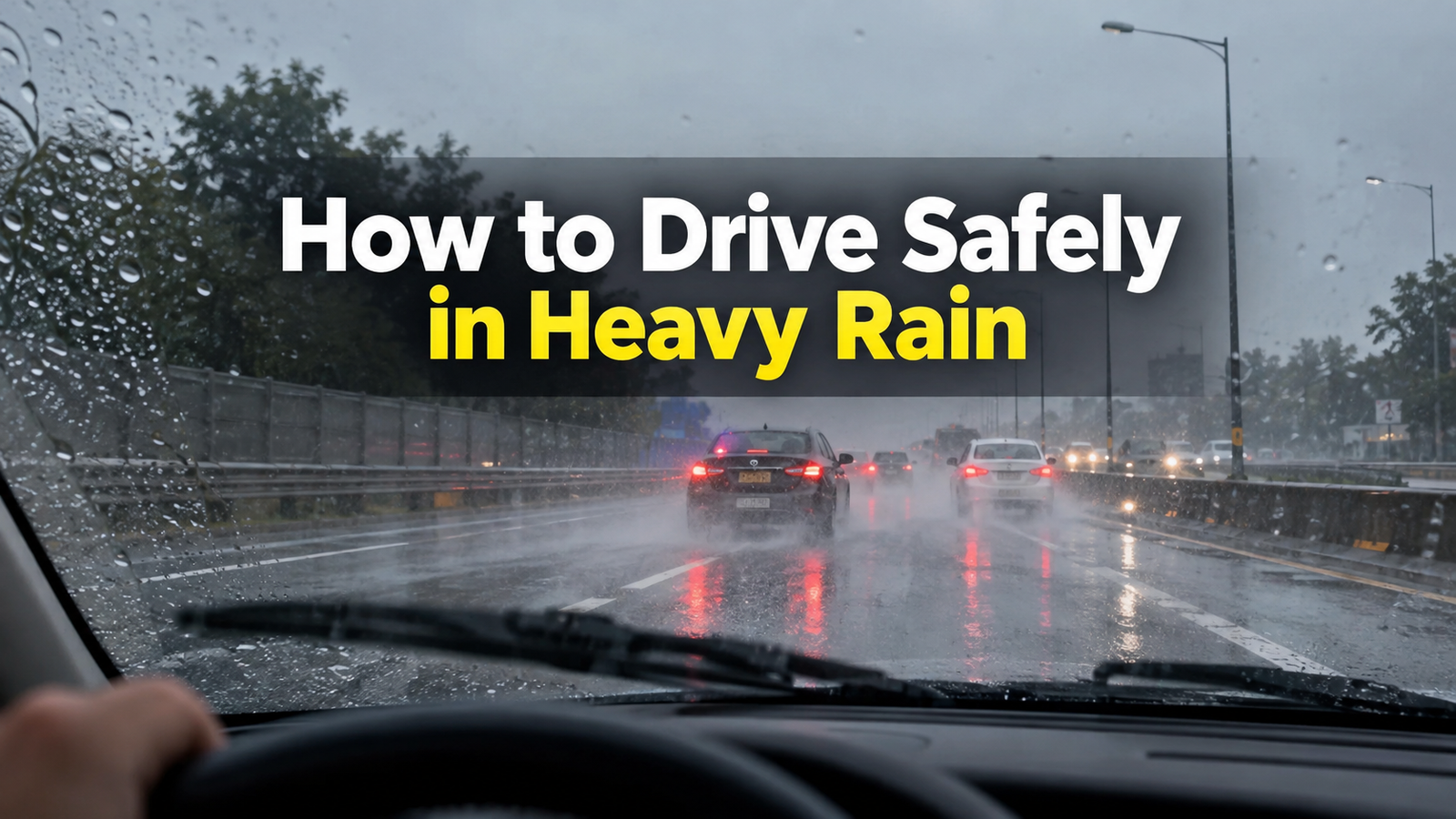
Driving in heavy rain can quickly turn an ordinary journey into a stressful and dangerous experience. Roads become slippery, visibility drops, braking distance increases, and even experienced drivers may struggle to control their vehicles properly.
Rain itself is not always the main danger. The real risk often comes from how drivers react to changing road conditions. Driving too fast, following another vehicle too closely, using worn tires, or making sudden steering movements can greatly increase the chance of an accident.
Learning how to drive safely in heavy rain is therefore an important skill for every driver. A few simple habits can make a major difference when weather conditions become difficult.
This guide explains practical heavy rain driving safety tips that can help you stay calm, maintain control of your vehicle, and reduce the risk of accidents.
Why Driving in Heavy Rain Is Dangerous
Heavy rainfall affects almost every part of driving.
The first problem is reduced visibility. Rainwater on the windshield can make it difficult to see road markings, traffic signs, pedestrians, motorcycles, and vehicles ahead.
Another problem is reduced tire grip. Water creates a layer between the tires and the road surface. If tires cannot remove this water properly, the vehicle may lose traction.
Braking also becomes less effective on wet roads. A car usually needs more distance to stop compared with dry conditions.
Standing water creates another serious danger. Driving through deep water at high speed can cause the tires to lose contact with the road completely. This situation is known as hydroplaning.
Heavy rain can also hide potholes, damaged roads, debris, and flooded areas.
For these reasons, drivers should change their driving style as soon as rainfall becomes heavy.
Reduce Your Speed
One of the most important rules for driving safely in heavy rain is to slow down.
Many drivers continue driving at their normal speed even when visibility is poor and roads are wet. This greatly reduces the amount of time available to react to unexpected situations.
Driving more slowly gives your tires more time to maintain contact with the road. It also gives you more time to brake if another vehicle stops suddenly.
Your speed should depend on road conditions rather than the posted speed limit alone.
A speed limit may be safe during dry weather but too fast during heavy rainfall.
If visibility becomes extremely poor, reduce your speed further.
The goal is not to reach your destination quickly. The goal is to reach it safely.
Increase Your Following Distance
Drivers should always maintain a safe distance from the vehicle ahead, but this becomes even more important during heavy rain.
Wet roads increase braking distance.
If you normally leave a few seconds between your vehicle and the vehicle ahead, increase that gap during rainy conditions.
A larger following distance provides extra time to react if traffic suddenly slows down.
It also reduces the need for emergency braking.
This is especially important when following trucks, buses, and larger vehicles because they may spray large amounts of water onto your windshield.
Avoid driving directly behind large vehicles whenever possible.
Turn On Your Headlights
Headlights are important during heavy rain even during daytime.
They help you see the road more clearly and make your vehicle easier for other drivers to notice.
Low beam headlights are usually the best choice during rainfall.
High beams can sometimes make visibility worse because light reflects from raindrops and creates glare.
If your vehicle has automatic headlights, make sure they are actually activated during dark rainy conditions.
Do not assume daytime running lights provide enough visibility from the rear.
Turning on your regular headlights usually activates your rear lights as well.
Use Your Windshield Wipers Properly
Windshield wipers are one of the most important safety systems during rainy weather.
Wipers should remove water smoothly without leaving large streaks.
If your wipers make noise, skip across the glass, or leave blurry areas, the blades may need replacement.
Wiper blades naturally wear out over time because of sunlight, heat, dust, and regular use.
Drivers should inspect them regularly, especially before the rainy season.
During heavy rain, select the correct wiper speed so that your windshield remains clear.
If the fastest wiper setting cannot provide enough visibility, conditions may be too dangerous to continue driving.
Keep Your Windshield Clean
A dirty windshield can make rainy driving much more difficult.
Dust, grease, fingerprints, and road dirt may create glare when water spreads across the glass.
Clean both the outside and inside surfaces of your windshield regularly.
Make sure your windshield washer reservoir contains enough washer fluid.
Clear glass helps improve visibility during rain, especially at night when headlights from other vehicles reflect on wet roads.
Use the Defogger
Windows can fog quickly during rainy weather because of differences between the temperature inside and outside the vehicle.
A fogged windshield may reduce visibility almost completely.
Use your vehicle’s front defogger or climate control system to clear moisture from the glass.
Air conditioning can also help remove moisture from the air inside the cabin.
Avoid wiping the windshield with your hand because this can leave oily marks that may cause more glare later.
Keeping the glass clear should always be a priority.
Check Your Tires
Good tires are essential for safe driving in heavy rain.
Tire tread channels water away from the contact area between the tire and the road.
When tread becomes worn, tires become less effective at removing water.
This increases the risk of losing traction.
Check your tire tread regularly and replace tires that have become excessively worn.
Also make sure tire pressure is correct.
Both underinflated and overinflated tires may affect handling and braking performance.
Check tire pressure when tires are cold and follow the vehicle manufacturer’s recommended pressure.
Never ignore damaged tires, cracks, bulges, or uneven wear.
Understand Hydroplaning
Hydroplaning happens when tires lose contact with the road because they begin riding on a layer of water.
When this happens, steering and braking control may be greatly reduced.
Hydroplaning becomes more likely when driving quickly through standing water.
Worn tires can also increase the risk.
If you feel your vehicle beginning to hydroplane, remain calm.
Avoid sudden braking.
Slowly release the accelerator and keep the steering wheel steady.
Allow the tires to regain contact with the road naturally.
Sudden steering or braking movements can make the vehicle unstable.
Reducing speed before entering areas with standing water is the best way to lower the risk of hydroplaning.
Avoid Sudden Steering
Smooth driving is extremely important on wet roads.
Sudden steering movements can cause tires to lose grip.
Try to make turns gradually and avoid changing lanes aggressively.
Look ahead and plan your movements early.
If you need to change lanes, check mirrors carefully, use your indicator, and move smoothly.
Keeping your movements predictable also helps other drivers understand what you are doing.
Brake Gently
Heavy braking can be dangerous on wet roads.
Modern vehicles often have anti lock braking systems, but drivers should still avoid unnecessary emergency braking.
Start slowing down earlier than you normally would.
Apply the brakes smoothly and gradually.
Looking farther ahead gives you more time to recognize traffic lights, stopped vehicles, pedestrians, and other hazards.
Smooth braking also reduces the chance of being hit from behind by another driver who may also have limited traction.
Avoid Cruise Control
Cruise control can be useful on dry highways, but it is usually better to avoid using it during heavy rain.
Drivers should remain fully involved in controlling vehicle speed when road conditions are changing.
If your tires begin losing traction, quickly adjusting speed may become necessary.
Keeping your foot near the accelerator allows you to respond more naturally.
Manual speed control also encourages greater attention to changing road conditions.
Watch for Standing Water
Large puddles may be deeper than they appear.
Water can hide potholes, damaged pavement, and road edges.
Driving through standing water quickly can cause loss of control.
It can also damage your vehicle.
Water may enter the engine air intake, electrical system, or other important components.
If you cannot judge the depth of water, do not drive through it.
Floodwater can also move with surprising force.
A road that appears safe may have been damaged underneath the water.
Whenever possible, find another route.
Avoid Flooded Roads
Flooded roads should always be treated seriously.
Never assume that your vehicle can safely cross floodwater simply because another vehicle has done so.
Different vehicles have different ground clearances and air intake locations.
Floodwater may also become deeper without warning.
Moving water can push vehicles away from the road.
The safest choice is usually to turn around and find an alternative route.
Saving a few minutes is never worth risking your vehicle or personal safety.
Be Careful Near Large Vehicles
Trucks and buses can create significant water spray during heavy rain.
This spray can temporarily block your view.
If you are approaching a large vehicle, be prepared for reduced visibility.
Avoid remaining directly beside large vehicles longer than necessary.
Their larger tires may also throw water and road debris toward your vehicle.
Give them extra space.
Avoid Driving Through Large Puddles at Speed
Some drivers drive through puddles quickly without thinking about the consequences.
This can cause several problems.
Your vehicle may hydroplane.
Water may enter mechanical or electrical components.
Large amounts of water may also splash pedestrians or other vehicles.
Slow down before reaching puddles whenever it is safe to do so.
If the water appears deep, avoid it completely.
Keep Both Hands Ready for Steering
During heavy rain, road conditions can change quickly.
Keeping proper control of the steering wheel makes it easier to respond if the vehicle moves unexpectedly.
Avoid distractions such as using a mobile phone, adjusting entertainment settings repeatedly, or reaching for objects while driving.
Your attention should remain focused on the road.
Even a few seconds of distraction can be dangerous when visibility is poor.
Stay in the Clearest Lane
Water often collects in certain parts of the road.
Look ahead and try to choose a lane with less standing water when it is safe to do so.
On highways, tire tracks left by vehicles ahead may sometimes provide slightly better contact with the road because some water has already been displaced.
However, never follow another vehicle too closely just to remain in its tracks.
Maintaining a safe distance remains more important.
Be Extra Careful at Night
Heavy rain is often more difficult to manage after dark.
Wet roads reflect headlights and streetlights, creating glare.
Road markings can also become harder to see.
Reduce your speed further if necessary.
Make sure your windshield is clean and your headlights are working correctly.
Avoid staring directly at bright headlights from oncoming traffic.
Keep your attention focused on your lane and the road ahead.
Check Your Brakes After Driving Through Water
If you drive through a shallow puddle, your brakes may become wet.
Wet brakes may feel slightly different until they dry.
After leaving the water, test the brakes gently when it is safe to do so.
Avoid sudden braking.
Applying light pressure may help remove moisture.
If braking performance feels unusual for an extended period, have the system inspected.
Watch for Pedestrians and Motorcyclists
Pedestrians and motorcyclists are especially vulnerable during rain.
People may move suddenly to avoid puddles or seek shelter.
Motorcycles can also become less stable on slippery surfaces.
Give motorcycles additional space.
Avoid passing them aggressively.
Be especially careful near bus stops, schools, intersections, and crowded streets.
Avoid Distractions
Heavy rain requires more concentration than normal driving conditions.
Put your phone away.
Avoid sending messages, making unnecessary calls, or changing navigation settings while moving.
If you need to use your phone, stop somewhere safe first.
Your eyes and attention should remain on the road.
Driving safely in heavy rain depends heavily on noticing hazards early.
Listen for Important Road Sounds
Rain can make it more difficult to hear other vehicles, emergency sirens, or unusual sounds from your own car.
Keep music at a reasonable volume.
Remaining aware of your surroundings allows you to react more quickly.
Sometimes you may hear tires moving through deep water before you clearly see the flooded section ahead.
Use Indicators Early
Other drivers may have difficulty seeing your vehicle during heavy rain.
Use turn signals early before changing lanes or making turns.
Clear communication between drivers becomes even more important when visibility is limited.
Avoid sudden lane changes.
Check mirrors carefully and look over your shoulder before moving.
Maintain Your Vehicle Before Rainy Season
Good preparation can prevent many rainy weather problems.
Inspect your vehicle before periods of frequent rainfall.
Check the tires, brakes, headlights, rear lights, windshield wipers, washer fluid, battery, and defogging system.
Make sure drainage areas around the windshield are not blocked by leaves or dirt.
Small maintenance problems that seem unimportant during dry weather can become serious during heavy rain.
Know When to Stop Driving
Sometimes rainfall becomes too intense for safe driving.
If you cannot clearly see lane markings, nearby vehicles, or the road ahead, consider stopping.
Find a safe parking area away from moving traffic.
Do not stop in an active traffic lane.
Avoid parking under trees that may be affected by strong winds.
Wait until conditions improve before continuing.
There is no advantage in forcing yourself to continue when visibility is dangerously low.
Stay Calm
Drivers often become nervous during sudden heavy rainfall.
Panic can lead to poor decisions such as hard braking, sudden steering, or unnecessary lane changes.
Stay calm and concentrate on simple actions.
Reduce speed.
Increase following distance.
Keep your windshield clear.
Watch traffic carefully.
Smooth and controlled driving is usually much safer than reacting aggressively.
Plan Your Journey
Checking weather conditions before leaving can help you prepare for difficult driving.
If severe rainfall is expected, consider delaying your journey if possible.
Choose routes that are less likely to flood.
Allow additional travel time so you do not feel pressured to drive quickly.
Keeping a charged phone, emergency contact numbers, drinking water, and basic emergency supplies in the vehicle may also be useful during severe weather.
Common Mistakes Drivers Make in Heavy Rain
Many rainy weather accidents are linked to simple mistakes.
Common examples include driving too fast, following too closely, using worn tires, making sudden lane changes, ignoring standing water, driving with poor visibility, and using a phone while driving.
Another mistake is becoming overconfident.
Modern vehicles include many safety systems, but technology cannot completely overcome the limits of tire grip and road conditions.
The driver still plays the most important role in maintaining safety.
Final Thoughts
Learning how to drive safely in heavy rain is mostly about adjusting your driving style to changing road conditions.
Slow down, leave more space between vehicles, keep your headlights on, maintain your tires, and avoid sudden steering or braking.
Never take flooded roads lightly.
If visibility becomes too poor or water levels look dangerous, stopping or choosing another route is usually the safer decision.
Good driving during heavy rain does not require complicated techniques. It requires patience, concentration, proper vehicle maintenance, and respect for the conditions around you.
By following these heavy rain driving safety tips, you can improve vehicle control, reduce unnecessary risks, and make rainy journeys safer for yourself and everyone else on the road.