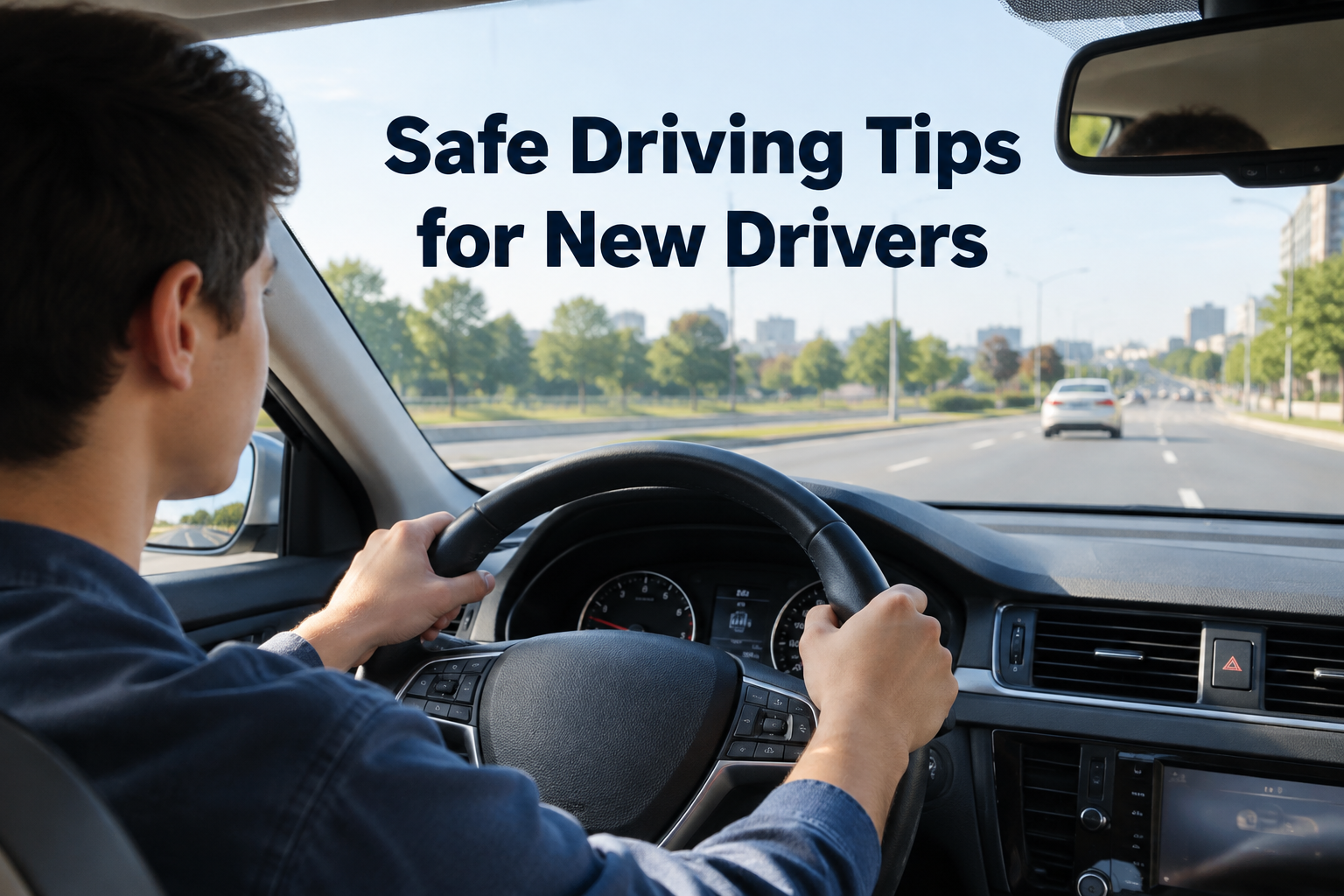
Learning to drive is an exciting experience, but it also comes with a serious responsibility. A new driver is not only responsible for controlling a vehicle but also for protecting passengers, pedestrians, cyclists, and other road users. Driving safely requires much more than knowing how to start a car, change gears, or use the steering wheel.
New drivers often feel nervous during their first few weeks on the road. This is completely normal because driving involves making many decisions at the same time. You have to watch traffic, check mirrors, maintain speed, follow road signs, keep a safe distance, and stay aware of everything happening around you.
The good news is that safe driving becomes easier with practice. Developing good habits from the beginning can help you become a confident and responsible driver.
This guide explains some of the most important safe driving tips for new drivers. These practical tips can help you avoid common mistakes, reduce accident risks, and become more comfortable behind the wheel.
Understand Your Car Before You Start Driving
Before driving on busy roads, spend some time understanding your vehicle.
Every car feels slightly different. The position of the pedals, steering response, brake sensitivity, visibility, and controls may vary from one vehicle to another.
Learn where the important controls are located. These include the headlights, indicators, windshield wipers, hazard lights, parking brake, climate controls, and horn.
You should also know how to adjust your seat and mirrors correctly.
Your seat should allow you to reach the pedals comfortably without stretching your legs. Your arms should remain slightly bent while holding the steering wheel.
Proper seating improves comfort and gives you better control of the vehicle.
Always Wear Your Seat Belt
Wearing a seat belt is one of the simplest and most important safe driving habits.
A seat belt helps keep your body properly positioned during sudden braking or a collision. It can significantly reduce the risk of serious injury.
Make sure every passenger wears a seat belt before you start driving.
Do not begin your journey until everyone in the vehicle is safely secured.
New drivers should develop this habit from the first day. Over time, fastening the seat belt should become automatic whenever you enter a car.
Adjust Your Mirrors Properly
Correct mirror adjustment helps reduce blind spots and improves awareness of surrounding traffic.
Before driving, adjust the rear view mirror so you can clearly see the road behind your vehicle.
The side mirrors should allow you to monitor vehicles approaching from both sides.
Mirrors should be checked regularly while driving, especially before changing lanes, turning, slowing down, or overtaking.
However, mirrors cannot show everything.
Always perform a quick shoulder check before changing lanes because another vehicle or motorcycle may be hidden in your blind spot.
Keep Your Eyes on the Road
One of the most important safe driving tips for new drivers is to maintain full attention on the road.
Many accidents happen because drivers become distracted.
Avoid looking at your phone, adjusting music, searching for items inside the car, or having conversations that take your attention away from driving.
Even a few seconds of distraction can be dangerous.
At highway speeds, a vehicle can travel a significant distance in only a few seconds. If your eyes are not on the road, you may not notice sudden braking, pedestrians, road debris, or changing traffic conditions.
Keep your focus on driving at all times.
Never Use Your Phone While Driving
Mobile phones are one of the biggest sources of driver distraction.
Texting, checking notifications, browsing social media, or entering navigation instructions while driving can reduce your reaction time.
If you need to use your phone, stop the vehicle in a safe location first.
Set your navigation system before beginning your journey.
If your phone supports hands free navigation, use voice guidance instead of looking at the screen constantly.
The safest option is to keep your phone out of reach while driving.
Follow the Speed Limit
Speed limits exist to make roads safer.
New drivers sometimes drive too fast because they feel confident, while others drive too slowly because they feel nervous.
Both situations can create problems.
Try to maintain a speed that is appropriate for the road and traffic conditions while staying within the legal limit.
Remember that the posted speed limit represents the maximum permitted speed under suitable conditions.
You may need to drive slower during rain, fog, heavy traffic, road construction, or poor visibility.
Safe driving is not about reaching your destination quickly. It is about reaching your destination safely.
Maintain a Safe Following Distance
Keeping enough distance from the vehicle ahead gives you more time to react.
If the car in front suddenly brakes, you need enough space to stop safely.
A useful method is the three second rule.
Choose a fixed object on the road, such as a sign or tree. When the vehicle ahead passes that object, begin counting seconds.
Your vehicle should reach the same point at least three seconds later.
You should increase this distance during rain, fog, nighttime driving, or slippery road conditions.
More distance gives you more reaction time.
Use Indicators Before Turning
Indicators help other road users understand your intentions.
Always signal before turning, changing lanes, entering traffic, or leaving the road.
Use the indicator early enough for other drivers to react.
Avoid signaling at the last moment.
After completing the turn or lane change, make sure the indicator has switched off.
Using indicators consistently makes traffic movements more predictable and reduces the chance of accidents.
Learn to Check Blind Spots
Blind spots are areas around your vehicle that cannot be seen clearly through the mirrors.
Motorcycles, bicycles, and smaller vehicles can easily disappear into these areas.
Before changing lanes, check your mirrors first.
Then briefly look over your shoulder toward the lane you want to enter.
This quick check can prevent dangerous side collisions.
Blind spot awareness is especially important on highways and roads with multiple lanes.
Avoid Sudden Braking
New drivers often brake too hard because they notice traffic situations late.
Try to look farther ahead while driving.
Instead of focusing only on the car directly in front of you, observe traffic several vehicles ahead.
This allows you to notice slowing traffic earlier.
Reduce your speed gradually whenever possible.
Smooth braking improves comfort, saves fuel, reduces brake wear, and lowers the risk of the vehicle behind hitting you.
Accelerate Smoothly
Hard acceleration is rarely necessary during normal driving.
Press the accelerator gently and allow the vehicle to gain speed smoothly.
Sudden acceleration can make the car harder to control and increase fuel consumption.
Smooth acceleration is especially important on wet or slippery roads where the tires may lose traction.
Developing a gentle driving style makes your journeys safer and more comfortable.
Understand Road Signs
Road signs provide important information about speed limits, hazards, directions, traffic rules, and upcoming road conditions.
Every new driver should learn the meaning of common road signs.
Pay special attention to stop signs, speed limit signs, pedestrian crossings, school zones, no entry signs, railway crossings, and warning signs.
Road signs are placed where drivers need important information.
Ignoring them can put you and others at risk.
Be Careful at Intersections
Intersections are among the most dangerous areas for drivers because vehicles may approach from several directions.
Slow down when approaching an intersection.
Observe traffic lights, road markings, pedestrians, motorcycles, and vehicles preparing to turn.
Even when your light turns green, take a quick look in both directions before moving forward.
Another driver may accidentally enter the intersection late.
Never assume that every road user will follow the rules perfectly.
Defensive driving means being prepared for mistakes made by others.
Practice Defensive Driving
Defensive driving means staying alert and preparing for unexpected situations.
You cannot control the actions of other drivers, but you can control how you respond.
Watch for vehicles moving unpredictably.
Be careful around drivers who change lanes frequently, follow too closely, or drive at inconsistent speeds.
Keep enough space around your vehicle whenever possible.
Avoid competing with aggressive drivers.
If someone wants to overtake you, allow them to pass safely.
Your goal is not to prove who is right. Your goal is to avoid unnecessary risk.
Stay Calm Around Aggressive Drivers
Some drivers may honk, follow too closely, or try to pressure you into driving faster.
Do not allow their behavior to make you panic.
Stay calm and continue driving safely.
If another driver is following very closely, move to a slower lane or allow them to pass when it is safe.
Avoid making eye contact, using angry gestures, or responding aggressively.
Road rage can turn a small situation into a serious problem.
A calm driver usually makes better decisions.
Take Extra Care in Rain
Rain reduces visibility and makes roads slippery.
Slow down when driving in wet conditions.
Increase the distance between your vehicle and the car ahead.
Use your headlights when visibility becomes poor.
Avoid sudden steering movements, hard braking, and aggressive acceleration.
Water can reduce tire grip, especially if your tires are worn.
If there is deep water on the road, avoid driving through it unless you are certain it is safe.
Floodwater can hide potholes or damage the vehicle.
Be Careful While Driving at Night
Night driving can be challenging for new drivers because visibility is reduced.
Drive at a comfortable speed and keep more distance from the vehicle ahead.
Make sure your headlights are clean and working correctly.
Use high beams only when appropriate and switch back to low beams when another vehicle approaches.
Avoid staring directly at bright headlights from oncoming traffic.
Instead, focus slightly toward the side of your lane while keeping the road in view.
If you feel tired, stop somewhere safe and rest.
Do Not Drive When Tired
Fatigue can seriously reduce driving ability.
A tired driver may react slowly, miss road signs, drift between lanes, or even fall asleep.
If you feel sleepy before driving, rest first.
During long trips, take regular breaks.
Stretch your legs, drink water, and allow your mind to recover.
Opening the window or increasing music volume is not a reliable solution for serious tiredness.
Proper rest is the safest choice.
Avoid Driving Under the Influence
Never drive after consuming alcohol, illegal drugs, or any substance that affects your judgment and reaction time.
Some prescription and nonprescription medicines can also cause drowsiness.
Read medication labels carefully.
If a medicine affects your ability to concentrate or stay awake, avoid driving.
Safe driving requires clear thinking, good coordination, and quick reactions.
Keep Both Hands Ready for Control
Keeping proper control of the steering wheel is important, especially for new drivers.
Avoid driving with only one hand for long periods unless you need to operate another vehicle control briefly.
Do not hold food, drinks, or a phone while steering.
Keeping both hands available gives you better control during sudden situations such as avoiding an obstacle or responding to a tire problem.
Learn Proper Lane Discipline
Stay within your lane and avoid unnecessary lane changes.
Before changing lanes, follow a simple routine.
Check your mirrors.
Use your indicator.
Check your blind spot.
Move gradually into the new lane when there is enough space.
Do not cut in front of another vehicle.
Avoid changing several lanes at once.
Smooth and predictable lane changes make driving safer for everyone.
Give Pedestrians Enough Attention
Pedestrians are among the most vulnerable road users.
Slow down near pedestrian crossings, schools, markets, residential streets, and crowded areas.
Be prepared for children to move unexpectedly.
Always stop when pedestrians have the legal right of way.
Never rush someone who is crossing the road.
Extra patience around pedestrians can prevent serious accidents.
Watch Carefully for Motorcycles and Bicycles
Motorcycles and bicycles are smaller than cars and can be difficult to see.
Check your mirrors and blind spots carefully before turning or changing lanes.
Give cyclists enough space when passing.
Do not follow motorcycles too closely.
Motorcyclists may need to slow down suddenly because of potholes, road debris, or uneven surfaces.
Keeping extra distance gives everyone more room to react safely.
Learn How to Park Properly
Parking is an important skill for every new driver.
Practice parallel parking, reverse parking, and parking between lines in quiet areas before trying them in busy locations.
Move slowly while parking.
Use your mirrors and check your surroundings carefully.
Be especially aware of children, pets, bicycles, and low objects that may not be easily visible.
Do not depend completely on parking sensors or cameras.
Technology can help, but drivers should still observe their surroundings.
Understand Your Braking Distance
A car does not stop immediately when you press the brake pedal.
Stopping distance depends on several factors.
These include speed, tire condition, road surface, weather, vehicle weight, and driver reaction time.
Driving faster greatly increases the distance needed to stop.
This is another reason why maintaining a safe speed and following distance is essential.
Keep Your Car in Good Condition
Safe driving also depends on vehicle maintenance.
Check your tires regularly for correct pressure and sufficient tread.
Make sure the brakes work properly.
Inspect headlights, brake lights, indicators, windshield wipers, and mirrors.
Keep enough engine oil, coolant, brake fluid, and windshield washer fluid in the vehicle.
A poorly maintained car may become dangerous even when the driver is careful.
Regular maintenance improves both safety and reliability.
Avoid Too Many Passengers When Learning
Having several friends in the car can distract a new driver.
Passengers may talk loudly, play music, or encourage risky behavior.
During your early driving experience, keep distractions as low as possible.
Driving with an experienced and calm passenger can be helpful.
They can provide guidance and help you notice situations you may have missed.
As your confidence improves, managing passengers becomes easier.
Plan Your Route Before Leaving
Knowing where you are going reduces stress.
Check your route before starting the car.
Look for major turns, highway exits, construction areas, and difficult intersections.
If you are using navigation, enter the destination before moving.
Planning ahead means you can spend more time watching the road and less time worrying about directions.
Do Not Panic If You Make a Mistake
Every new driver makes mistakes while learning.
You may miss a turn, stall the engine, enter the wrong lane, or park badly.
The important thing is to remain calm.
Do not make a dangerous movement just to correct a small mistake.
If you miss an exit, continue driving and find another safe route.
If you enter the wrong lane, follow that lane until you can change safely.
A missed turn is far less serious than a sudden unsafe maneuver.
Practice in Different Driving Conditions
Experience is one of the best ways to improve driving skills.
Start in quiet streets and gradually practice in more challenging environments.
Try driving in residential areas, city traffic, highways, parking areas, and nighttime conditions once you feel ready.
You should also gain supervised experience in rain and other weather conditions.
The more safe driving situations you experience, the better prepared you will become.
Never Drive Beyond Your Confidence Level
Confidence is useful, but overconfidence can be dangerous.
New drivers should gradually build their skills.
Do not attempt difficult driving situations simply because other drivers pressure you.
If you are uncomfortable driving on a busy highway, practice on quieter roads first.
If weather conditions are severe, consider delaying your journey.
Knowing your limits is an important part of becoming a responsible driver.
Keep Emergency Items in Your Car
A few basic emergency supplies can be useful if your car develops a problem.
Consider carrying a first aid kit, flashlight, phone charger, drinking water, reflective warning equipment, basic tools, and a spare tire if your vehicle is designed to carry one.
You should also know how to contact roadside assistance if needed.
Being prepared can make unexpected situations easier to manage.
Continue Learning After Getting Your License
Passing a driving test does not mean the learning process is finished.
Good drivers continue improving throughout their lives.
Pay attention to situations that make you uncomfortable and practice them safely.
Learn more about vehicle maintenance, defensive driving, road signs, weather conditions, and emergency procedures.
Experience will improve your judgment over time.
The most important thing is to maintain safe habits even after you become more confident.
Common Mistakes New Drivers Should Avoid
New drivers often make similar mistakes.
These include following other vehicles too closely, forgetting to check blind spots, speeding, braking suddenly, becoming distracted by phones, driving when tired, and changing lanes without enough space.
Another common mistake is watching only the vehicle directly ahead.
Good drivers observe the entire road environment.
You should notice traffic lights, pedestrians, road signs, vehicles in nearby lanes, and changing traffic patterns.
Awareness gives you more time to make safe decisions.
Final Thoughts
Safe driving is a skill that develops through patience, practice, and responsible habits.
New drivers do not need to be perfect from the first day. What matters most is staying alert, following traffic rules, respecting other road users, and learning from every journey.
Always wear your seat belt, maintain a safe speed, keep enough distance from other vehicles, check your mirrors, avoid distractions, and remain calm in difficult situations.
Remember that confidence should come from experience, not from taking unnecessary risks.
By following these safe driving tips for new drivers, you can gradually become more comfortable behind the wheel while protecting yourself and everyone around you.
A responsible driver understands that every trip requires attention and good judgment. The safest drivers are usually not the fastest or most aggressive. They are the ones who stay patient, observe their surroundings, and make careful decisions.
Build these habits early, and they can help you enjoy safer driving for many years.