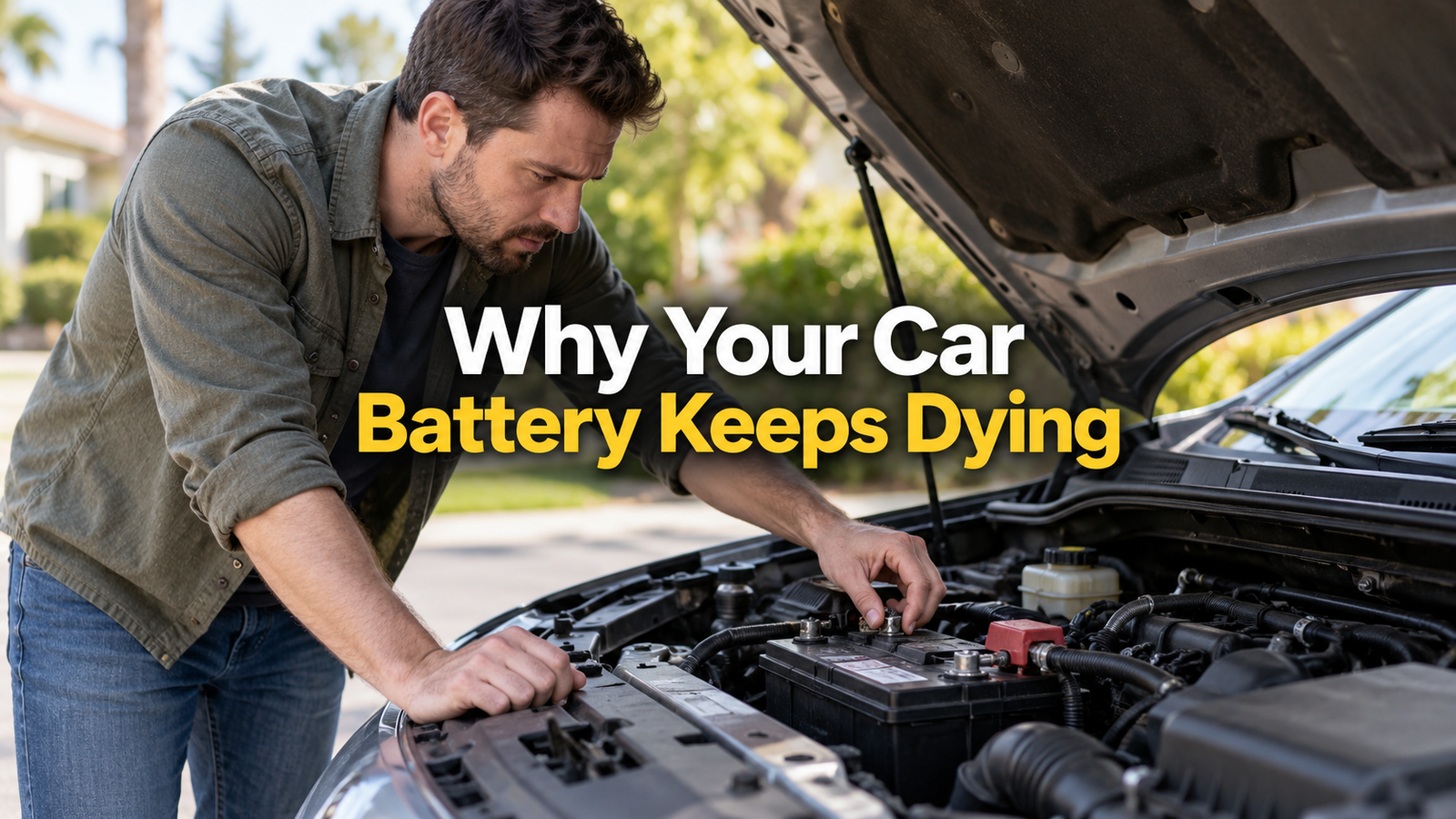
A car battery is one of those parts that most drivers rarely think about until the engine refuses to start. You turn the key or press the start button and instead of hearing the engine come to life, you hear a clicking sound or nothing at all. When this happens once, you might assume the battery simply needs charging. But when your car battery keeps dying again and again, there is usually a reason behind it.
A battery that repeatedly loses power can be frustrating because the actual problem is not always the battery itself. Sometimes an electrical component is draining power while the vehicle is parked. In other cases, the charging system may not be working properly. Driving habits, extreme temperatures, corrosion, age, and even loose connections can also affect battery performance.
Understanding why your car battery keeps dying can help you identify the problem before you spend money replacing parts unnecessarily. This guide explains the most common causes of a dead car battery, the warning signs to watch for, and the steps you can take to prevent the problem from returning.
How a Car Battery Works
Before looking at the causes of repeated battery failure, it helps to understand what the battery actually does.
The battery stores electrical energy that is used to start the engine. When you turn the ignition, the battery sends power to the starter motor. The starter motor then turns the engine until combustion begins.
Once the engine is running, the alternator generates electricity. It supplies power to electrical systems such as the lights, radio, climate control, and onboard computers. At the same time, it recharges the battery.
In a healthy vehicle, this process happens continuously. The battery provides power when needed, and the alternator restores the energy afterward.
Problems begin when the battery loses more electricity than it receives. If this continues, the battery eventually becomes too weak to start the engine.
1. Your Car Battery May Be Old
Battery age is one of the most common reasons a car battery keeps dying.
Most conventional car batteries have a limited service life. As the battery gets older, its internal components gradually lose their ability to hold a full charge.
A new battery may start the engine easily even in difficult conditions. An older battery may work normally one day and struggle the next.
Signs of an aging battery can include:
Slow engine cranking
Dim headlights during startup
Frequent need for jump starts
Electrical accessories behaving strangely
Difficulty starting in cold or hot weather
Visible swelling or damage to the battery case
If your battery is several years old and continues losing charge, battery age should be one of the first things you consider.
A professional battery test can measure its remaining capacity and starting power.
2. The Alternator May Not Be Charging the Battery
Sometimes the battery gets blamed when the real problem is the alternator.
The alternator is responsible for producing electricity while the engine is running. It also keeps the battery charged.
If the alternator becomes weak or fails completely, the battery may gradually lose power while you drive.
Eventually, the engine may stop running because the electrical system is no longer receiving enough power.
Common signs of an alternator problem include:
Battery warning light appearing on the dashboard
Headlights becoming unusually dim
Lights changing brightness with engine speed
Electrical accessories operating slowly
Difficulty starting the vehicle
Engine suddenly stopping while driving
A damaged alternator belt can also prevent the alternator from working correctly.
If you install a new battery but it becomes discharged shortly afterward, the charging system should be inspected.
3. Something May Be Draining the Battery Overnight
One of the most frustrating battery problems is known as a parasitic electrical drain.
Modern vehicles continue using a small amount of electricity even when the engine is switched off. Systems such as alarms, clocks, security modules, and computers may remain active.
A small amount of electrical consumption is normal.
The problem begins when something continues drawing more electricity than it should.
Possible sources of battery drain include:
Interior lights
Glove compartment lights
Trunk lights
Aftermarket alarms
Dash cameras
Audio equipment
Phone chargers
Electronic accessories
Faulty switches
Damaged wiring
Control modules that do not enter sleep mode
For example, a trunk light may remain illuminated because the switch is faulty. Since you cannot see the light when the trunk is closed, the battery may slowly drain overnight.
A technician can perform a parasitic draw test to determine whether the vehicle is consuming too much electricity while parked.
4. You May Be Leaving Lights or Accessories On
Sometimes the explanation is much simpler.
Headlights, interior lights, or electronic accessories left on while the engine is off can quickly drain a battery.
Many newer vehicles automatically turn lights off after a certain period, but this feature does not always protect the battery from every accessory.
Devices connected to power sockets may continue drawing electricity even when the car is parked.
Common examples include:
Phone chargers
Portable refrigerators
Dash cameras
USB accessories
GPS devices
Bluetooth transmitters
Aftermarket entertainment systems
Before leaving your vehicle, take a few seconds to check that lights and accessories are switched off.
This simple habit can prevent many dead battery situations.
5. Loose Battery Connections Can Cause Problems
A battery can contain plenty of energy but still fail to start the car if its connections are loose.
Battery cables must remain securely connected to the battery terminals.
If a terminal becomes loose, electricity may not flow properly between the battery and the vehicle.
You might notice that the engine sometimes starts normally and sometimes does not.
Other symptoms may include flickering dashboard lights or electrical systems that suddenly lose power.
Battery terminals should be firmly attached, but excessive force should not be used when tightening them.
If you are unsure how to inspect battery connections safely, have a mechanic check them.
6. Corrosion Can Reduce Electrical Flow
Battery corrosion is another common problem.
Corrosion often appears as a white, green, or bluish powder around the terminals.
When corrosion builds up, it can increase electrical resistance and prevent power from flowing efficiently.
The battery may still be charged, but the starter motor may not receive enough electricity.
Corrosion can develop because of battery gases, moisture, chemical reactions, or aging components.
Cleaning battery terminals can often improve the electrical connection.
However, proper safety precautions are important because batteries contain corrosive chemicals and can produce explosive gases.
If corrosion is severe, professional cleaning may be the safest option.
7. Short Trips May Not Give the Battery Enough Time to Recharge
Many drivers are surprised to learn that frequent short trips can contribute to battery problems.
Starting the engine requires a significant amount of electricity.
After the engine starts, the alternator needs time to replace that energy.
If you regularly drive only a few minutes before switching the engine off again, the battery may never receive a full recharge.
Over time, its state of charge can gradually decrease.
This can become especially noticeable if you use several electrical systems during those short journeys, such as:
Air conditioning
Heated seats
Headlights
Audio systems
Rear window heaters
Phone chargers
Occasionally taking the vehicle on a longer drive may help the battery recover, assuming the charging system is functioning correctly.
8. Extreme Heat Can Damage a Car Battery
Many drivers associate battery problems with cold weather, but extreme heat can be equally damaging.
High temperatures can accelerate chemical reactions inside the battery.
Heat may also increase the rate at which internal components deteriorate.
In very hot climates, batteries can lose capacity faster than expected.
Heat under the hood can make the situation even worse, particularly when the vehicle is regularly parked in direct sunlight.
Whenever possible, parking in a shaded or covered area may reduce heat exposure.
Regular battery inspections are also important in hot climates because damage may develop before obvious symptoms appear.
9. Cold Weather Can Reduce Battery Performance
Cold weather affects batteries differently.
Low temperatures reduce the battery’s ability to produce electrical power. At the same time, cold engine oil can make the engine more difficult to turn.
This means the starter motor may require more power exactly when the battery is less capable of supplying it.
A battery that works normally during warmer months may suddenly struggle during winter.
If the battery is already old or weak, cold weather can reveal the problem quickly.
Testing the battery before winter can help identify reduced capacity before you are left with a car that will not start.
10. The Starter Motor Could Be Causing the Problem
Not every starting problem is caused by the battery.
The starter motor requires a large amount of electricity to turn the engine.
If the starter becomes worn or damaged, it may draw more current than normal.
This can make the battery appear weak even when it still has a reasonable charge.
Possible signs of a starter problem include:
Clicking noises when starting
Grinding sounds
Intermittent starting problems
Engine failing to turn despite working lights
Slow cranking with a tested healthy battery
A mechanic can test the starter motor and compare its electrical consumption with the manufacturer’s specifications.
11. A Faulty Relay May Keep Electrical Systems Active
Relays act as electrical switches inside your vehicle.
They control many systems and accessories.
If a relay becomes stuck in the active position, an electrical component may continue receiving power after the engine has been switched off.
This can slowly drain the battery.
Because many relays are hidden inside fuse boxes, identifying the problem may require electrical testing.
Repeated overnight battery failure is one situation where a technician may inspect relays and related circuits.
12. Aftermarket Electronics Can Cause Battery Drain
Adding electronic equipment can improve comfort and convenience, but poor installation can create electrical problems.
Aftermarket accessories may include:
Sound systems
Amplifiers
Security systems
Remote starters
Additional lighting
Dash cameras
Navigation units
Tracking devices
Charging equipment
If these devices are connected incorrectly, they may continue drawing power even when the vehicle is parked.
Poor wiring can also cause electrical faults.
If your battery problems began shortly after installing an accessory, the installation should be inspected carefully.
13. The Battery May Not Be the Correct Type
Modern vehicles can have specific battery requirements.
Some cars use advanced charging systems or automatic engine stop and start technology.
These vehicles may require particular battery designs.
Installing a battery with insufficient capacity or the wrong technology can lead to poor performance and shorter battery life.
When replacing a battery, always check the manufacturer’s recommended size, capacity, and battery type.
Choosing the cheapest battery without checking compatibility may cost more in the long run.
14. The Vehicle May Have a Wiring Problem
Electrical wiring can deteriorate over time.
Insulation may become damaged due to heat, vibration, moisture, rodents, previous repairs, or accidents.
Damaged wires can sometimes create unwanted electrical paths that drain the battery.
Electrical problems can be difficult to diagnose because they may occur intermittently.
A vehicle may work perfectly for several days before the battery suddenly becomes discharged again.
Professional electrical testing may be necessary when obvious causes have already been eliminated.
15. The Battery May Not Be Fully Charging
A battery does not always become fully charged simply because the engine is running.
Several factors can reduce charging efficiency.
These include:
Weak alternator output
Loose drive belt
Poor electrical connections
Heavy accessory use
Short driving distances
Battery deterioration
Charging system faults
If the battery repeatedly operates at a low state of charge, its lifespan may become shorter.
A charging system test can reveal whether the alternator is supplying the correct voltage.
Signs Your Car Battery Is Getting Weak
A battery often gives warning signs before it fails completely.
Pay attention to changes in how the car behaves.
Common warning signs include:
Engine cranking more slowly than usual
Headlights becoming dim during startup
Frequent jump starts
Dashboard warning lights
Electrical accessories acting strangely
Clicking sounds when starting
Battery terminals showing corrosion
Vehicle needing several attempts to start
Ignoring these symptoms may eventually leave you stranded.
How to Find Out Why Your Battery Keeps Dying
Diagnosing repeated battery failure usually involves checking several systems.
Start with the battery itself.
Have its charge level and condition tested.
Next, inspect the terminals and cables for looseness, corrosion, or damage.
The charging system should then be tested to confirm that the alternator is producing enough electricity.
If both the battery and alternator appear healthy, the next step may involve checking for parasitic electrical drain.
A technician can measure how much current the vehicle consumes while switched off.
If the reading is too high, individual circuits can be tested to identify the source.
How to Prevent Your Car Battery From Dying
Regular maintenance can greatly reduce the chance of unexpected battery failure.
Check the battery terminals periodically and keep them clean.
Make sure cables remain secure.
Avoid leaving lights and accessories running while the engine is off.
If you drive only short distances, consider taking occasional longer trips.
Have the battery tested as it gets older.
Inspect the charging system whenever unusual electrical symptoms appear.
Use the correct replacement battery for your vehicle.
Avoid installing poorly wired accessories.
If the car will remain parked for an extended period, a suitable battery maintainer may help preserve its charge.
Should You Replace the Battery Immediately?
Not necessarily.
A dead battery does not automatically mean the battery itself needs replacing.
If the alternator is faulty, installing a new battery may only provide a temporary solution.
The new battery could become discharged as well.
The same applies to parasitic drain.
If an electrical system continues consuming power while the car is parked, even a new battery may eventually go flat.
Testing the battery and charging system before purchasing replacement parts can save money and prevent repeated problems.
When Should You See a Mechanic?
Consider professional diagnosis if your battery becomes discharged repeatedly despite being charged properly.
You should also seek help if:
The battery warning light appears
The vehicle loses electrical power while driving
You smell burning around electrical components
Battery cables become excessively hot
The battery case appears swollen
You notice severe corrosion
The engine repeatedly refuses to start
A technician can test the battery, starter, alternator, charging system, wiring, and electrical drain to determine the actual cause.
Frequently Asked Questions
Why does my car battery keep dying overnight?
A battery that dies overnight may be affected by a parasitic electrical drain. Interior lights, faulty switches, aftermarket accessories, damaged wiring, alarms, control modules, or other electrical systems may continue consuming power after the vehicle is switched off.
Can a bad alternator kill a new battery?
Yes. If the alternator does not properly recharge the battery, even a new battery can eventually become discharged.
Can short trips drain a car battery?
Frequent short journeys can contribute to battery discharge because the alternator may not have enough time to replace the energy used during engine startup.
How do I know whether my battery or alternator is bad?
Battery and charging system tests are the most reliable methods. A weak battery may struggle to hold a charge, while a faulty alternator may fail to recharge a healthy battery while the engine is running.
Can leaving a phone charger plugged in drain the battery?
Some vehicles continue supplying electricity to accessory sockets after the ignition is switched off. Certain devices may therefore consume a small amount of power while parked.
Why does my battery die even though it is new?
A new battery can still lose charge because of an alternator problem, parasitic drain, loose connection, incorrect battery specification, wiring fault, or faulty electrical accessory.
Final Thoughts
If your car battery keeps dying, replacing the battery without finding the cause may not solve the problem.
The issue could be something simple, such as leaving an interior light switched on, or something more complicated, such as a faulty alternator, parasitic electrical drain, damaged wiring, or charging system problem.
Start by checking the age and condition of the battery. Inspect the terminals and cables. Then test the charging system. If the battery continues losing power while the vehicle is parked, an electrical drain test may be necessary.
Regular battery maintenance and early diagnosis can prevent unexpected breakdowns and help you avoid replacing parts that are still working properly.
A healthy battery should provide reliable starting power every day. When it begins dying repeatedly, your vehicle is usually telling you that something in the electrical or charging system needs attention. Finding that cause early is the best way to restore reliable performance and keep your car ready whenever you need it.