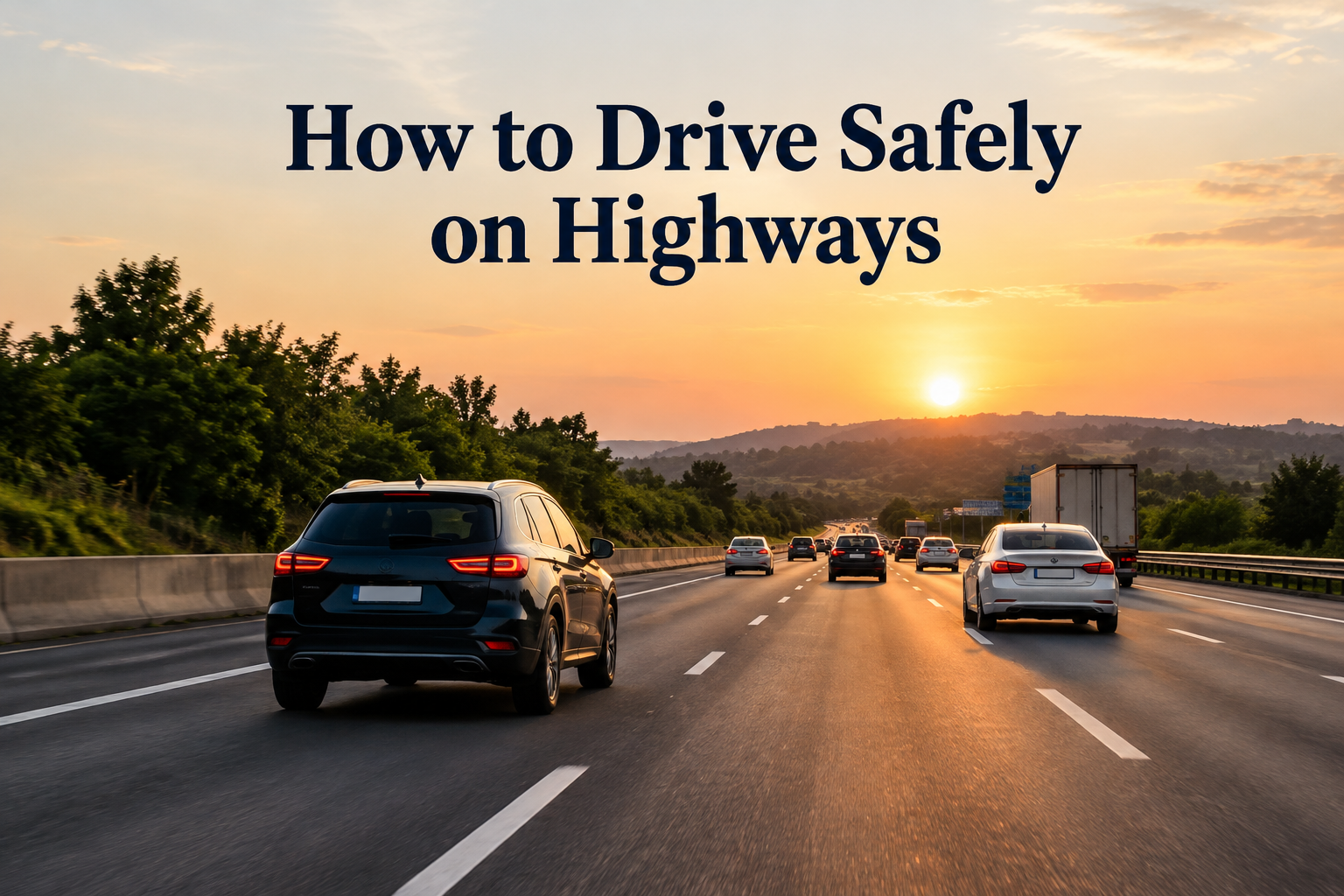
Driving on a highway can feel easy because the roads are usually wide, smooth, and designed for higher speeds. However, highway driving also brings serious risks. Vehicles move faster, traffic can change suddenly, and a small mistake can quickly become dangerous. This is why learning how to drive safely on highways is important for every driver.
Safe highway driving is not only about following speed limits. It also involves maintaining proper distance, using mirrors correctly, staying alert, understanding lane discipline, checking the condition of your vehicle, and reacting calmly to unexpected situations.
Many highway accidents happen because drivers become overconfident. A long, straight road may look simple, but high speed reduces the amount of time available to react. Good highway driving requires patience, concentration, and responsible decision making.
This guide explains practical highway driving safety tips that every driver should know.
Understand Why Highway Driving Requires Extra Attention
Highways are different from city roads. In city traffic, vehicles usually move at slower speeds and drivers often stop at signals, intersections, or crossings. On highways, vehicles can travel at much higher speeds for long periods.
At higher speeds, stopping distance increases significantly. A vehicle that could stop quickly at a low speed may require much more road space to stop safely on a highway.
Another important factor is reaction time. If a driver suddenly brakes in front of you, you may have only a few seconds to respond. This is why highway driving requires constant awareness.
You should always watch the traffic ahead rather than focusing only on the vehicle directly in front of you.
Check Your Car Before Entering the Highway
Safe highway driving begins before you reach the highway.
A quick vehicle inspection can prevent many problems. You do not need to perform a complete mechanical inspection every time, but a few basic checks are always helpful.
Check your tires for visible damage and make sure the tire pressure is correct. Tires play a major role in highway safety because they are continuously exposed to higher speeds.
Also check your fuel level. Running out of fuel on a highway can put you in a difficult and dangerous situation.
Make sure your headlights, brake lights, indicators, and mirrors are working properly.
Your windshield should also be clean so that you have a clear view of the road.
If you are planning a long highway trip, checking engine oil, coolant, and other important fluids is a good idea.
Always Wear Your Seat Belt
Seat belts remain one of the most important safety features in any vehicle.
Everyone in the car should wear a seat belt before the vehicle starts moving. This includes passengers sitting in the back seats.
At highway speeds, the force of a collision can be extremely powerful. A seat belt helps keep occupants in their seats and reduces the risk of serious injury.
Children should use appropriate child safety seats based on their age and size.
Never assume that a short highway journey is safe enough to travel without a seat belt. Accidents can happen within seconds.
Follow the Speed Limit
Speed limits are designed to help maintain safe traffic flow.
Driving too fast reduces reaction time and increases stopping distance. It can also make it harder to control the vehicle during sudden lane changes or emergency braking.
At the same time, driving much slower than surrounding traffic can also create risks if other drivers are forced to brake or change lanes suddenly.
Try to maintain a safe and legal speed that matches road conditions.
Remember that the posted speed limit represents the maximum legal speed under suitable conditions. During rain, fog, heavy traffic, or poor visibility, a lower speed may be necessary.
Maintain a Safe Following Distance
One of the most important rules for highway safety is maintaining enough distance from the vehicle in front.
Following too closely is dangerous because you may not have enough time to stop if traffic suddenly slows down.
A useful method is the three second rule.
Choose a fixed object on the side of the road, such as a sign or a tree. When the vehicle in front passes that object, begin counting.
If you reach the same object before three seconds have passed, you may be following too closely.
In bad weather or poor visibility, increase the distance even more.
A larger safety gap gives you more time to react.
Use Your Mirrors Regularly
Highway driving requires awareness of what is happening around your entire vehicle.
Do not look only through the front windshield.
Check your rearview mirror regularly and use your side mirrors to monitor vehicles approaching from behind.
Frequent mirror checks help you understand the movement of surrounding traffic.
This becomes especially important before changing lanes, slowing down, or preparing to exit the highway.
However, avoid staring at mirrors for too long. Your main attention should remain on the road ahead.
Check Blind Spots Before Changing Lanes
Mirrors cannot show everything around your vehicle.
Almost every car has blind spots. These are areas beside the vehicle that may not be visible through the mirrors.
Before changing lanes, check your mirrors, use your indicator, and quickly look over your shoulder to make sure the lane is clear.
Do not rely completely on blind spot monitoring systems if your vehicle has them. Electronic systems can be useful, but drivers should still perform proper visual checks.
A quick blind spot check can prevent a serious side collision.
Use Turn Signals Properly
Indicators communicate your intentions to other drivers.
Always use your turn signal before changing lanes or exiting the highway.
Activate the indicator early enough to give other drivers time to understand what you plan to do.
Avoid changing lanes first and signaling afterward. At highway speeds, other drivers need advance warning.
After completing the lane change, make sure your indicator turns off.
Clear communication makes traffic more predictable and safer for everyone.
Avoid Frequent Lane Changes
Some drivers constantly move from one lane to another trying to save a small amount of time.
This behavior increases the risk of accidents.
Every lane change creates another opportunity for a collision. You have to judge the speed of nearby vehicles, check blind spots, and move safely into another lane.
Choose a suitable lane and remain there unless you have a good reason to change.
Smooth and predictable driving is usually safer than aggressive lane switching.
Understand Highway Lane Discipline
Lane rules may vary depending on the country and road system, but the basic principle is simple.
Use the appropriate lane for normal driving and use passing lanes when overtaking slower vehicles.
Do not remain unnecessarily in a passing lane if other vehicles are trying to overtake.
Lane discipline helps maintain smooth traffic flow and reduces frustration between drivers.
Pay attention to road signs because some highways may have special rules for certain lanes.
Merge Carefully When Entering the Highway
Entering a highway requires good judgment.
Use the acceleration lane to gradually increase your speed so that it becomes similar to the speed of highway traffic.
Check your mirrors and blind spot before merging.
Do not stop at the end of the acceleration lane unless traffic conditions make it absolutely necessary.
Stopping unexpectedly can make merging more difficult and can create danger for vehicles behind you.
Try to identify a safe gap and enter the traffic flow smoothly.
Give Other Drivers Space to Merge
When you notice another vehicle entering the highway, try to make the situation easier if it is safe to do so.
You may be able to adjust your speed slightly or change lanes to create space.
You should not make sudden movements, but small and predictable adjustments can improve traffic flow.
Safe highway driving involves cooperation as well as individual responsibility.
Overtake With Care
Overtaking should always be done calmly and legally.
Before overtaking another vehicle, check the lane ahead and behind you.
Use your indicator and check your blind spot before moving.
Maintain a steady speed while passing.
Once you have safely passed the vehicle, return to the normal driving lane when there is enough space.
Avoid cutting back into the lane too quickly.
You should also avoid speeding excessively just to complete an overtake.
Stay Away From Large Trucks
Heavy trucks and buses behave differently from cars.
They require more distance to stop and often have large blind spots.
Avoid driving directly beside a truck for long periods.
If you cannot see the truck driver’s mirrors, there is a possibility that the driver cannot see you.
When passing a large truck, complete the maneuver safely and avoid staying in its blind spot.
Also maintain extra distance when following a truck because your view of the road ahead may be limited.
Do Not Use Your Phone While Driving
Mobile phone use is one of the most dangerous distractions while driving.
Reading a message for only a few seconds means your eyes are not watching the road.
At highway speeds, your vehicle can travel a significant distance during that short period.
Keep your phone away while driving.
If you need navigation, set the route before starting your journey. Voice guidance can reduce the need to look at the screen.
If you must make a call or send a message, stop at a safe location first.
Avoid Other Distractions
Phones are not the only source of distraction.
Eating, adjusting music, searching for objects, turning around to talk to passengers, or looking at roadside events can all reduce your concentration.
Try to complete necessary adjustments before entering the highway.
Keep the cabin organized so that important items are easy to reach when needed.
Your eyes and attention should remain focused on driving.
Stay Alert During Long Trips
Highway driving can become monotonous.
Long straight roads, constant engine noise, and repetitive scenery may make drivers tired.
Fatigue is extremely dangerous because it reduces reaction time and concentration.
Signs of tiredness include frequent yawning, heavy eyes, difficulty staying in your lane, and forgetting the last few kilometers of your journey.
If you feel sleepy, find a safe place to stop and rest.
Opening a window or increasing music volume is not a reliable solution for serious fatigue.
A proper break is much safer.
Plan Rest Stops
During long highway journeys, take regular breaks.
Stopping every few hours gives your body and mind time to recover.
Use rest stops to stretch your legs, drink water, use the restroom, and relax.
Short breaks can improve concentration and reduce fatigue.
If several licensed drivers are traveling together, sharing driving responsibilities can also make a long journey safer.
Keep Both Hands Ready for Control
Modern drivers often become relaxed during long highway trips.
However, you should always remain ready to control the vehicle.
Keep your hands in a comfortable and safe position on the steering wheel.
Avoid driving with one hand occupied by food, a phone, or another object.
If an unexpected obstacle appears, you may need to react quickly.
Having proper control of the steering wheel helps you respond more effectively.
Be Extra Careful During Rain
Rain can make highways especially dangerous.
Water reduces tire grip and increases stopping distance.
Slow down when roads are wet and increase your following distance.
Avoid sudden braking, sharp steering, or rapid acceleration.
Heavy rain can also reduce visibility.
Use your headlights when necessary and make sure your windshield wipers are functioning properly.
If visibility becomes extremely poor, consider stopping at a safe location until conditions improve.
Understand the Risk of Hydroplaning
Hydroplaning happens when tires lose contact with the road because of water.
The vehicle may suddenly feel like it is sliding.
If hydroplaning occurs, remain calm.
Avoid hard braking or sudden steering movements.
Reduce pressure on the accelerator and allow the vehicle to slow gradually.
Good tire condition and lower speeds can reduce the risk of hydroplaning.
Drive Carefully in Fog
Fog can reduce visibility dramatically.
Use low beam headlights because high beams may reflect light back from the fog and make visibility worse.
Reduce speed and increase your following distance.
Watch lane markings carefully.
Do not follow another vehicle too closely simply because you can see its lights.
The driver ahead may also be struggling with poor visibility.
Be Careful at Night
Night highway driving creates additional challenges.
Visibility is reduced, and tiredness may increase.
Make sure your headlights are working properly and keep the windshield clean.
Avoid staring directly at the headlights of approaching vehicles.
Instead, focus slightly toward your lane while keeping the road in view.
If you struggle to see clearly at night, reduce your speed and increase the distance between your car and other vehicles.
Watch for Road Signs
Highway signs provide important information.
They warn drivers about speed changes, exits, construction areas, sharp curves, lane closures, and other road conditions.
Look ahead and read signs early.
Making a sudden lane change because you almost missed an exit can be extremely dangerous.
If you accidentally miss an exit, continue driving and take the next safe route.
Never reverse or stop unexpectedly on a highway.
Slow Down in Construction Areas
Road construction zones may contain narrow lanes, workers, equipment, temporary barriers, and sudden traffic changes.
Reduce speed and pay close attention to temporary signs.
Do not assume the normal highway layout will continue through a construction area.
Workers may be standing close to moving traffic, so careful driving is essential.
Know What to Do During a Tire Blowout
A tire blowout can be frightening, especially at highway speed.
If a tire suddenly fails, try to remain calm.
Hold the steering wheel firmly and avoid sudden braking.
Allow the vehicle to slow gradually while keeping it under control.
When it is safe, move toward the side of the road and stop in a secure location.
Turn on your hazard lights.
Avoid changing a tire close to fast moving traffic if the location is unsafe.
Know What to Do if Your Car Breaks Down
Mechanical problems can happen even with good maintenance.
If your vehicle begins losing power or develops a serious problem, move toward the shoulder or another safe area if possible.
Turn on your hazard lights.
Try to position the vehicle as far away from moving traffic as you safely can.
If you must exit the vehicle, be extremely careful.
In some situations, staying inside with your seat belt fastened may be safer than standing near traffic.
Contact roadside assistance or emergency services when necessary.
Keep Emergency Supplies in Your Car
A basic emergency kit can be useful during highway travel.
Useful items may include drinking water, a flashlight, a first aid kit, reflective warning equipment, a phone charger, basic tools, and a properly inflated spare tire if your vehicle uses one.
For long trips or remote areas, carrying additional supplies may be sensible.
Emergency preparation does not guarantee that problems will not happen, but it can make them easier to manage.
Stay Calm Around Aggressive Drivers
You may occasionally encounter a driver who follows too closely, flashes headlights, changes lanes aggressively, or tries to provoke a reaction.
Do not compete with that driver.
Avoid speeding up, blocking the lane, or responding with gestures.
Create space and allow aggressive drivers to move away.
Your goal should be to reach your destination safely, not to prove a point.
Do Not Drive Under the Influence
Alcohol, illegal drugs, and certain medications can reduce reaction time, judgment, coordination, and concentration.
Never drive if your ability is impaired.
Some prescription and over the counter medicines may also cause drowsiness.
Read medication warnings carefully and speak with a healthcare professional if you are unsure whether a medicine affects driving.
Highway driving requires your full attention and clear judgment.
Keep a Safe Attitude
Safe highway driving is strongly connected to mindset.
Drivers who are impatient or aggressive are more likely to take unnecessary risks.
Leave early enough so that you do not feel pressured to rush.
Accept that traffic delays may happen.
Give other drivers room and avoid turning small mistakes into conflicts.
Patience can prevent accidents.
Final Thoughts
Learning how to drive safely on highways is mainly about preparation, awareness, and good judgment.
Before starting your journey, make sure your vehicle is in suitable condition. Once you are on the highway, maintain a safe speed, keep enough distance, use mirrors regularly, check blind spots, and follow proper lane discipline.
Avoid distractions and never allow your phone to take your attention away from the road. During long trips, watch for signs of fatigue and take proper rest breaks.
Weather conditions such as rain, fog, and darkness require additional caution. You should also be prepared for unexpected situations such as tire problems, breakdowns, or aggressive drivers.
Highway safety is not about driving slowly all the time. It is about driving at a safe speed while remaining aware of your surroundings and giving yourself enough time and space to react.
Good drivers are predictable, patient, and attentive. By following these highway driving safety tips, you can reduce unnecessary risks and make every journey safer for yourself, your passengers, and everyone else on the road.