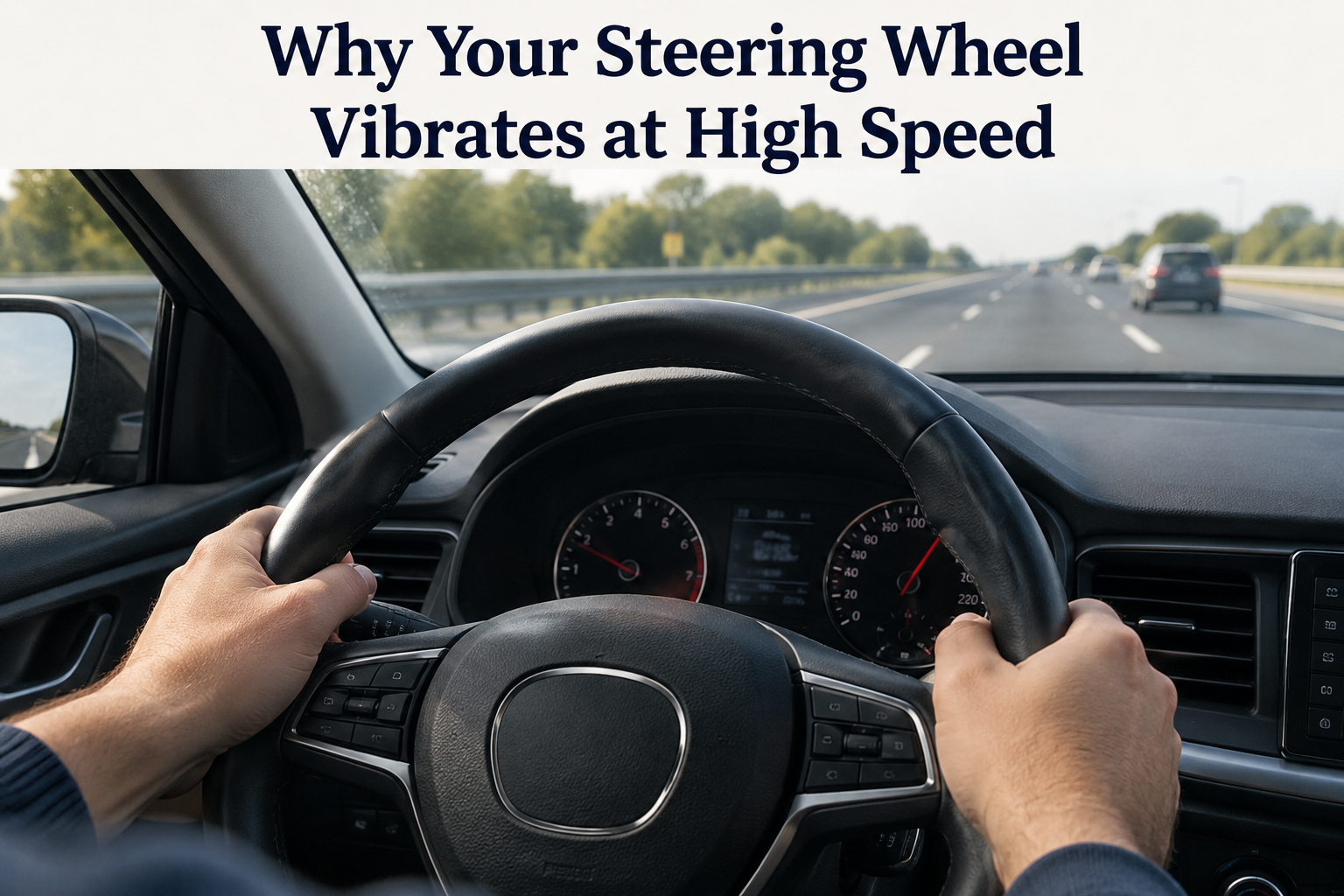
Driving at highway speed should feel smooth, stable, and comfortable. If your steering wheel starts vibrating when you reach 60, 70, or 80 miles per hour, it can quickly make driving uncomfortable. More importantly, steering wheel vibration at high speed can sometimes indicate a problem with your tires, wheels, suspension, steering system, or brakes.
Many drivers notice that their car feels completely normal around town, but the steering wheel begins shaking as soon as they reach highway speed. In some cases, the vibration appears at a certain speed and then becomes weaker when the vehicle goes faster. In other situations, the shaking continues until the driver slows down.
Understanding why your steering wheel vibrates at high speed can help you identify the problem before it becomes more serious. Some causes are simple and inexpensive to fix, while others require professional inspection.
This guide explains the most common reasons for steering wheel vibration, how to identify the source, and what you can do to keep your vehicle smooth and safe.
Why Does the Steering Wheel Vibrate at High Speed?
A steering wheel vibration usually occurs when something connected to the wheels is rotating unevenly or when parts of the suspension and steering system are unable to keep the wheels stable.
At low speeds, a small imbalance may not create enough force to be noticeable. As vehicle speed increases, however, the wheels rotate much faster. Even a small weight difference in a tire or wheel can create noticeable vibration.
This is why many steering problems become easier to detect during highway driving.
The most common causes include wheel imbalance, damaged tires, bent wheels, incorrect wheel alignment, worn suspension components, and brake problems.
1. Unbalanced Tires Are the Most Common Cause
One of the most common reasons a steering wheel vibrates at high speed is an unbalanced tire or wheel.
Tires and wheels are never perfectly equal in weight around their entire circumference. During wheel balancing, small weights are attached to the wheel to compensate for these differences.
If one of these weights falls off or the tire wears unevenly, the wheel can become unbalanced.
At low speeds, you may not notice anything unusual. Once the vehicle reaches around 50 to 70 miles per hour, the imbalance can create a noticeable vibration through the steering wheel.
You may also feel the vibration through the floor or seat.
A professional tire shop can usually check wheel balance quickly using a balancing machine.
If wheel imbalance is the problem, balancing the tires can often restore smooth driving.
2. Uneven Tire Wear
Uneven tire wear can also cause steering wheel vibration.
A tire should ideally wear evenly across the surface that contacts the road. However, poor wheel alignment, incorrect tire pressure, damaged suspension components, or delayed tire rotation can cause certain areas of the tire to wear faster than others.
For example, you may notice that the inside edge of a tire has less tread than the outside edge.
Another common problem is cupping. This creates small high and low areas across the tire tread.
When these uneven areas contact the road at high speed, they can produce vibration.
Check your tires regularly for unusual wear patterns.
If the tires are badly worn, balancing alone may not solve the problem. Tire replacement may be necessary.
3. Incorrect Wheel Alignment
Wheel alignment controls the direction and angle of your wheels.
If the wheels are not properly aligned, the tires may not roll straight along the road.
This can cause several symptoms, including uneven tire wear, steering wheel vibration, and a vehicle that pulls to one side.
Wheel alignment problems can occur after hitting a pothole, driving over a curb, or regularly traveling on rough roads.
Suspension repairs can also change wheel alignment.
You may need an alignment inspection if your steering wheel is not centered when driving straight or if your vehicle constantly moves toward one side of the road.
Correct wheel alignment improves vehicle stability and helps your tires wear evenly.
4. A Bent Wheel or Rim
A bent wheel can create strong vibration at highway speed.
Wheels can become damaged after hitting deep potholes, curbs, or road debris.
Sometimes the damage is easy to see. In other cases, the wheel may only be slightly bent and appear normal during a visual inspection.
When a damaged wheel rotates quickly, it may move slightly from side to side instead of spinning evenly.
This movement can travel through the suspension and steering system until you feel it in the steering wheel.
A tire technician can place the wheel on a balancing machine to check whether it is running straight.
Minor wheel damage may sometimes be repaired, but heavily damaged wheels usually need replacement.
5. Damaged or Defective Tires
Not every tire problem is caused by tread wear.
The internal structure of a tire can sometimes become damaged.
A tire contains several internal layers that help maintain its shape and strength. If one of these layers separates or becomes damaged, the tire may no longer remain perfectly round.
This condition can create vibration that becomes stronger as vehicle speed increases.
You might also notice a bulge on the sidewall or tread surface.
Never ignore visible tire damage.
A damaged tire can become dangerous, especially during high speed driving when heat and pressure increase.
If you suspect structural tire damage, have the tire inspected and replaced if necessary.
6. Incorrect Tire Pressure
Incorrect tire pressure can affect vehicle handling and ride quality.
When tire pressure is too low, the tire flexes more than it should. This can create uneven contact with the road.
Excessive tire pressure can also reduce the tire contact area and make the ride feel harder.
Pressure differences between the front tires may contribute to steering instability.
Check tire pressure when the tires are cold.
The correct pressure is normally listed on a label inside the driver door area or in the vehicle owner’s manual.
Do not automatically use the maximum pressure printed on the tire sidewall. That number represents the maximum tire pressure rating, not necessarily the recommended pressure for your vehicle.
7. Worn Suspension Components
Your suspension system does much more than improve comfort.
It also keeps the tires firmly connected to the road.
Components such as control arms, bushings, ball joints, and shock absorbers help maintain wheel stability.
As these components wear, the wheels can develop unwanted movement.
At higher speeds, this movement may produce vibration through the steering wheel.
Suspension problems may also create knocking or clunking sounds when driving over bumps.
You may notice unusual tire wear or loose steering as well.
Because suspension components affect vehicle control, worn parts should be inspected as soon as possible.
8. Worn Steering Components
The steering system contains several joints and connections that transfer movement from the steering wheel to the front wheels.
Tie rod ends are an important part of this system.
When tie rods become worn, the wheels may develop excessive movement.
This can cause unstable steering and vibration.
In some cases, the vehicle may feel as though it is moving slightly from side to side even when you are trying to drive straight.
A mechanic can check for excessive play by lifting the vehicle and inspecting the steering system.
Replacing worn steering components can improve both stability and steering response.
9. Wheel Bearing Problems
Wheel bearings allow the wheels to rotate smoothly while supporting the weight of the vehicle.
A worn wheel bearing can create vibration, noise, or looseness in the wheel.
One common sign of wheel bearing wear is a humming or grinding sound that becomes louder as speed increases.
The sound may change when turning left or right.
A severely worn bearing may also allow the wheel to move slightly.
This movement can affect steering stability.
Wheel bearing problems should not be ignored because the bearing plays an important role in supporting and controlling the wheel.
10. Brake Rotor Problems
Sometimes steering wheel vibration is only noticeable when braking.
If your steering wheel shakes while driving at high speed but becomes especially strong when you press the brake pedal, the brake rotors may be uneven.
Brake rotors are metal discs that rotate with the wheels.
Brake pads press against these discs to slow the vehicle.
Over time, excessive heat or uneven wear can create differences across the rotor surface.
When the brakes are applied, the brake pads may move slightly as they contact the uneven rotor.
This movement can travel through the suspension and steering system, creating vibration in the steering wheel.
If vibration occurs mainly during braking, ask a mechanic to inspect the brakes before focusing only on tire balance.
11. Loose Wheel Nuts
Loose wheel nuts are less common but much more serious.
The wheel nuts hold the wheel securely against the wheel hub.
If they are not tightened correctly, the wheel may develop movement while rotating.
This can produce vibration and unstable steering.
A loose wheel can become extremely dangerous if the problem is ignored.
If your steering wheel suddenly starts vibrating shortly after tire replacement, brake service, or wheel removal, stop driving and have the wheel nuts checked.
Wheel nuts should always be tightened according to the manufacturer’s recommended torque specification.
12. Mud or Dirt Inside the Wheels
Sometimes the cause of steering wheel vibration is surprisingly simple.
Mud, dirt, snow, or other material can collect inside a wheel.
If enough material collects on one side, it changes the balance of the wheel.
This can create the same symptoms as an incorrectly balanced tire.
The problem is more common after driving through muddy roads, deep snow, or construction areas.
Inspect the inside of the wheels and clean away any heavy buildup before assuming there is a major mechanical problem.
How Speed Helps Identify the Problem
The speed at which vibration appears can provide useful information.
If the vibration becomes noticeable between approximately 50 and 70 miles per hour, tire or wheel balance is often one of the first things worth checking.
If vibration increases steadily with speed, there may be a tire, wheel, bearing, or suspension problem.
If the vibration mostly occurs during braking, the brake system deserves closer inspection.
If vibration appears during acceleration, drivetrain components may also need to be examined.
The exact symptoms vary between vehicles, so professional inspection is still important when the cause is unclear.
Steering Wheel Vibration Versus Seat Vibration
Where you feel the vibration can sometimes help identify its location.
When the steering wheel shakes strongly, the problem is often connected to the front tires, front wheels, steering system, or front suspension.
If the vibration is stronger through the seat or floor, the rear wheels may be involved.
However, vibration can travel through the vehicle body, so this method does not provide a guaranteed diagnosis.
It is simply a helpful clue.
What Should You Check First?
If your steering wheel suddenly begins vibrating at highway speed, start with the easiest checks.
Inspect your tires for visible damage, uneven wear, and correct pressure.
Next, make sure there is no dirt or mud collected inside the wheels.
After that, consider having the wheels professionally balanced.
If the vibration continues, wheel alignment, suspension components, steering parts, wheel bearings, and brakes should be inspected.
A proper inspection can prevent unnecessary replacement of good parts.
Can You Drive With a Vibrating Steering Wheel?
A small vibration does not always mean that your vehicle is about to break down.
However, it should not be ignored.
The vibration may simply be caused by an unbalanced tire, but it could also indicate tire damage, worn suspension components, or loose wheel hardware.
Continuing to drive for a long time with severe vibration can also increase wear on tires and suspension parts.
If the shaking suddenly becomes strong or you notice unusual noises, poor steering control, or visible tire damage, avoid high speed driving until the vehicle has been inspected.
How Wheel Balancing Solves Vibration
Wheel balancing is one of the most common solutions for high speed vibration.
During the process, the wheel and tire assembly is mounted on a balancing machine.
The machine rotates the wheel and measures weight differences.
The technician then adds small balancing weights to specific locations on the wheel.
These weights allow the wheel to rotate more evenly.
Wheel balancing is especially useful after installing new tires or when vibration begins after several months of normal driving.
It is also a good idea to check wheel balance if you frequently drive on rough roads.
Wheel Balancing and Wheel Alignment Are Different
Drivers sometimes confuse wheel balancing with wheel alignment.
They solve different problems.
Wheel balancing corrects uneven weight distribution around the wheel and tire.
Wheel alignment adjusts the angles of the wheels so they point in the correct direction.
A vehicle may need balancing without needing alignment.
It may also need alignment even if the tires are perfectly balanced.
In some situations, both services may be required.
How to Prevent Steering Wheel Vibration
Regular maintenance can reduce the risk of steering wheel vibration.
Check tire pressure at least once a month and before long trips.
Rotate your tires according to the vehicle or tire manufacturer’s recommended schedule.
Inspect your tires for uneven tread wear, cracks, bulges, or other damage.
Have the wheels balanced when new tires are installed or when vibration develops.
Wheel alignment should also be checked after suspension repairs or strong impacts with potholes and curbs.
Drive carefully on damaged roads whenever possible.
A deep pothole can damage a tire, bend a wheel, or affect wheel alignment in a matter of seconds.
Why You Should Not Ignore Tire Condition
Your tires are the only parts of your vehicle that remain in direct contact with the road.
Small tire problems can therefore have a major effect on how the vehicle feels.
A tire that is slightly out of balance may only create an annoying vibration at first.
Over time, however, the vibration can contribute to uneven tread wear.
Once the tire develops an irregular wear pattern, balancing may no longer completely solve the problem.
Regular inspections can help identify these issues while they are still easy to correct.
When Should You Visit a Mechanic?
You should consider professional inspection if the vibration is severe, suddenly appears, continues after tire balancing, or is accompanied by unusual noises.
You should also have the vehicle inspected if the steering feels loose or unstable.
A mechanic can inspect the wheels, tires, suspension, steering system, bearings, and brakes to locate the source.
Modern repair shops also have equipment that can identify wheel and tire problems that may not be visible during a normal inspection.
Finding the exact cause is usually better than replacing parts based only on guesswork.
Frequently Asked Questions
Why does my steering wheel shake at 70 miles per hour?
One of the most common reasons is incorrect wheel balance. Uneven tire wear, damaged wheels, poor alignment, and worn suspension components can also cause vibration around highway speed.
Can poor alignment cause steering wheel vibration?
Yes. Incorrect alignment can cause uneven tire wear and steering instability. However, wheel imbalance is often a more common cause of vibration that appears only at certain speeds.
Why does my steering wheel shake only when braking?
If the vibration mainly occurs during braking, uneven brake rotor surfaces or other brake system problems may be responsible.
Can bad tires cause high speed vibration?
Yes. Uneven tread wear, internal tire damage, incorrect pressure, and structural problems can all cause vibration.
Will balancing tires fix steering wheel vibration?
It can if incorrect wheel balance is causing the problem. If the vibration comes from a damaged tire, bent wheel, suspension problem, or brake issue, balancing alone may not solve it.
Is steering wheel vibration dangerous?
It depends on the cause. Some problems are relatively minor, while others may affect vehicle control. Persistent or severe vibration should always be inspected.
Final Thoughts
Steering wheel vibration at high speed is a common problem, but it should never be treated as normal.
In many cases, the cause is something relatively simple, such as an unbalanced tire, incorrect tire pressure, or uneven tire wear. Other causes can include bent wheels, poor wheel alignment, worn steering components, suspension damage, wheel bearing problems, or uneven brake rotors.
Start by inspecting the tires and checking their pressure. If everything looks normal, professional wheel balancing is usually a sensible next step.
If the vibration remains, a complete inspection of the steering, suspension, wheels, tires, bearings, and brakes can help locate the exact cause.
A smooth steering wheel is more than a matter of comfort. It is also an important sign that your tires, wheels, and steering system are working properly.
Regular maintenance, correct tire pressure, wheel balancing, alignment checks, and careful driving can help prevent many vibration problems before they develop.
Paying attention to small changes in how your vehicle feels can save money on repairs and help keep every highway journey safer, smoother, and more comfortable.