Owning a car comes with more responsibility than simply filling the fuel tank and driving from one place to another. A vehicle contains thousands of components that work together every time the engine starts. Some parts require regular inspection, while others need cleaning, lubrication, adjustment, or replacement after a certain period.
Many drivers understand that car maintenance is important, but mistakes are still common. Sometimes a driver delays an oil change because the car appears to be running normally. Someone else may ignore a warning light because there is no obvious problem. Small habits like these can gradually increase wear and eventually lead to expensive repairs.
Learning about common car maintenance mistakes drivers should avoid can help you protect your vehicle, improve reliability, and reduce unnecessary expenses. Good maintenance is not about constantly spending money on a car. It is about taking care of important components at the right time.
Here are some of the most common mistakes drivers make and how they can be avoided.
1. Delaying Engine Oil Changes
One of the biggest car maintenance mistakes is keeping the same engine oil for too long.
Engine oil performs several important jobs. It lubricates moving engine components, reduces friction, helps control heat, and carries contaminants toward the oil filter. As oil becomes older, its ability to perform these functions gradually decreases.
Some drivers follow a fixed mileage rule for every vehicle. However, the correct oil change interval can vary depending on the car, engine, oil specification, driving conditions, and manufacturer recommendations.
Frequent short trips, heavy traffic, dusty environments, extreme temperatures, and demanding driving conditions may also affect maintenance requirements.
The safest approach is to follow the service interval listed in your vehicle owner’s manual and use the recommended oil specification.
Ignoring oil changes may contribute to sludge formation, increased engine wear, reduced performance, and potentially serious engine damage.
2. Ignoring Tire Pressure
Tires are the only parts of your car that remain in direct contact with the road, yet tire pressure is often forgotten.
Driving with incorrect tire pressure can affect handling, tire wear, comfort, and fuel consumption. An underinflated tire creates more rolling resistance and may generate additional heat. An overinflated tire may reduce ride comfort and cause uneven wear.
A visual inspection alone is not always enough. A tire can appear normal while still being below the recommended pressure.
Use a reliable tire pressure gauge and check the tires when they are cold. The correct pressure is normally listed on a label inside the driver’s door area or in the owner’s manual.
Do not automatically use the maximum pressure printed on the tire sidewall as your normal operating pressure. Follow the vehicle manufacturer’s recommendation instead.
3. Forgetting About Tire Rotation
Checking tire pressure is important, but it is only one part of tire maintenance.
Front and rear tires may wear at different rates because they perform different jobs. Steering, braking, acceleration, vehicle weight distribution, and drivetrain layout can all influence tire wear.
Regular tire rotation, when recommended for your vehicle and tire setup, can help promote more even wear.
Drivers sometimes wait until a tire becomes visibly worn before thinking about rotation. By that point, uneven wear may already be significant.
Follow the rotation pattern and interval recommended by your vehicle or tire manufacturer. Some vehicles with different front and rear tire sizes may have special requirements and cannot use a traditional rotation pattern.
4. Ignoring Wheel Alignment Problems
If your car pulls toward one side, the steering wheel is not centered, or your tires are wearing unevenly, the wheel alignment may need attention.
Continuing to drive with an alignment problem can shorten tire life and affect vehicle handling.
Potholes, rough roads, curb impacts, suspension wear, and other factors can disturb wheel alignment.
Drivers often make the mistake of replacing worn tires without investigating why the tires wore unevenly in the first place. New tires may eventually develop the same problem if the underlying alignment or suspension issue remains.
Have the vehicle inspected if you notice unusual tire wear or changes in steering behavior.
5. Driving With Warning Lights On
Modern vehicles contain sensors and electronic monitoring systems designed to alert the driver when something requires attention.
A warning light should not automatically cause panic, but it should not be ignored either.
Different lights have different meanings and levels of urgency. A maintenance reminder is very different from an oil pressure warning, overheating warning, brake warning, or charging system warning.
One common mistake is assuming that a warning light can be ignored as long as the vehicle still drives normally.
Some problems develop before the driver can hear, feel, or see obvious symptoms.
Check your owner’s manual to understand the meaning of the warning. If a serious warning appears, follow the manufacturer’s instructions and have the vehicle inspected promptly.
6. Neglecting the Engine Air Filter
An engine needs clean air for proper operation. The air filter helps prevent dust and debris from entering the engine.
Over time, the filter collects contaminants and may become restricted.
Drivers sometimes forget about the air filter because it does not require attention as frequently as fuel or engine oil. However, vehicles regularly driven in dusty environments may need filter inspection more often.
Do not replace the filter based purely on appearance unless the manufacturer provides an inspection method. Follow the recommended maintenance schedule and adjust inspection frequency when operating in unusually dusty conditions.
A clean and correctly installed air filter helps the engine receive the air it needs while protecting internal components from contamination.
7. Forgetting About the Cabin Air Filter
The cabin air filter is another commonly overlooked maintenance item.
This filter helps remove dust, pollen, and other particles from air entering the passenger compartment through the heating and air conditioning system.
As the filter becomes dirty, airflow through the vents may decrease. In some cases, drivers notice weak air conditioning performance and immediately assume that the AC system has a major mechanical problem.
Sometimes the cause can be much simpler.
Checking and replacing the cabin filter according to the manufacturer’s recommendations can help maintain good airflow and a cleaner cabin environment.
8. Ignoring Fluid Levels
A car relies on several different fluids, not just engine oil.
Depending on the vehicle, these may include coolant, brake fluid, transmission fluid, power steering fluid, and windshield washer fluid.
One mistake is waiting for a dashboard warning before checking anything.
Fluid inspection can sometimes reveal a problem before it becomes severe. For example, an unexplained drop in coolant level could indicate a leak that deserves investigation.
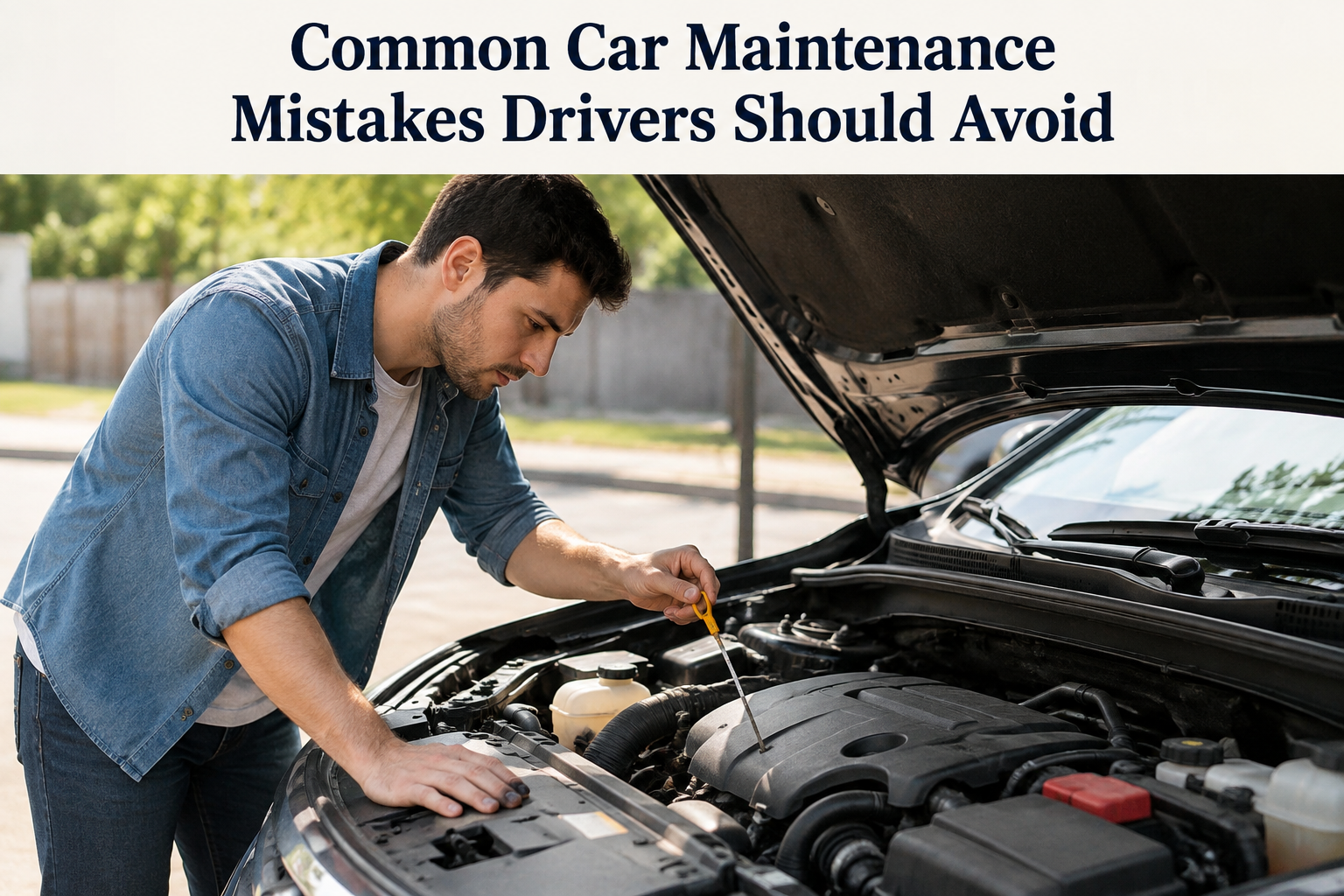
Always check fluids using the procedure described in the owner’s manual. Some fluids must be checked with the engine cold, while certain transmission systems have specific temperature and operating requirements.
Never open a pressurized cooling system when the engine is hot.
9. Using the Wrong Fluids
Not all automotive fluids are interchangeable.
Using an incorrect engine oil viscosity, coolant specification, transmission fluid, or brake fluid can cause problems.
Modern vehicles are designed around specific fluid standards. Two products may look similar while having very different chemical or performance characteristics.
Avoid choosing a fluid only because the container says it is suitable for cars.
Before adding or replacing any fluid, check the specification listed in the owner’s manual. If you are uncertain, consult a qualified technician.
Using the correct product is usually much cheaper than repairing damage caused by the wrong one.
10. Neglecting the Cooling System
An engine produces a tremendous amount of heat during normal operation. The cooling system keeps operating temperatures under control.
Coolant does more than simply prevent overheating. The correct coolant mixture can also provide freeze protection and help protect cooling system components against corrosion.
Some drivers keep topping up the system with ordinary water without considering the manufacturer’s coolant requirements. While water may be used in specific emergency circumstances, routinely replacing proper coolant with water can reduce the protection provided by the cooling system.
Coolant condition and replacement intervals vary between vehicles. Follow the manufacturer’s recommendations instead of relying on a universal schedule.
If your car repeatedly loses coolant, find the cause rather than continuously topping it up.
11. Ignoring Brake Problems
Brake maintenance directly affects safety.
Drivers should pay attention to unusual brake noises, vibrations, changes in pedal feel, increased stopping distance, or warning lights.
A common mistake is waiting until brake pads are completely worn before replacing them. Excessive wear can damage other braking components and increase repair costs.
Brake inspections are especially important if the vehicle is frequently driven in heavy traffic, mountainous areas, or conditions that require repeated braking.
If braking performance changes noticeably, have the system professionally inspected.
12. Forgetting About the Battery
A car battery often receives attention only when the engine refuses to start.
Heat, cold, age, charging system problems, loose connections, and electrical loads can all influence battery performance.
Drivers can reduce unexpected battery problems by occasionally inspecting the terminals for corrosion and ensuring the connections are secure.
If starting becomes slower than usual, especially after the battery has been in service for several years, testing the battery and charging system may be worthwhile.
Battery life varies considerably according to climate, vehicle use, battery type, and electrical demands, so there is no single replacement age that applies to every car.
13. Ignoring Small Leaks
A small spot under a parked car may seem harmless, but it can provide an early warning of a developing problem.
Vehicles can leak engine oil, coolant, transmission fluid, brake fluid, or other liquids.
Not every liquid under a car indicates a fault. For example, clear water dripping after using the air conditioner can be normal condensation.
However, colored, oily, unusually smelling, or persistent fluid leaks should be investigated.
Finding the source early can prevent a minor seal, hose, or connection problem from becoming a much larger repair.
14. Using Cheap Parts Without Checking Quality
Saving money on maintenance is reasonable, but choosing the cheapest available component can sometimes cost more over the long term.
Filters, brake components, spark plugs, belts, batteries, sensors, and other replacement parts can vary greatly in quality.
This does not mean that you must always purchase the most expensive option or buy every part directly from a dealership. Reputable aftermarket manufacturers can produce excellent components.
The important point is to choose parts that meet the correct specifications and come from trustworthy manufacturers and sellers.
Poor quality parts may wear prematurely or perform inconsistently.
15. Ignoring Strange Sounds
Cars communicate problems in many ways, and unusual noises are one of them.
Squealing, grinding, knocking, clicking, rattling, humming, or clunking noises can indicate different mechanical issues.
Some drivers simply increase the music volume and continue driving.
That can be an expensive mistake.
A new sound does not always mean that a major failure is about to occur, but identifying its cause early is sensible.
Pay attention to when the noise occurs. Does it happen while braking, turning, accelerating, starting the engine, or driving over bumps? This information can help a technician diagnose the problem.
16. Driving Aggressively All the Time
Maintenance is not limited to replacing parts. Driving habits also influence how quickly components wear.
Frequent hard acceleration, sudden braking, aggressive cornering, and unnecessary high engine speeds can place additional stress on tires, brakes, drivetrain components, and the engine.
Smooth driving does not mean driving excessively slowly. It means using the controls progressively and anticipating traffic conditions.
Gentle acceleration and planned braking can reduce unnecessary wear while also improving comfort and potentially reducing fuel consumption.
17. Ignoring Suspension Problems
The suspension system helps maintain tire contact with the road and contributes to steering stability and ride comfort.
Worn shocks, struts, bushings, ball joints, or other suspension components may gradually change the way a vehicle handles.
Because the change can happen slowly, drivers sometimes become accustomed to it.
Warning signs can include excessive bouncing, knocking over bumps, uneven tire wear, steering instability, or unusual vehicle movement during braking.
Suspension problems should be inspected rather than treated as normal signs of an aging car.
18. Washing the Car Incorrectly
Car maintenance also includes protecting the exterior.
Using dirty cloths, harsh household detergents, or abrasive materials can damage the paint finish. Automatic washing methods can also vary greatly in quality.
Use automotive cleaning products designed for painted surfaces. Keep wash materials clean and avoid rubbing dry dust aggressively across the paint.
Whenever possible, wash the vehicle in a shaded area and dry it using clean, paint safe materials.
Regular cleaning can also remove substances such as bird droppings, tree residue, road grime, and other contaminants before they remain on the surface for extended periods.
19. Forgetting Windshield Wipers
Wiper blades are inexpensive compared with most car components, but they are extremely important during rain.
Worn blades can leave streaks, create noise, or reduce visibility.
Drivers often continue using damaged blades because they still move across the windshield.
Inspect them periodically for cracks, splitting, or poor wiping performance. Replace them when they can no longer clear the glass effectively.
Also keep the windshield washer reservoir filled with an appropriate washer fluid.
Clear visibility is an essential part of safe driving.
20. Skipping Scheduled Maintenance
Perhaps the biggest mistake of all is maintaining a vehicle only after something goes wrong.
Preventive maintenance is designed to reduce this risk.
Your owner’s manual normally contains a maintenance schedule covering important items such as engine oil, filters, spark plugs, fluids, belts, and inspections.
The exact schedule varies significantly between vehicles.
Instead of following random advice online about when every component should be replaced, use the manufacturer’s schedule as your starting point.
Keeping basic service records is also useful. Write down the date, mileage, and maintenance performed. This makes it easier to know what has already been completed and what may be due next.
Why Preventive Car Maintenance Matters
Many major automotive problems begin as small issues.
A slow fluid leak, slightly underinflated tire, worn brake pad, weak battery, or unusual vibration may initially seem unimportant. When these warning signs are repeatedly ignored, the problem can become more expensive and sometimes more dangerous.
Preventive car maintenance allows drivers to deal with issues earlier.
It can also improve reliability. A well maintained vehicle is less likely to surprise its owner with preventable breakdowns.
Maintenance can support resale value as well. A documented service history shows future buyers that the vehicle has received regular care.
A Simple Car Maintenance Routine
You do not need to be a professional mechanic to take better care of your vehicle.
Develop a simple routine.
Check tire pressure regularly and inspect the tires for visible damage. Watch fluid levels according to the procedures in your owner’s manual. Pay attention to warning lights, unusual noises, vibrations, smells, and changes in handling.
Keep track of your mileage and scheduled services.
Before a long journey, spend a few minutes checking the tires, lights, windshield washer fluid, and obvious fluid levels. If a major service is approaching, consider completing it before the trip rather than waiting until afterward.
Most importantly, do not ignore a developing problem simply because the car is still moving.
Final Thoughts
Understanding the common car maintenance mistakes drivers should avoid can save money, protect important vehicle components, and make everyday driving more dependable.
Most maintenance mistakes are surprisingly simple. Drivers delay oil changes, forget tire pressure, ignore warning lights, overlook fluid levels, use incorrect products, or wait too long before investigating unusual noises.
The solution is not complicated.
Follow the maintenance schedule provided by your vehicle manufacturer, use the correct fluids and parts, inspect basic components regularly, and respond to warning signs early.
Every vehicle eventually needs repairs because mechanical components naturally wear with time and use. Good maintenance cannot prevent every problem, but it can reduce unnecessary wear and help small issues get discovered before they become larger ones.
Treat maintenance as part of owning a car rather than something that begins only when the vehicle breaks down. A few minutes of attention today can prevent hours of inconvenience later and help keep your car reliable for many years.