A long road trip can be one of the most enjoyable ways to travel. You get the freedom to stop where you want, explore new places, enjoy different landscapes, and spend quality time with family or friends. However, the success of a road trip depends heavily on how well your car is prepared before you leave.
Many drivers focus on packing clothes, food, hotel bookings, and travel plans but forget that the vehicle itself is the most important part of the journey. A car that performs perfectly during short city drives can still develop problems during several hours of continuous highway driving.
Proper car preparation can reduce the risk of breakdowns, improve fuel efficiency, increase comfort, and make the entire journey safer.
This guide explains how to prepare your car for a long road trip using simple checks that almost every driver can understand.
Why Car Preparation Is Important Before a Long Road Trip
Long distance driving places more stress on a vehicle than normal daily driving.
During a road trip, your engine may operate continuously for several hours. Tires become warmer. The cooling system works harder. The air conditioning system may remain active for long periods, especially during summer.
Small problems that are barely noticeable during short trips can become serious problems on the highway.
For example, a slightly weak battery may start your car every morning near your home but fail after several hours of travel. A tire with low pressure may seem normal in the city but overheat during extended highway driving.
Preparing your car before the journey allows you to identify these issues early.
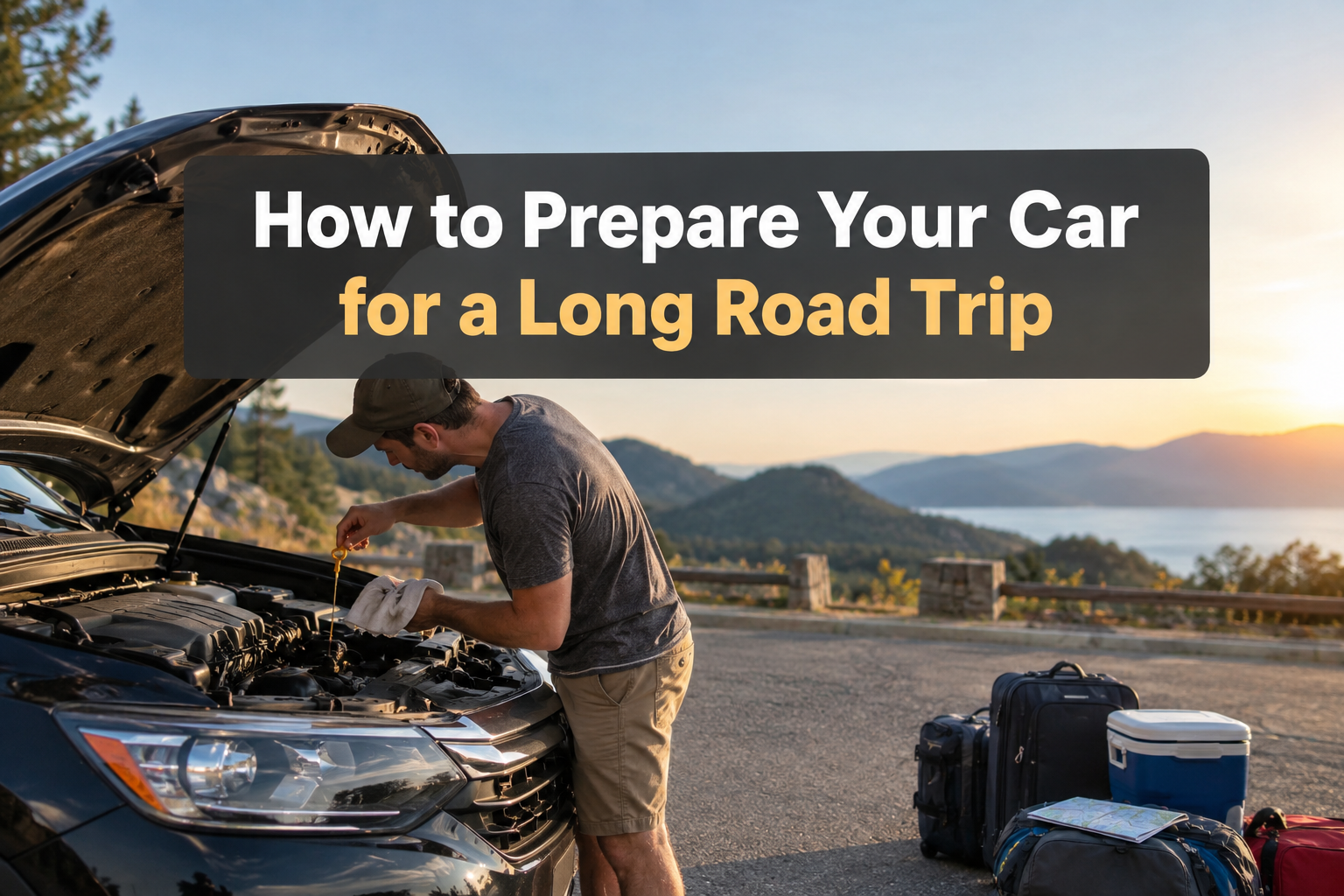
Check Your Engine Oil
Engine oil is one of the most important fluids in your vehicle.
It lubricates moving engine components and helps reduce friction and heat. Driving long distances with insufficient or badly degraded oil may increase engine wear.
Before starting your road trip, park your vehicle on a level surface and allow the engine to cool.
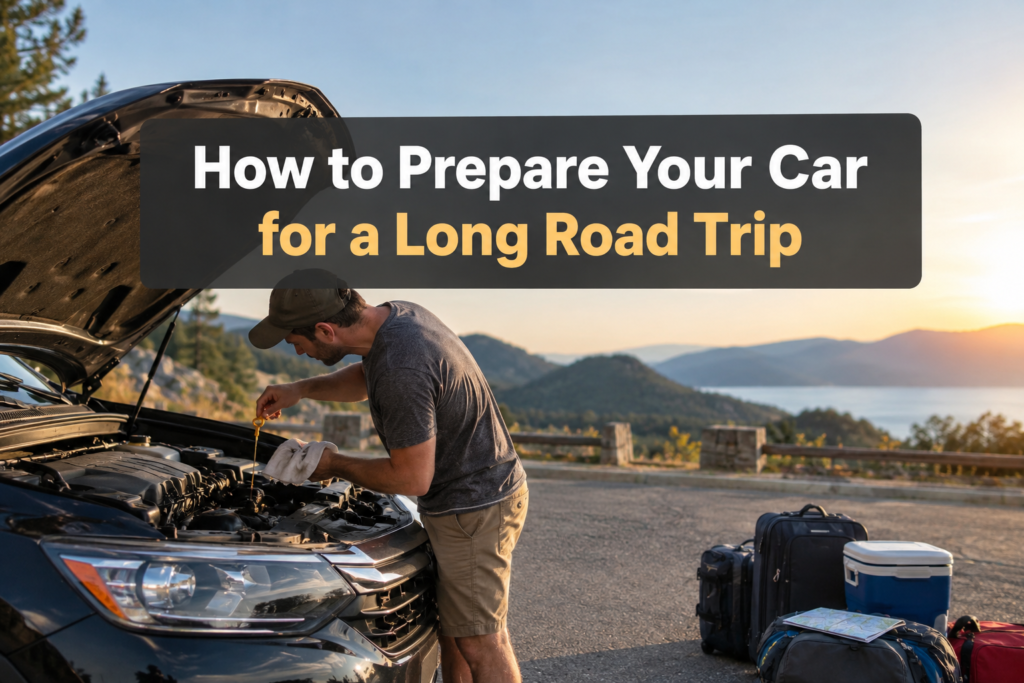
Remove the engine oil dipstick, clean it with a cloth, insert it again, and then remove it once more.
The oil level should normally remain between the minimum and maximum markings.
Also look at the condition of the oil.
Fresh engine oil is usually amber or light brown. Oil naturally becomes darker as it is used, so dark oil does not always mean something is wrong.
However, if the oil appears extremely dirty, thick, or overdue for replacement, consider changing it before the trip.
Follow the oil change interval recommended in your vehicle owner’s manual.
Inspect the Coolant System
An overheating engine can quickly ruin a road trip.
Your vehicle’s cooling system controls engine temperature by circulating coolant through the engine and radiator.
Before traveling, check the coolant level when the engine is completely cool.
Never open a hot radiator cap because pressurized hot coolant can cause serious burns.
Most modern vehicles have a transparent coolant reservoir that allows you to see the fluid level easily.
The coolant should normally remain between the minimum and maximum marks.
If the coolant level frequently drops, there may be a leak somewhere in the cooling system.
Look underneath the vehicle and around radiator hoses for signs of leaking fluid.
If you notice a coolant leak, have it inspected before starting a long journey.
Check Your Tires Carefully
Tires are one of the most important safety components of your car.
They affect braking, handling, fuel efficiency, ride quality, and overall road safety.
Before your road trip, inspect all four tires carefully.
Check the tire pressure when the tires are cold. Use the recommended pressure listed in your vehicle owner’s manual or on the tire information label usually located inside the driver’s door area.
Do not simply use the maximum pressure printed on the tire sidewall.
Proper tire pressure improves fuel economy and helps prevent excessive tire heat.
Underinflated tires can generate extra heat during highway driving, while overinflated tires may reduce ride comfort and road grip.
Inspect Tire Tread
Tire tread provides grip between your vehicle and the road.
This becomes especially important during rain or emergency braking.
Look closely at the tread depth on each tire.
Many tires contain tread wear indicators inside the grooves. When the tread becomes level with these indicators, replacement may be necessary.
You should also inspect the tires for cracks, cuts, bulges, or unusual wear.
Uneven tread wear may indicate incorrect wheel alignment, improper tire pressure, or suspension problems.
Any tire with serious damage should be replaced before the road trip.
Do Not Forget the Spare Tire
A spare tire is easy to ignore because it normally remains hidden in the trunk.
Unfortunately, many drivers only discover that their spare tire is flat when they actually need it.
Check the spare tire pressure before traveling.
Make sure the jack, wheel wrench, and any special wheel lock key are also inside the vehicle.
If your car uses a tire repair kit instead of a spare tire, check whether the sealant is still within its expiration date.
Knowing how your emergency tire equipment works can save valuable time if you experience a flat tire far from home.
Inspect Your Car Battery
Battery problems are among the most common reasons vehicles fail to start.
Before a long road trip, inspect your battery terminals.
They should be clean and securely connected.
White or green corrosion around the battery terminals may interfere with electrical connections.
If the battery is several years old or the engine has recently been slow to start, consider having the battery tested.
Many automotive workshops and battery stores can perform a battery test quickly.
A healthy battery is especially important if you will be traveling through remote areas where roadside assistance may not be easily available.
Check the Brakes
Your braking system should always be in good condition, but it becomes even more important during long journeys.
Listen carefully when you apply the brakes.
Grinding, squealing, vibration, or unusual noises may indicate worn brake pads or other problems.
Also pay attention to the brake pedal.
If the pedal feels unusually soft or requires more pressure than normal, have the braking system inspected.
Check the brake fluid level as well.
If you are unsure about the condition of your brakes, a professional inspection before your road trip is a good idea.
Inspect the Windshield Wipers
Clear visibility is essential during highway driving.
Windshield wipers often appear fine until heavy rain suddenly begins.
Run your wipers before your trip and check whether they clean the glass smoothly.
Replace blades that leave streaks, make noise, or skip across the windshield.
Wiper blades are relatively inexpensive but can make a major difference during bad weather.
Fill the Windshield Washer Fluid
Windshields become dirty quickly during long drives.
Dust, insects, road spray, and mud can reduce visibility.
Make sure the windshield washer reservoir is full before leaving.
If your route includes dusty highways or rural roads, carrying additional washer fluid can also be useful.
Check All Exterior Lights
Your car lights help you see and help other drivers see you.
Walk around the vehicle and check the headlights, brake lights, reverse lights, parking lights, and turn signals.
Ask another person to help you check the brake lights while you press the brake pedal.
Replace any failed bulb before traveling.
Proper lighting becomes especially important when driving at night, during rain, or through fog.
Test the Air Conditioning System
A comfortable cabin helps reduce driver fatigue.
If you are planning a summer road trip, test the air conditioning system before departure.
Turn the system on and check whether it produces cold air within a reasonable amount of time.
Weak cooling may indicate low refrigerant, a clogged cabin filter, or another air conditioning problem.
It is better to repair the system before the journey instead of discovering the problem during hours of hot highway driving.
Check the Cabin Air Filter
The cabin air filter cleans air entering the passenger compartment.
A dirty filter can reduce airflow from the air conditioning system.
It may also allow dust and unpleasant smells to enter the cabin.
Check the replacement schedule in your vehicle manual.
If the filter has not been changed for a long time, replacing it before a road trip can improve comfort.
Inspect the Engine Air Filter
Your engine also requires clean air.
The engine air filter prevents dust and debris from entering the engine.
A heavily clogged filter can restrict airflow and may affect engine performance.
Inspect the air filter before traveling, especially if you regularly drive in dusty environments.
Replace it if it is extremely dirty.
Check Transmission Fluid If Applicable
Transmission fluid lubricates and cools internal transmission components.
Some vehicles allow drivers to check the fluid using a dipstick, while others have sealed transmission systems that require professional servicing.
Check your vehicle manual to understand the correct procedure.
If your transmission has been shifting roughly or behaving unusually, have it inspected before taking a long road trip.
Check Power Steering Fluid
Some vehicles use hydraulic power steering systems that require fluid.
If your vehicle has a power steering reservoir, check the level according to the manufacturer’s instructions.
Low power steering fluid may cause steering noise or increased steering effort.
Many newer vehicles use electric power steering and therefore do not require hydraulic fluid.
Inspect Belts and Hoses
Rubber belts and hoses become weaker as they age.
Look under the hood for visible cracks, fraying, swelling, or fluid leaks.
A broken belt or failed coolant hose can leave your vehicle stranded.
If a belt looks badly worn or a hose feels unusually soft or damaged, replacement before the trip may prevent a roadside breakdown.
Check for Fluid Leaks
After parking your vehicle overnight, look underneath it.
Small water drops from the air conditioning system are usually normal.
However, colored or oily fluid may indicate a leak.
Engine oil is usually brown or black.
Coolant may be green, pink, orange, or another color depending on the type.
Transmission fluid may appear reddish or brown.
Brake fluid is usually clear to light brown.
Any significant leak should be inspected before traveling.
Make Sure Your Fuel System Is Ready
Try not to begin a long journey with very little fuel.
Starting with a full tank gives you more flexibility, especially if your route passes through areas with limited fuel stations.
It is also helpful to identify fuel stops before entering long remote sections of highway.
Avoid repeatedly driving until the fuel tank is nearly empty because the fuel pump often depends on fuel for cooling.
Listen for Unusual Sounds
Your car often gives warning signs before a mechanical problem becomes serious.
Before your trip, drive the vehicle and listen carefully.
Pay attention to knocking sounds, rattles, wheel noises, brake squeaks, suspension sounds, or unusual engine noises.
If the vehicle suddenly feels different from normal, investigate the cause before beginning a long journey.
Pay Attention to Dashboard Warning Lights
Never ignore important dashboard warning lights before a road trip.
If the check engine light, oil pressure warning, battery warning, temperature warning, or brake warning appears, determine the cause.
Some warning lights indicate minor problems, while others may indicate serious mechanical issues.
A diagnostic scan can often identify why the check engine light is active.
Clean Your Windshield and Mirrors
Good visibility reduces driving stress.
Clean the inside and outside of your windshield before leaving.
A film of dust or grease inside the windshield can create glare at night.
Also clean the side mirrors and rear window.
If your vehicle has cameras or parking sensors, clean those areas too.
Organize the Interior of Your Car
A clean and organized interior makes long journeys more comfortable.
Remove unnecessary items before loading your luggage.
Loose objects can move around the cabin during sudden braking.
Keep frequently used items within easy reach but avoid placing objects where they can interfere with the driver.
Water bottles, charging cables, tissues, sunglasses, and travel documents should be stored securely.
Avoid Overloading the Vehicle
Every vehicle has a maximum weight capacity.
Carrying excessive luggage may affect braking, handling, tire performance, and fuel efficiency.
Place heavier luggage low and securely inside the trunk.
Avoid placing very heavy objects on one side of the vehicle.
If you use a roof rack or roof box, follow the manufacturer’s weight limits carefully.
Extra weight and roof cargo can also increase fuel consumption.
Pack an Emergency Kit
Even a well maintained vehicle can experience unexpected problems.
A basic road trip emergency kit can make difficult situations easier to manage.
Useful items include a flashlight, first aid kit, reflective warning triangle, basic tools, tire pressure gauge, jumper cables, phone charger, drinking water, and emergency contact information.
If you are traveling during winter, you may also want warm clothing, blankets, gloves, and additional emergency supplies.
Carry Important Vehicle Documents
Before leaving, make sure you have the necessary documents for your vehicle and journey.
These may include your driving license, vehicle registration, insurance information, roadside assistance details, and any documents required for your destination.
Keeping digital copies on your phone can provide additional convenience, but physical copies may still be useful in some situations.
Prepare Your Navigation Before Leaving
Modern navigation apps make long distance travel much easier.
Enter your destination before driving and review the route.
Check for alternative routes, fuel stations, rest areas, toll roads, and expected travel time.
Downloading offline maps can also be useful if mobile data coverage becomes weak.
Avoid adjusting your phone while driving. Use a secure phone mount or ask a passenger to handle navigation when possible.
Plan Regular Rest Stops
Car preparation is important, but driver preparation matters just as much.
Driving for many hours without rest can reduce concentration and reaction time.
Plan regular breaks during your journey.
Use these stops to stretch, drink water, eat light food, and rest your eyes.
If you feel sleepy, stop in a safe location instead of trying to continue.
No destination is worth the risk of driving while extremely tired.
Get Enough Sleep Before the Trip
Try to sleep properly the night before a long journey.
Starting a road trip already tired can make driving more difficult.
Fatigue can affect attention, judgment, and reaction time.
If possible, begin your journey when you normally feel awake and alert.
Some people prefer early morning travel because roads may be quieter and temperatures may be cooler.
Choose a departure time that works best for your normal sleep schedule.
Check Weather Conditions
Weather can affect road safety dramatically.
Before leaving, check the weather forecast for your entire route, not just your starting point and destination.
You may encounter rain, strong winds, fog, extreme heat, or other conditions along the way.
Knowing what to expect helps you prepare the vehicle and adjust your travel schedule.
Consider a Professional Inspection
If your car is older, has high mileage, or has not been serviced recently, consider having a mechanic inspect it before your trip.
A professional inspection may identify problems that are difficult to notice at home.
The mechanic can check the brakes, suspension, battery, cooling system, tires, belts, hoses, and fluid levels.
This can provide additional confidence before a long journey.
Take a Short Test Drive
A few days before your trip, take the car for a proper drive.
Do not wait until the morning of departure to discover a problem.
Drive at different speeds and pay attention to braking, steering, acceleration, temperature, and unusual sounds.
If something does not feel normal, you still have time to investigate it.
Final Road Trip Car Checklist
Before leaving your home, quickly review the essential items.
Make sure the engine oil is at the correct level.
Check coolant and other important fluids.
Confirm that tire pressure is correct.
Inspect the spare tire.
Check the battery.
Test the brakes.
Confirm that all lights are working.
Check the windshield wipers.
Fill the washer fluid.
Make sure the air conditioning system works properly.
Pack your emergency kit.
Carry important vehicle documents.
Confirm your route.
Start with enough fuel.
These simple checks can prevent many common road trip problems.
Final Thoughts
Learning how to prepare your car for a long road trip is not difficult, but it requires a little planning.
The goal is not to make your vehicle perfect. The goal is to identify obvious problems before they become emergencies on the road.
Start your preparation several days before departure whenever possible.
Check your tires, engine oil, coolant, battery, brakes, lights, wipers, and important fluids. Inspect the vehicle for leaks and unusual sounds. Prepare your emergency equipment and organize your luggage properly.
A well prepared vehicle gives you more confidence and allows you to focus on enjoying the journey.
Road trips should be remembered for beautiful places, enjoyable conversations, and new experiences, not for preventable roadside breakdowns.
Taking a little time to prepare your car before leaving can make your trip safer, smoother, and far more enjoyable.