Tires are one of the most important safety components of any vehicle. They are the only parts of your car that remain in direct contact with the road while you drive. Every time you accelerate, brake, turn, or travel over a wet road, your tires play a major role in keeping the vehicle stable and under control.
Despite their importance, tires are often overlooked during routine car maintenance. Many drivers pay close attention to engine oil, coolant, brakes, and batteries but only think about their tires when one becomes flat or visibly damaged. This approach can lead to unnecessary expenses and, more importantly, safety problems.
Proper tire maintenance does not require advanced mechanical knowledge. Most basic checks can be performed at home within a few minutes. Regular attention can help your tires last longer, improve fuel efficiency, provide better handling, and reduce the risk of unexpected tire failure.
This tire maintenance guide explains the essential steps every driver should know for safer and more comfortable driving.
Why Tire Maintenance Is Important
A healthy tire provides grip between your vehicle and the road. This grip becomes especially important during braking, cornering, and driving in wet conditions.
As tires wear down, their ability to maintain good contact with the road can decrease. Incorrect tire pressure can also affect handling and braking performance.
Properly maintained tires can provide several benefits.
They can improve road grip, support predictable handling, help maintain fuel efficiency, and provide a smoother ride. Good maintenance may also extend tire life and reduce the chances of premature replacement.
The most important benefit, however, is safety.
A few minutes spent checking your tires regularly can help you identify problems before they become serious.
Check Tire Pressure Regularly
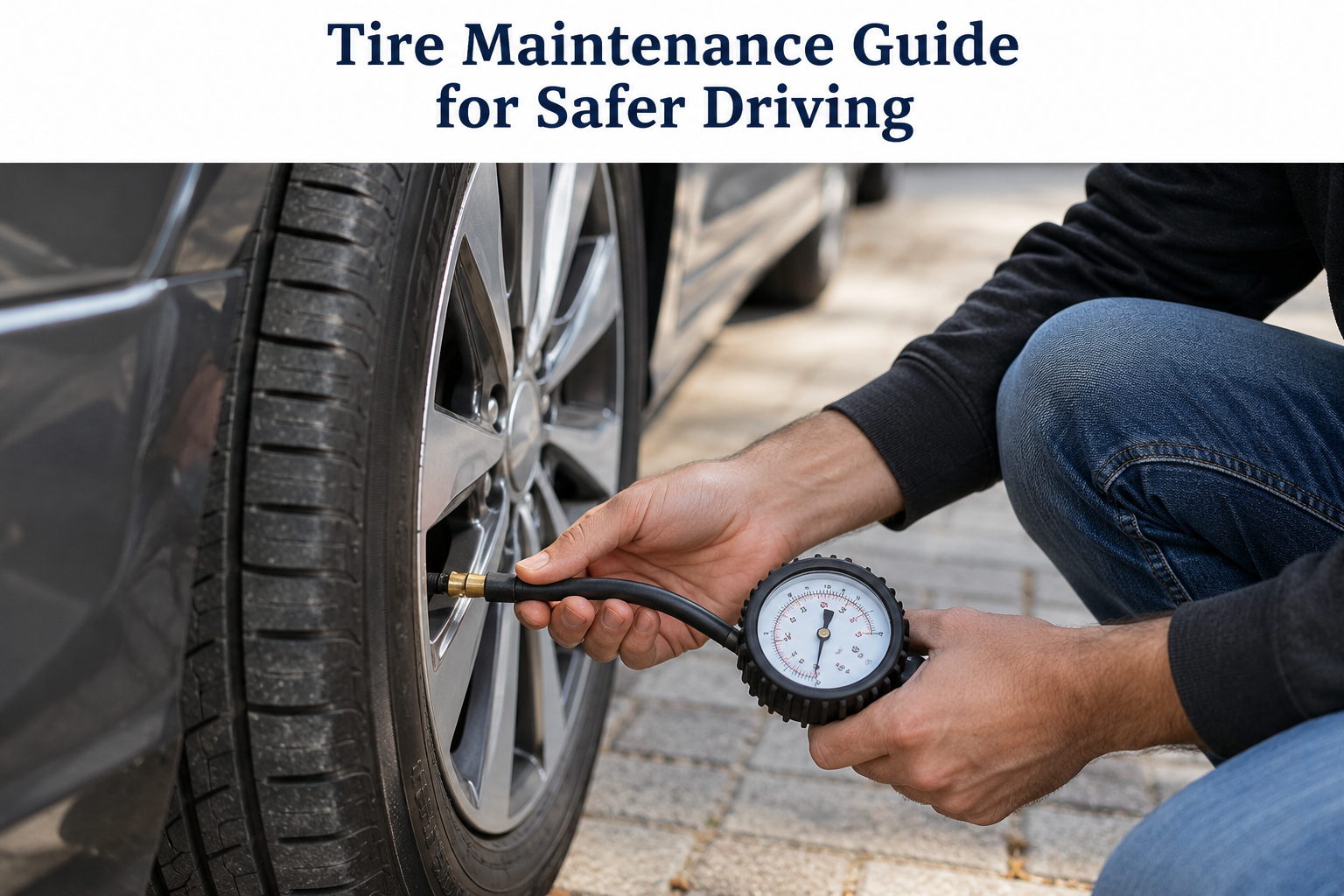
Maintaining correct tire pressure is one of the simplest and most important parts of tire care.
A tire gradually loses air over time. Changes in temperature can also affect tire pressure. For these reasons, a tire that looked perfectly normal a few weeks ago may no longer have the recommended pressure.
Underinflated tires can create additional rolling resistance and heat. They may also wear more quickly around certain parts of the tread.
Overinflated tires can also cause problems. Too much pressure may reduce the tire’s ability to absorb bumps comfortably and can contribute to uneven tread wear.
A good habit is to check tire pressure at least once a month and before long road trips.
Find the Correct Tire Pressure
Do not assume that the number printed on the tire sidewall represents the ideal operating pressure for your vehicle.
The recommended tire pressure is usually provided by the vehicle manufacturer. You can often find this information on a label inside the driver’s door area or in the owner’s manual.
The recommended pressure may be different for the front and rear tires.
Use these manufacturer specifications whenever possible.
A reliable tire pressure gauge is inexpensive and useful to keep in your car or garage.
Check Pressure When Tires Are Cold
For a more accurate reading, check tire pressure when the tires are cold.
Driving generates heat, and heat can increase tire pressure. If you measure pressure immediately after a long drive, the reading may be higher than the normal cold pressure.
Ideally, check your tires before driving in the morning or after the vehicle has been parked long enough for the tires to cool.
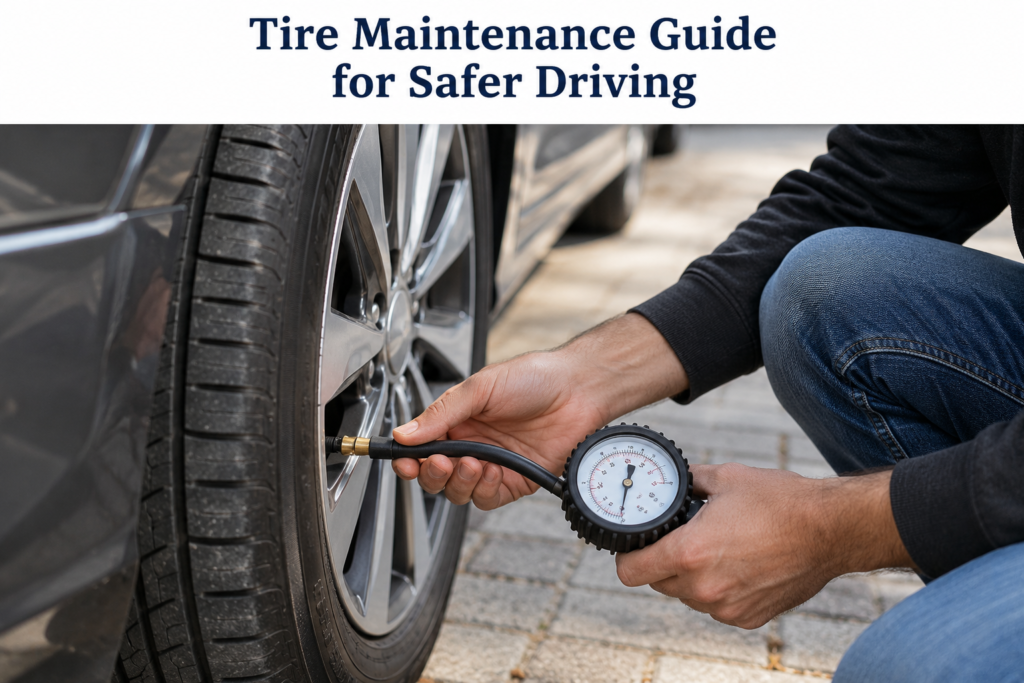
Remove the valve cap, place the pressure gauge firmly onto the valve, and read the measurement.
Compare the reading with the manufacturer’s recommendation and adjust the air pressure if necessary.
Remember to replace the valve cap afterward.
Never Ignore the Tire Pressure Warning Light
Modern vehicles commonly use a Tire Pressure Monitoring System, often known as TPMS.
If the tire pressure warning light appears on your dashboard, do not simply ignore it because the vehicle still feels normal.
Park somewhere safe and inspect the tires.
The warning may indicate that one or more tires have lost pressure. Sometimes temperature changes can also contribute to a pressure warning.
After adjusting the pressure, continue monitoring the tire. If the same tire repeatedly loses air, there may be a puncture, valve problem, or another issue that requires professional inspection.
Inspect Your Tires Visually
A quick visual inspection can reveal many developing tire problems.
Walk around your vehicle regularly and look carefully at each tire.
Check for cuts, cracks, bulges, unusual wear, exposed material, or objects stuck in the tread.
Small stones in the tread are usually less concerning than sharp objects such as nails or screws. If you notice an object embedded deeply in a tire, avoid pulling it out immediately because it may be temporarily limiting air loss.
Have the tire inspected by a qualified tire technician.
Bulges on the sidewall deserve particular attention because they may indicate internal tire damage. A visibly damaged tire should be professionally evaluated before continued driving.
Understand Tire Tread
Tread is the patterned rubber surface that contacts the road.
The grooves in the tread are especially important when driving on wet roads because they help move water away from the contact area.
As a tire wears, tread depth decreases.
A severely worn tire can have less ability to maintain traction, particularly on wet surfaces. This can increase the risk of losing grip.
Checking tread condition should therefore be part of your normal maintenance routine.
Many tires include tread wear indicators within the grooves. When the tread approaches the level of these indicators, replacement may be necessary.
Legal minimum tread requirements vary by location, so drivers should also follow local regulations and tire manufacturer recommendations.
Look for Uneven Tread Wear
Tires do not always wear evenly.
The pattern of wear can sometimes provide useful clues about your vehicle.
Excessive wear around the edges may be associated with incorrect inflation or other conditions. Heavy wear near the center can also occur when tire pressure is unsuitable.
Wear that is noticeably greater on one side of a tire may indicate an alignment or suspension issue.
If one tire looks significantly different from the others, have the vehicle inspected instead of simply replacing the worn tire and ignoring the underlying cause.
Correcting the original problem can help protect your new tires.
Rotate Your Tires
The front and rear tires often experience different loads and forces.
For example, the front tires on many vehicles handle steering and a significant amount of braking force. Depending on the drivetrain and vehicle design, certain tires may wear faster than others.
Tire rotation changes the position of tires on the vehicle to encourage more even wear.
The correct rotation interval and pattern depend on the vehicle and tire design. Your owner’s manual and tire manufacturer recommendations should be your main reference.
Regular rotation may help extend the useful life of a complete set of tires and maintain more consistent handling.
Some directional or differently sized tire setups have special rotation requirements, so they should not be rotated using a standard pattern without checking the specifications first.
Pay Attention to Wheel Alignment
Wheel alignment refers to the angles at which the wheels are positioned relative to the vehicle and road.
Poor alignment can cause tires to wear unevenly.
You may notice that the vehicle tends to pull toward one side, the steering wheel appears off center while driving straight, or certain areas of the tire tread wear much faster than others.
Hitting a deep pothole or curb can sometimes affect alignment.
If you notice these symptoms, have the alignment checked by a professional.
Proper alignment supports predictable steering and can help prevent unnecessary tire wear.
Do Not Forget Wheel Balancing
Wheel balancing and wheel alignment are different services.
Balancing deals with how weight is distributed around the tire and wheel assembly.
An unbalanced wheel may cause vibration, particularly at certain speeds. You might feel this vibration through the steering wheel, floor, or seats.
If unusual vibration begins after tire installation or develops over time, wheel balance is one possible cause.
However, vibration can also result from other mechanical problems. A professional inspection is therefore sensible if the problem persists.
Check Tires Before Long Trips
Before starting a long journey, spend a few minutes checking your tires.
Inspect the pressure and tread condition. Look for visible damage and make sure nothing unusual is embedded in the tires.
Do not forget the spare tire if your vehicle carries one.
Discovering a flat spare tire on the side of a highway is frustrating and potentially dangerous. Checking it occasionally can prevent this situation.
If your vehicle uses a tire repair kit instead of a traditional spare tire, check its condition and expiration information according to the manufacturer’s instructions.
Avoid Overloading Your Vehicle
Every vehicle and tire has load limitations.
Carrying excessive weight places additional stress on tires and other vehicle components.
An overloaded vehicle may handle differently and can increase heat buildup in the tires. This becomes particularly important during long journeys and hot weather.
Check your vehicle owner’s manual or manufacturer information for its recommended load limits.
When preparing for a family trip, avoid loading the vehicle simply according to how much luggage can physically fit inside. Passenger weight and cargo weight both matter.
Drive Carefully Over Potholes
Potholes are difficult to avoid completely, but careful driving can reduce the risk of tire and wheel damage.
A severe impact can damage the tire sidewall, wheel, suspension, or alignment.
If you hit a large pothole, pay attention afterward.
Look for new vibrations, steering changes, pressure loss, or visible tire damage.
Sometimes damage is not immediately obvious. If the impact was severe or the vehicle starts behaving differently, a professional inspection is worthwhile.
Be Careful Around Curbs
Repeatedly hitting or rubbing tires against curbs can damage sidewalls.
The sidewall performs an important structural role and should not be treated like a protective bumper.
When parking, leave enough distance to avoid pressing the tire heavily against the curb.
If you accidentally hit a curb hard, inspect the affected tire for cuts, bulges, or other visible damage.
Tire Maintenance During Hot Weather
High temperatures can make tire maintenance particularly important.
Tires naturally become warmer during driving. Hot roads, high speeds, heavy loads, and incorrect inflation can increase heat further.
Check tire pressure regularly during hot weather, but always use the recommended cold tire pressure as your reference rather than intentionally reducing pressure because the tire becomes warmer while driving.
Before a summer road trip, inspect the tread, pressure, sidewalls, and general condition of every tire.
Older or damaged tires deserve extra attention before long journeys in extreme heat.
Tire Care in Rainy Conditions
Good tires are especially important during rain.
Water between the road and tire reduces available traction. Tire tread helps channel this water away.
As tread becomes excessively worn, wet road performance can suffer.
Drive more cautiously when roads are wet. Reduce speed when necessary, maintain additional distance from the vehicle ahead, and avoid sudden steering or braking inputs.
Tire maintenance improves your vehicle’s ability to perform properly, but it cannot overcome unsafe driving for the conditions.
Do Tires Have an Age Limit?
Tire condition is not determined only by tread depth.
Rubber and other tire materials change with age. A vehicle that is driven very little can therefore have tires with plenty of visible tread but still require inspection because of their age.
Tires normally have manufacturing information marked on their sidewalls. A tire professional can help you identify and interpret the date code if you are unsure.
There is no single replacement age that applies perfectly to every tire in every situation. Tire type, storage, climate, usage, manufacturer recommendations, and condition all matter.
Follow the vehicle and tire manufacturer’s guidance and have older tires inspected periodically.
When Should You Replace Your Tires?
Tires should be replaced when they can no longer provide safe and reliable service.
Possible reasons include excessive tread wear, serious sidewall damage, structural damage, certain punctures that cannot be safely repaired, or deterioration related to age.
Do not wait for a tire to become completely smooth before thinking about replacement.
If you are uncertain about a tire’s condition, have it inspected by a reputable professional.
A qualified technician can determine whether a puncture can be safely repaired or whether replacement is the appropriate option.
Do Not Assume Every Puncture Can Be Repaired
A nail in a tire does not automatically mean the tire must be replaced, but it also does not mean every puncture is repairable.
Repairability depends on factors such as the location and extent of the damage and the tire’s overall condition.
Damage in certain areas, particularly the sidewall, may make safe repair inappropriate.
Avoid relying permanently on temporary emergency repair methods unless the tire manufacturer specifically allows it.
A professional internal inspection is the better approach when deciding whether a damaged tire can return to normal service.
Maintain All Four Tires
Drivers sometimes focus only on the two tires that appear most worn.
However, your vehicle relies on all four tires for braking, stability, and handling.
Try to maintain appropriate pressure and suitable tread condition across the entire vehicle.
When replacing tires, follow the recommendations for your particular vehicle. Some vehicles, especially certain all wheel drive systems, can have specific requirements concerning differences in tire size and tread depth.
Consult the owner’s manual or a qualified tire professional when you are unsure.
Keep a Simple Tire Maintenance Schedule
Consistency makes tire care easier.
You do not need to inspect every detail every day. Instead, develop a simple routine.
Check tire pressure about once a month and before long journeys. Look over the tires whenever you wash your vehicle. Pay attention to tread wear periodically and have rotation, alignment, and balancing performed when appropriate according to manufacturer recommendations and tire condition.
This routine takes very little time compared with the inconvenience of dealing with a preventable tire problem.
Common Tire Maintenance Mistakes
One common mistake is judging tire pressure only by appearance. A tire can lose pressure without looking obviously flat.
Another mistake is filling every tire to the pressure printed on its sidewall instead of following the vehicle manufacturer’s recommended pressure.
Drivers also sometimes ignore unusual vibration, pulling, or uneven wear for too long.
These symptoms should be investigated because they can indicate tire, wheel, alignment, suspension, or other mechanical issues.
Finally, do not forget the spare tire. It is easy to ignore until the day you actually need it.
How Tire Maintenance Can Save Money
Tire maintenance is not only about safety.
Correct inflation can help reduce unnecessary rolling resistance. Regular rotation and proper alignment can reduce irregular wear. Catching a slow puncture early may also prevent additional damage.
Over the life of a vehicle, these small habits can help reduce unnecessary tire replacement costs.
A well maintained tire is more likely to deliver the service life it was designed to provide.
Final Thoughts
Tire maintenance is one of the easiest ways to support safer driving and protect your vehicle.
You do not need to be a mechanic to check tire pressure, inspect tread, look for damage, or notice unusual wear. These simple habits can tell you a great deal about the condition of your tires.
Check the pressure regularly, inspect tread and sidewalls, rotate tires according to recommendations, pay attention to alignment and balancing symptoms, and never ignore visible damage or repeated pressure loss.
Most importantly, treat tires as essential safety equipment rather than ordinary pieces of rubber.
A vehicle may have a powerful engine, advanced brakes, and modern safety technology, but ultimately it relies on four relatively small contact areas where the tires meet the road. Keeping those tires in good condition gives your vehicle a better foundation for safe, smooth, and dependable driving.
Regular tire care takes only a small amount of effort, but the benefits can continue every time you get behind the wheel.