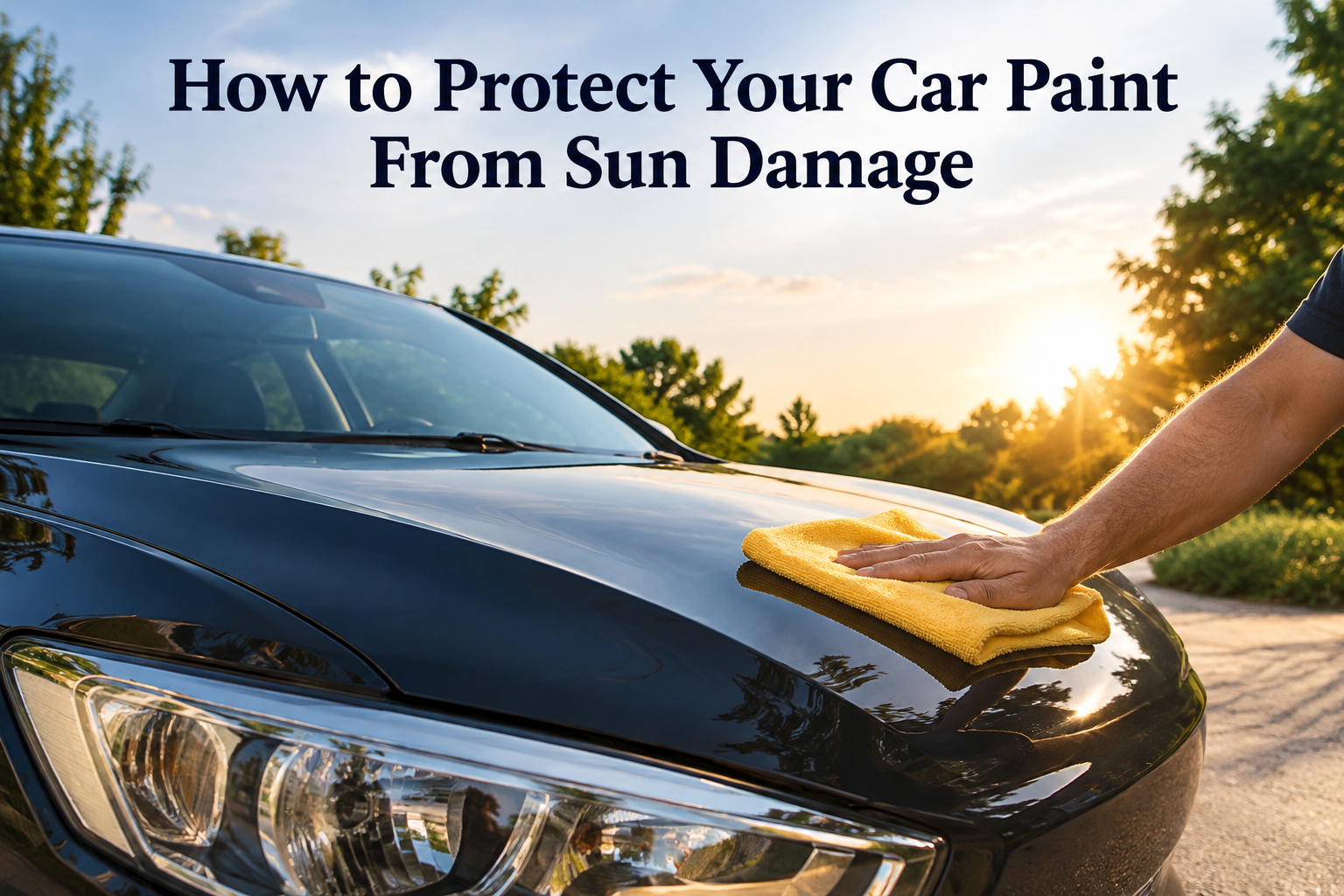
A clean and shiny car always looks attractive, but keeping the paint in good condition is not as simple as washing the vehicle once in a while. Sunlight is one of the biggest environmental factors that can slowly damage automotive paint. A car that spends several hours outside every day is constantly exposed to sunlight, heat, dust, moisture, bird droppings, and other contaminants.
At first, sun damage may not be obvious. The paint can still look perfectly normal. Over time, however, the surface may begin to lose its shine. The color can appear dull, and in severe cases the clear coat may start deteriorating.
The good news is that protecting car paint from sun damage does not require complicated maintenance. Regular washing, proper parking, wax or paint protection, and a few sensible habits can make a major difference.
In this guide, I will explain how to protect your car paint from sun damage and how you can maintain its appearance for years.
Why Sunlight Can Damage Car Paint
To understand how to protect car paint, it helps to know what happens when a vehicle remains exposed to sunlight.
Sunlight contains ultraviolet radiation, commonly known as UV radiation. Long term exposure to UV rays can affect many materials, including plastics, fabrics, rubber, and painted surfaces.
Modern automotive paint normally consists of several layers. The visible outer layer is usually protected by a transparent clear coat. This clear coat provides gloss and helps protect the colored paint underneath.
However, the clear coat is not completely immune to environmental exposure.
When a vehicle spends years outdoors, ultraviolet radiation and high temperatures can gradually affect the surface. Oxidation, contamination, and poor maintenance can make the problem worse.
This is why cars that are regularly parked outdoors without protection may eventually look dull compared with vehicles that are properly maintained.
Park Your Car in the Shade Whenever Possible
One of the simplest ways to protect your car paint from sun damage is to reduce direct sunlight exposure.
Whenever possible, park inside a garage or under a proper covered parking area. A garage provides excellent protection because it reduces exposure not only to sunlight but also to dust, bird droppings, tree sap, rain, and other environmental contaminants.
If a garage is unavailable, look for safe shaded parking.
Even reducing the amount of time your car spends under direct sunlight can be beneficial over the long term.
You should still choose the parking location carefully. Parking directly underneath certain trees may provide shade, but it can also expose the car to tree sap, leaves, insects, and bird droppings.
A proper roof, carport, or covered parking structure is usually preferable.
Wash Your Car Regularly
Regular washing is one of the most important parts of car paint maintenance.
Dust and dirt do more than make a car look untidy. The surface of a vehicle can collect road grime, insects, bird droppings, tree sap, industrial fallout, and many other contaminants.
Some contaminants can become increasingly difficult to remove if they remain on the paint for a long period, particularly when the surface repeatedly heats up in direct sunlight.
Wash the vehicle whenever it becomes noticeably dirty.
The exact washing frequency depends on where you live, where you park, how frequently you drive, and the conditions in which the vehicle is used.
A car driven daily on dusty roads may require cleaning more frequently than one stored inside a garage.
Regular cleaning gives you another advantage. It allows you to inspect the paint and notice stains, scratches, chips, or other problems before they become more serious.
Never Wash a Very Hot Car
Timing also matters when washing a vehicle.
Avoid washing a car immediately after it has been sitting under strong sunlight and the body panels are extremely hot.
Water and cleaning products can dry too quickly on a hot surface. This may leave water spots or soap residue and can make the washing process unnecessarily difficult.
Whenever possible, wash your car in a shaded location.
Early morning or later in the day can also be more comfortable, particularly during hot weather.
Allow extremely hot body panels to cool before beginning.
Use a Proper Automotive Shampoo
Household detergents are designed for household cleaning, not automotive paint.
A dedicated car shampoo is normally a better choice because it is specifically formulated for cleaning vehicle surfaces.
Follow the manufacturer’s dilution instructions and avoid using more product than necessary.
The goal is to remove contamination without unnecessarily stressing the existing protective layer on the paint.
Good washing technique is just as important as choosing the right cleaning product.
Use a Clean and Soft Wash Mitt
Small scratches and swirl marks can gradually reduce the shine of otherwise healthy paint.
Many of these marks are created during improper washing.
Instead of scrubbing the car aggressively, use a clean microfiber wash mitt or another suitable automotive washing tool.
Start from cleaner upper areas and gradually work toward dirtier lower sections.
The lower doors, bumpers, and areas behind the wheels often contain considerably more road contamination than the roof and upper body panels.
Rinse the wash mitt frequently so that dirt is not continuously rubbed against the paint.
Gentle washing can help preserve the clear coat and maintain a cleaner, glossier appearance.
Dry the Car Properly
Leaving a freshly washed car to dry naturally under strong sunlight is not always a good idea.
Water contains dissolved minerals. When water droplets evaporate, some of those minerals can remain on the surface and create visible spots.
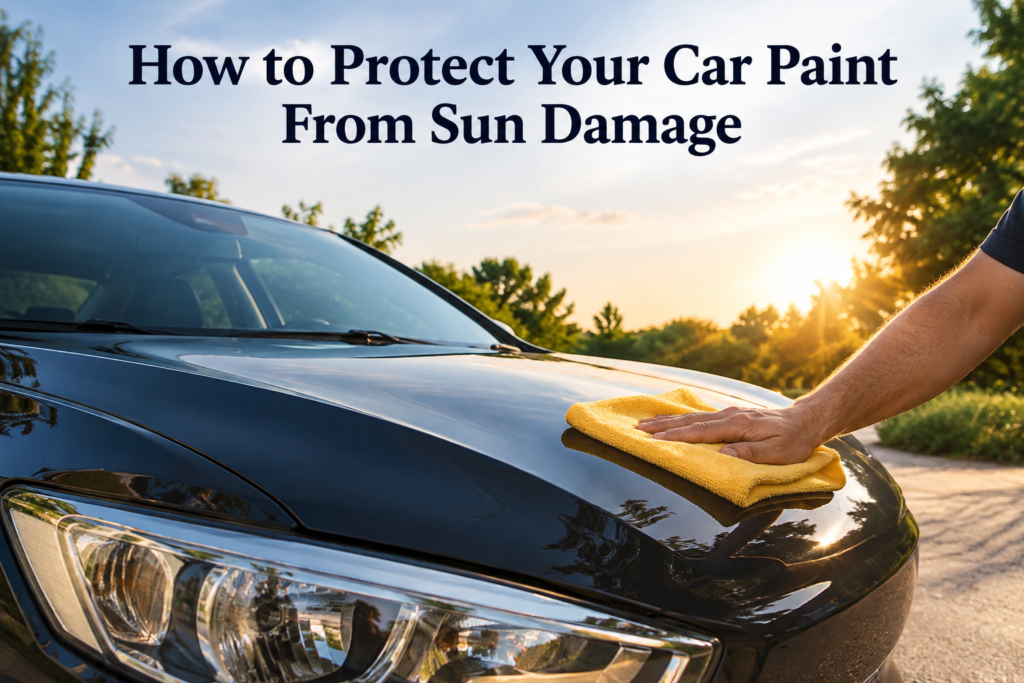
After washing and rinsing the vehicle, dry it using a clean and soft microfiber drying towel.
Avoid using dirty cloths or rough household towels.
Patting or gently wiping the surface with an appropriate drying towel reduces unnecessary friction and helps prevent water spotting.
Apply Car Wax Regularly
Wax is one of the traditional ways to add a sacrificial protective layer over automotive paint.
After the car has been properly cleaned and dried, automotive wax can improve gloss and provide additional protection against environmental contamination.
Different wax products have different application methods and durability.
Some are traditional paste waxes, while others come as liquids or sprays.
Instead of following a fixed schedule for every product, read the instructions supplied by the manufacturer. Reapply the product when its protection begins to decline or according to its recommended maintenance interval.
Wax should not be considered permanent protection, but regular application can form part of an effective paint care routine.
Consider a Paint Sealant
A paint sealant is another option for owners looking for longer lasting protection.
Sealants are generally formulated to create a protective layer over the clear coat. Depending on the specific product, preparation, environment, and maintenance routine, they may last longer than some conventional waxes.
The surface should normally be thoroughly cleaned before application.
Always follow the product instructions because preparation and curing requirements can vary.
For many everyday vehicles, a quality paint sealant can provide a practical balance between protection, appearance, cost, and ease of maintenance.
Ceramic Coating Can Provide Longer Term Protection
Ceramic coatings have become popular among people who want a more durable form of paint protection.
A ceramic coating bonds with the vehicle’s surface and creates a protective layer. Depending on the product, it can improve water behavior, make routine cleaning easier, and offer resistance against some environmental contamination.
Many ceramic coatings also provide UV resistance.
However, ceramic coating does not make car paint indestructible.
A coated vehicle still needs washing and maintenance. Bird droppings should still be removed, and the vehicle should still be treated carefully.
Professional paint preparation may also be necessary before applying certain coatings, especially if the existing paint contains oxidation, stains, or swirl marks.
Ceramic coating should therefore be viewed as additional protection rather than a replacement for proper car care.
Use a Good Quality Car Cover
If you regularly park outdoors and covered parking is unavailable, a good quality car cover can be useful.
A suitable outdoor cover can reduce direct exposure to sunlight, dust, and some environmental contamination.
However, choosing and using the cover correctly is important.
The cover should fit the vehicle properly and be made from material designed for automotive use. It should also be breathable and appropriate for outdoor conditions.
Never place a dirty cover on a dirty car if it can be avoided. Dirt trapped between the cover and paint may create scratches as the cover moves.
A poorly fitted cover that repeatedly moves in strong wind can also mark the surface.
For this reason, a car cover works best when both the vehicle and the inside of the cover are reasonably clean.
Remove Bird Droppings Quickly
Bird droppings are more than an appearance problem.
They can contain substances that may stain or damage the paint if allowed to remain on the surface for too long.
Heat can make the situation worse by drying the contamination onto the paint.
If you notice bird droppings on your car, remove them as soon as reasonably possible.
Do not scrape dried material aggressively.
Soften it first using water or an automotive safe cleaning product and remove it gently with clean microfiber material.
The same general rule applies to insect remains and other stubborn organic contamination.
Early removal is usually much easier than dealing with a stain later.
Do Not Ignore Tree Sap
Tree sap can be surprisingly difficult to remove after it has dried.
Parking under trees may protect a vehicle from direct sunlight, but it can introduce this different problem.
If you notice sticky spots on the paint, clean them promptly using an automotive safe method.
Avoid aggressive scraping or harsh chemicals that have not been designed for automotive finishes.
If the contamination is difficult to remove, a dedicated automotive sap remover may be appropriate when used according to its instructions.
Protect the Car Even During Winter
Some drivers associate sun damage only with extremely hot summer weather.
Temperature and UV exposure, however, are not the same thing.
Ultraviolet radiation can still reach vehicle surfaces during cooler months. Therefore, basic paint protection should continue throughout the year.
Regular washing and maintaining the chosen wax, sealant, or coating will help protect the surface regardless of season.
Year round maintenance is usually easier than trying to restore badly neglected paint later.
Be Careful With Automatic Car Washes
Automatic car washes are convenient, but the washing method matters.
Some systems use rotating brushes that physically contact the vehicle. Depending on the equipment and its condition, repeated contact may contribute to fine scratches and swirl marks.
If paint appearance is a priority, a careful hand wash or a reputable touchless system may be preferable.
A correct hand wash gives you more control over the tools, chemicals, and pressure being used on the vehicle.
Whatever method you choose, avoid aggressive cleaning techniques.
Maintain the Protective Layer
Applying protection once and forgetting about it is not enough.
Wax, sealants, and coatings require different levels of maintenance.
Watch how the paint behaves during washing. If a previously water repellent surface begins holding water differently, the protective product may need maintenance or reapplication.
Follow the instructions provided with the particular product you use rather than assuming every paint protection product lasts for the same amount of time.
Environmental conditions can make a significant difference.
A vehicle parked outdoors every day may require more frequent attention than a weekend car stored indoors.
Inspect Your Paint Regularly
You do not need professional equipment to perform a basic inspection.
After washing the vehicle, look at the paint in good natural light.
Check for unusual dullness, stains, water spots, scratches, chips, and areas where the clear coat looks different.
Early identification can make paint problems easier to address.
Small stone chips are especially worth watching because exposed areas may become vulnerable to corrosion on metal body panels.
Appropriate touch up paint can sometimes protect small damaged areas, while more extensive damage may require professional repair.
Avoid Unnecessary Polishing
Polishing can improve paint appearance by correcting certain surface imperfections, but it should not be confused with routine washing or waxing.
Many polishing processes work by removing a microscopic amount of material from the clear coat.
For this reason, aggressive polishing should not be performed unnecessarily.
If the paint is heavily oxidized or covered in significant defects, professional paint correction may improve its appearance. However, the condition and remaining clear coat should be considered before aggressive correction is attempted.
The objective should be to preserve as much healthy paint as possible.
What to Do If Your Car Paint Is Already Faded
If the paint has already become dull, the appropriate solution depends on the cause and severity of the damage.
Mild oxidation or surface defects may sometimes be improved through professional detailing and polishing.
More serious clear coat failure is different.
If the clear coat is peeling, cracking, or badly deteriorated, simple wax or polish will not rebuild the missing paint layer. Professional refinishing may be required.
This is another reason preventive maintenance is valuable.
Maintaining healthy paint is generally easier than repairing severely damaged paint.
A Simple Paint Protection Routine
Protecting your car paint does not need to become complicated.
Start by parking under proper cover whenever possible. Wash the vehicle using automotive shampoo and clean washing tools. Dry it with a soft microfiber towel.
Remove bird droppings, tree sap, and similar contamination quickly.
Apply an appropriate wax, sealant, or coating depending on the level of protection you want and the amount of maintenance you are comfortable performing.
Inspect the paint periodically.
These basic habits are more useful when followed consistently than an expensive product that is applied once and then forgotten.
Why Paint Protection Is Worth the Effort
Your car’s paint has both an aesthetic and protective purpose.
Healthy paint keeps the vehicle looking newer and helps protect underlying body panels from environmental exposure.
A well maintained exterior can also create a better impression when you eventually decide to sell the vehicle.
More importantly, regular paint care can prevent small issues from turning into expensive cosmetic repairs.
You do not necessarily need premium detailing products or professional services every month. Consistent care and sensible protection are the most important factors.
Final Thoughts
Learning how to protect your car paint from sun damage is mainly about reducing unnecessary exposure and maintaining the vehicle’s protective surfaces.
Whenever possible, park in a garage, carport, or safe shaded area. Keep the vehicle clean and remove harmful contamination promptly. Use proper automotive cleaning products and avoid aggressive washing methods.
Wax, paint sealants, ceramic coatings, and quality car covers can provide additional protection when used correctly.
Most importantly, make paint care a regular part of your vehicle maintenance routine.
Sun damage usually develops gradually, which means prevention also works gradually. A few simple habits repeated throughout the year can help preserve the shine, color, and overall appearance of your car for a long time.
Primary SEO Keyword: How to Protect Your Car Paint From Sun Damage
Related Keywords: protect car paint from sun, car paint protection, UV protection for car paint, prevent car paint fading, protect car paint from sunlight, car paint maintenance, sun damaged car paint, car wax for sun protection, ceramic coating for car paint
Meta Description: Learn how to protect your car paint from sun damage with simple washing, parking, waxing, ceramic coating, and maintenance tips that help prevent fading and keep your vehicle looking newer.