A car is one of those things we often depend on every day without thinking much about what is happening under the hood. We start the engine, drive to work, take the children to school, go shopping, and travel long distances. As long as the car starts and moves normally, it is easy to assume that everything is fine.
However, a car needs regular attention just like any other machine. Waiting until something breaks can turn a small maintenance job into an expensive repair. Regular servicing helps your car stay reliable, safe, comfortable, and efficient.
One of the most common questions among drivers is, how often should you service your car?
There is no single answer that applies to every vehicle. The correct service interval depends on the age of the car, mileage, engine type, driving conditions, manufacturer recommendations, and how the vehicle is used.
In this guide, I will explain how often a car should be serviced, what happens during a service, why servicing matters, and how you can recognize when your car needs attention.
What Does Car Servicing Mean?
Car servicing means inspecting and maintaining important parts of your vehicle before they develop serious problems.
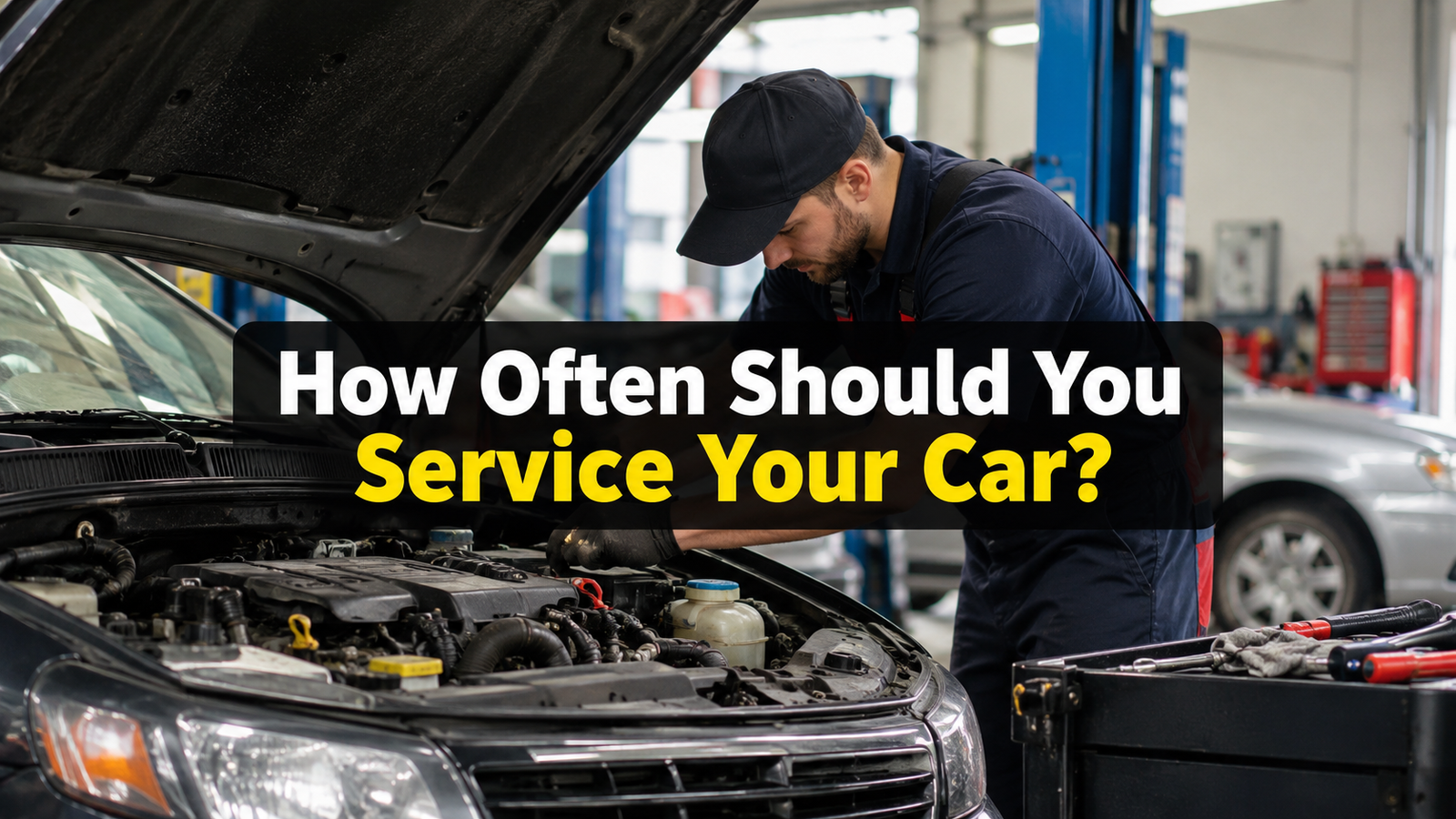
During a normal service, a mechanic may check the engine oil, filters, brakes, tires, battery, cooling system, suspension, lights, fluids, belts, and several other components.
Some parts are replaced during servicing while others are simply inspected.
The purpose is not only to repair existing problems. A good service is mainly about preventing problems before they happen.
For example, replacing old engine oil at the correct time can protect the engine from unnecessary wear. Checking brake pads early may prevent damage to more expensive brake components.
This is why regular servicing should be seen as part of owning a car rather than an optional expense.
How Often Should You Service Your Car?
For many modern cars, servicing is commonly required every 6 to 12 months or after a certain number of miles or kilometers.
A common interval is around 10,000 to 15,000 kilometers, although some vehicles may require servicing earlier or later.
The most accurate information will always be found in the owner’s manual provided by the vehicle manufacturer.
Manufacturers design service schedules based on the engine, transmission, fluids, filters, and other components used in each particular model.
Some newer vehicles also have service reminder systems. These systems may display a warning or message on the dashboard when maintenance is due.
Even when your car seems to be running perfectly, you should not ignore its recommended service interval.
Many maintenance problems develop quietly and may not produce obvious symptoms until significant damage has already occurred.
Follow the Manufacturer Service Schedule
Your vehicle owner’s manual is one of the most useful maintenance guides you have.
Inside it, you will usually find recommended intervals for important maintenance items such as engine oil, oil filters, air filters, spark plugs, coolant, transmission fluid, brake fluid, and timing components.
Following this schedule helps ensure that your car receives the right maintenance at the right time.
It is also important because different vehicles have different requirements.
A small petrol car may have a completely different maintenance schedule from a diesel SUV or hybrid vehicle.
Instead of relying only on general advice, use the manufacturer’s recommendations as your main guide.
Mileage Versus Time
Many drivers think maintenance depends only on mileage.
That is not always true.
Some parts and fluids deteriorate with time even when the vehicle is not driven very much.
Imagine two cars.
One travels 20,000 kilometers in a year.
The other travels only 4,000 kilometers.
The second car may still require servicing because engine oil can collect moisture and contaminants over time. Rubber components can age, batteries can lose strength, and brake components can develop corrosion.
This is why manufacturers often give service intervals based on both mileage and time.
For example, they may recommend servicing every 10,000 kilometers or once every 12 months, whichever comes first.
If you drive only occasionally, do not assume that your car can go several years without maintenance.
What Happens During a Basic Car Service?
The exact work depends on the vehicle and service package, but a normal service often includes several important checks.
Engine oil is usually one of the first things inspected or replaced.
Oil lubricates moving engine components and reduces friction. Over time, oil becomes contaminated and loses some of its protective qualities.
The oil filter is often replaced at the same time because it collects dirt and particles circulating through the lubrication system.
The mechanic may also inspect the air filter.
A clean air filter helps the engine receive proper airflow. A dirty filter can restrict air entering the engine and may affect performance and fuel economy.
Fluid levels are also checked.
These can include coolant, brake fluid, windshield washer fluid, power steering fluid in vehicles that use hydraulic steering, and transmission fluid where appropriate.
The tires, brakes, lights, battery, belts, and hoses may also be inspected.
Why Regular Engine Oil Changes Matter
Engine oil is one of the most important fluids in your car.
Inside an operating engine, many metal components move at high speed. Oil creates a protective layer between these surfaces.
Without proper lubrication, friction and heat can increase dramatically.
Fresh oil also helps carry heat and contamination away from important engine components.
As oil becomes older, it gradually loses effectiveness.
Driving for too long without an oil change may increase engine wear and can contribute to the formation of deposits.
The correct oil change interval depends on the manufacturer, oil specification, engine design, and driving conditions.
Some modern vehicles can travel relatively long distances between oil changes, while others require shorter intervals.
Never assume that every car uses the same schedule.
Driving Conditions Can Change Your Service Interval
Your driving habits can affect how frequently your car should be serviced.
A vehicle that travels mostly on smooth highways may experience different levels of wear compared with a vehicle that spends hours in heavy city traffic.
Short trips can also be demanding on an engine.
During very short journeys, the engine may not remain at its normal operating temperature for long enough. Frequent starting and stopping can also place more stress on certain components.
Dusty conditions can affect air filters.
Extremely hot weather can place greater demands on the cooling system, battery, tires, and air conditioning system.
Vehicles used to carry heavy loads may also require additional attention.
If you regularly drive in demanding conditions, shorter maintenance intervals may be appropriate depending on the manufacturer’s guidance.
Should You Service a Car Every Year?
For many vehicles, an annual service is a sensible minimum even if you have not covered much mileage.
A yearly inspection gives a mechanic an opportunity to identify developing problems before they become serious.
Small fluid leaks, worn brake pads, aging tires, weak batteries, cracked belts, or damaged suspension components may not always be obvious during everyday driving.
Finding these issues during routine servicing can save both time and money.
It can also reduce the chance of unexpected breakdowns.
However, some cars may require servicing more frequently than once a year, particularly when they cover high mileage.
Always compare your yearly mileage with the recommended mileage based service interval.
How Often Should a High Mileage Car Be Serviced?
Older cars and high mileage vehicles often deserve closer attention.
As a vehicle ages, components naturally experience wear.
Rubber seals may become harder, hoses can deteriorate, suspension components can loosen, and minor oil or coolant leaks may appear.
This does not mean an older car is unreliable.
A well maintained older vehicle can continue working properly for many years.
The important point is that maintenance becomes increasingly valuable as mileage increases.
If you own a high mileage car, checking engine oil, coolant, tires, brakes, and fluid levels regularly is especially useful.
You should also pay attention to unusual noises, vibrations, smells, warning lights, or changes in performance.
Signs Your Car May Need Servicing
You should not always wait for the official service date if the car starts showing unusual behavior.
One common warning is a dashboard service light or engine warning light.
Other symptoms may include difficulty starting, reduced fuel efficiency, unusual engine noises, vibrations, weak braking performance, rough running, or changes in steering.
You may also notice fluid underneath the vehicle after it has been parked.
Any unexpected change in the way the car drives should be investigated.
Sometimes the issue will be minor. At other times, early inspection can prevent a more expensive repair.
A car does not need to stop working completely before it deserves attention.
Regularly Check Your Tires
Tires are often overlooked during discussions about servicing, but they are one of the most important safety components on any vehicle.
They are the only parts of the car that remain in direct contact with the road.
Tire pressure should be checked regularly.
Incorrect pressure can affect handling, braking, tire wear, ride comfort, and fuel economy.
You should also inspect the tread and look for cuts, cracks, bulges, or unusual wear patterns.
Uneven tire wear may sometimes indicate alignment, suspension, or pressure problems.
The correct tire pressures can normally be found in the owner’s manual or on a label located somewhere on the vehicle, commonly near the driver’s door area.
Do Not Ignore Brake Maintenance
Your braking system should always be taken seriously.
Brake pads gradually wear each time you slow down or stop.
How quickly they wear depends on the vehicle, driving style, traffic conditions, and type of driving.
Someone who drives mainly on open roads may experience different brake wear compared with a driver who constantly stops in city traffic.
During servicing, brake pads, discs, fluid, and related components may be inspected.
If you hear grinding, squealing, or unusual noises while braking, do not simply wait until your next scheduled service.
You should have the brakes checked.
Other warning signs can include reduced braking performance, vibrations, or an unusual feeling through the brake pedal.
Check the Battery Regularly
The battery is another component that can cause problems without much warning.
Car batteries gradually lose their ability to hold a strong charge as they age.
Hot weather, cold weather, repeated short trips, electrical loads, and long periods without driving can all affect battery performance.
During routine servicing, battery condition and terminals may be inspected.
Corrosion around the battery terminals can interfere with electrical connections.
If the engine turns slowly when starting, lights appear unusually weak, or you frequently need a jump start, the battery may need testing.
Replacing a weak battery before it fails completely is often much more convenient than dealing with a car that refuses to start.
Cooling System Maintenance Is Important
The cooling system prevents the engine from becoming excessively hot.
Coolant circulates through the engine and radiator, carrying heat away from important components.
Over time, coolant can deteriorate and may need replacement according to the manufacturer’s schedule.
The cooling system also includes hoses, the radiator, thermostat, water pump, and other components.
Leaks or damaged parts can cause the engine to overheat.
If you notice the temperature gauge rising higher than normal, coolant leaking underneath the car, or repeated coolant loss, the problem should be investigated promptly.
Never continue driving an overheating vehicle simply because the engine is still running.
What About Transmission Servicing?
The transmission is one of the most complex and expensive parts of many vehicles.
Different transmissions have different maintenance requirements.
Manual transmissions, traditional automatic transmissions, continuously variable transmissions, and dual clutch systems may use different fluids and service procedures.
This is another reason why following the manufacturer’s maintenance schedule matters.
Using the wrong transmission fluid or following an unsuitable maintenance interval can cause problems.
If your car develops delayed gear changes, unusual noises, slipping, or jerky shifts, have the transmission inspected instead of waiting for the next normal service.
Does Regular Servicing Improve Fuel Economy?
Proper maintenance can help a vehicle operate efficiently.
Correct tire pressure, clean filters, suitable engine oil, properly functioning sensors, and a healthy ignition system all contribute to normal vehicle performance.
If maintenance is ignored, the engine may need to work harder than necessary.
For example, underinflated tires increase rolling resistance.
A severely dirty air filter can restrict airflow on some engines.
Worn ignition components may affect combustion.
Regular maintenance does not magically turn a large vehicle into a highly economical one, but it helps the car operate closer to the efficiency it was designed to provide.
Can Regular Servicing Save Money?
Some drivers postpone servicing because they want to avoid spending money.
This can sometimes create larger expenses later.
A relatively inexpensive maintenance item can become a major repair if ignored.
For example, an unnoticed coolant leak may eventually cause overheating.
Worn brake pads left for too long may damage additional brake components.
Low engine oil can increase wear inside the engine.
Maintenance costs are usually easier to manage when problems are found early.
Regular servicing also allows you to plan expenses rather than facing sudden repairs unexpectedly.
Keep Your Service Records
It is a good idea to keep records of every service and repair.
You can store receipts, invoices, mileage readings, dates, and a list of parts that were replaced.
These records help you remember when maintenance is due.
They can also be useful when diagnosing future problems because a mechanic can see what work has already been completed.
Good service records may also help when selling the vehicle.
A buyer can see that the car has received regular attention rather than having to rely only on verbal claims.
Simple Maintenance You Can Do Between Services
Professional servicing is important, but drivers can also perform simple checks between appointments.
Check your engine oil level regularly, particularly before long journeys.
Look at the coolant level when the engine is completely cool.
Check tire pressures and inspect tire condition.
Make sure headlights, brake lights, indicators, and other important lights are working.
Look underneath the vehicle occasionally for unusual leaks.
Pay attention to dashboard warning lights.
Listen for unfamiliar noises.
These simple habits can help you notice problems early.
You do not need to be a mechanic to become more aware of your vehicle’s condition.
What Happens If You Never Service Your Car?
A car may continue running for some time without regular servicing, but that does not mean maintenance is unnecessary.
Neglected oil can reduce engine protection.
Filters can become clogged.
Fluids can deteriorate.
Brake components can wear.
Tires may become unsafe.
Small leaks can become larger.
Eventually, reliability and safety may suffer.
Modern cars are durable, but they still depend on regular maintenance.
Ignoring servicing completely is usually a false economy because the money saved in the short term may eventually be spent on larger repairs.
How to Create a Simple Car Service Routine
A basic maintenance routine does not need to be complicated.
Start by reading the service section of your owner’s manual.
Write down the recommended mileage and time intervals.
Record the date and mileage each time the vehicle is serviced.
Check important fluid levels and tires between scheduled services.
Respond quickly if a warning light appears or the vehicle begins behaving differently.
Before long journeys, perform a few basic checks rather than assuming everything is fine.
These habits take very little time but can make car ownership much easier.
Final Thoughts
So, how often should you service your car?
For many vehicles, servicing every 6 to 12 months or around every 10,000 to 15,000 kilometers is common, but this should only be treated as general guidance.
Your car’s official service schedule should always be the main reference.
Mileage, vehicle age, driving conditions, engine design, climate, and driving habits can all influence how frequently maintenance is required.
More importantly, do not think of servicing as something that matters only when your car develops a problem.
Regular maintenance is about preventing problems.
A well maintained vehicle is more likely to remain reliable, efficient, comfortable, and safe. Regular servicing can also reduce the risk of unexpected breakdowns and costly repairs.
The best approach is simple. Follow the manufacturer’s schedule, monitor the condition of your vehicle, keep good maintenance records, and deal with unusual symptoms early.
Giving your car regular attention today can help it serve you reliably for many more years.