Taking care of a car does not always require a visit to a mechanic. Many basic maintenance tasks can be done at home with a little knowledge and a few minutes of your time. One of the easiest and most useful habits is checking your car fluids regularly.
Car fluids play an important role in keeping the engine, brakes, transmission, cooling system, and steering system working properly. When the fluid level becomes too low or the fluid becomes dirty, different parts of the vehicle may start wearing out faster. In some cases, ignoring a low fluid level can lead to expensive repairs.
Learning how to check car fluids at home can help you understand the condition of your vehicle and notice small problems before they become serious.
This complete guide explains the most important car fluids, how to check them safely, what healthy fluid should look like, and when it may be time to replace or refill them.
Why Checking Car Fluids Is Important
Modern vehicles depend on several different fluids to operate correctly. These fluids reduce friction, control temperature, transfer hydraulic pressure, clean internal components, and protect moving parts.
Over time, fluids can become contaminated or slowly decrease because of normal use. Small leaks can also develop without being immediately noticeable.
Regularly checking vehicle fluids can provide several benefits.
It can help protect the engine from damage.
It may improve vehicle reliability.
It can help identify leaks early.
It may reduce the risk of overheating.
It can protect the braking and transmission systems.
It may save money on major repairs.
It can also give you a better understanding of how your car is performing.
For many drivers, checking fluids once every few weeks is a simple maintenance routine that can make a big difference over the life of the vehicle.
Prepare Your Car Before Checking Fluids
Before opening the hood, it is important to prepare the vehicle correctly.
Park the car on a flat and level surface. An uneven surface can give an inaccurate fluid reading.
Turn off the engine.
For most fluid checks, allow the engine to cool before touching anything under the hood.
Some fluids are checked with the engine warm or running, depending on the vehicle. Always read the owner’s manual because manufacturers may use different procedures.
It is also helpful to keep a clean cloth or paper towel nearby. You may need it to wipe dipsticks or clean small spills.
Avoid wearing loose clothing around the engine area.
If you are not sure about the location of a fluid reservoir, check the owner’s manual instead of opening random caps.
1. How to Check Engine Oil
Engine oil is one of the most important fluids in any vehicle.
The engine contains many metal components that move at high speed. Engine oil creates a protective layer between these parts and reduces friction.
Without enough oil, engine components may overheat and wear quickly.
When to Check Engine Oil
A good habit is to check the engine oil every few weeks and before a long trip.
Some modern vehicles also have electronic oil level systems. Even if your car has an electronic system, understanding the traditional dipstick method can still be useful when a dipstick is available.
Steps to Check Engine Oil
Park the vehicle on level ground.
Turn off the engine and allow it to sit for several minutes.
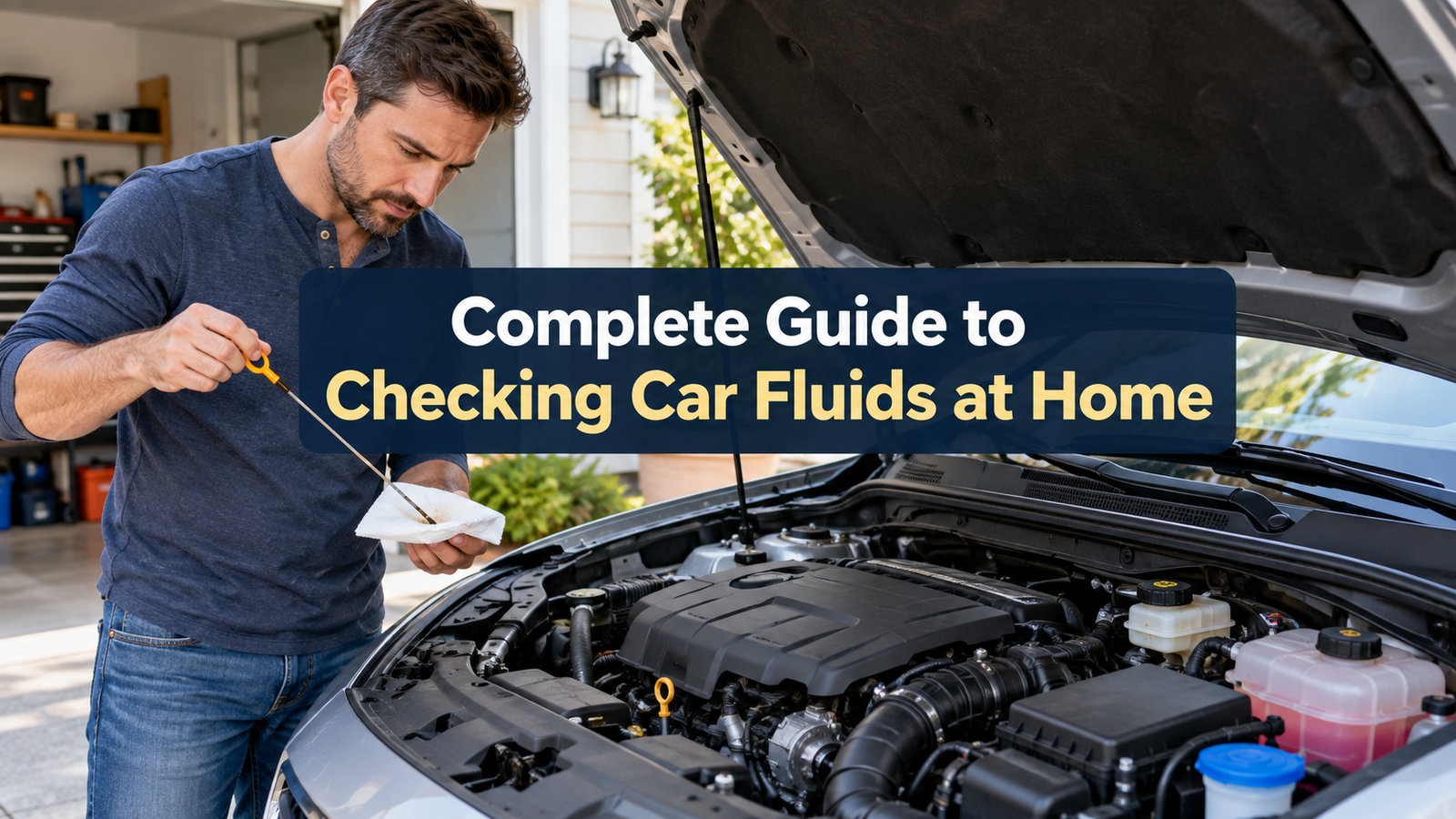
Open the hood and locate the engine oil dipstick.
The dipstick handle is often brightly colored.
Pull the dipstick out completely.
Wipe it clean using a cloth or paper towel.
Insert the dipstick fully back into the tube.
Remove it again and look at the oil level.
The dipstick usually has two marks. These may appear as minimum and maximum marks, dots, lines, or a shaded area.
The oil level should normally be between the minimum and maximum marks.
If the oil level is close to or below the minimum mark, additional oil may be needed.
What Healthy Engine Oil Looks Like
Fresh engine oil is usually golden or light brown.
As the oil is used, it normally becomes darker. Dark oil does not always mean that something is wrong because the oil collects contaminants while protecting the engine.
However, oil that appears extremely thick, gritty, creamy, or milky may require further inspection.
A milky appearance can sometimes indicate moisture or coolant contamination.
If you are unsure, a qualified mechanic can inspect the vehicle.
Adding Engine Oil
Only add the oil grade recommended by the manufacturer.
The correct viscosity is usually printed in the owner’s manual and may also appear on the engine oil cap.
Add a small amount at a time.
Wait briefly and check the dipstick again.
Avoid overfilling the engine because too much oil can also cause problems.
2. How to Check Engine Coolant
Coolant helps control the temperature of the engine.
During operation, an engine produces a large amount of heat. Coolant circulates through the engine and radiator to absorb and release this heat.
It also contains additives that help protect the cooling system from corrosion.
Important Safety Rule
Never open the radiator cap when the engine is hot.
The cooling system can remain under pressure, and hot coolant may spray out and cause serious burns.
Always allow the engine to cool completely before opening any pressurized cooling system cap.
How to Check Coolant Level
Most modern vehicles have a transparent coolant expansion tank.
Look for markings such as MIN and MAX on the side of the reservoir.
When the engine is cold, the coolant level should normally sit between these marks.
If the reservoir is nearly empty, the cooling system should be inspected carefully.
A small drop over a long period may sometimes happen, but frequent coolant loss can indicate a leak.
What Coolant Looks Like
Coolant is available in different colors depending on the manufacturer and chemical formulation.
It may be green, pink, red, blue, orange, yellow, or another color.
Do not choose coolant based only on color.
Different coolant formulations may not be compatible with each other. Always use the specification recommended by the vehicle manufacturer.
3. How to Check Brake Fluid
Brake fluid is essential for the hydraulic braking system.
When you press the brake pedal, brake fluid transfers pressure through the braking system so the vehicle can slow down or stop.
Low brake fluid should never be ignored.
Finding the Brake Fluid Reservoir
The brake fluid reservoir is usually located near the rear section of the engine compartment on the driver’s side.
It is often made from translucent plastic.
The cap may display a brake symbol or indicate the required brake fluid type.
Checking Brake Fluid Level
Look at the side of the reservoir.
You should normally see minimum and maximum level markings.
The fluid should be between these marks.
In many vehicles, there is no need to remove the cap just to check the level.
Why Brake Fluid Level May Drop
Brake fluid can gradually move lower as brake pads wear.
A sudden or significant reduction may indicate a leak.
If brake fluid is below the minimum level, do not simply keep adding fluid without understanding why it is low.
Because the braking system is a major safety component, unusual brake fluid loss should be inspected professionally.
Brake Fluid Condition
Fresh brake fluid is usually clear or light amber.
Over time, it can become darker as it absorbs moisture and contaminants.
Brake fluid is hygroscopic, which means it can absorb moisture from the surrounding air.
For this reason, manufacturers may recommend replacing brake fluid at certain intervals.
Check the maintenance schedule for your vehicle.
4. How to Check Transmission Fluid
Transmission fluid helps lubricate and cool the internal parts of the transmission.
In automatic transmissions, it also plays an important role in hydraulic operation.
Checking transmission fluid can be slightly more complicated because procedures vary significantly between vehicles.
Some cars have a transmission dipstick, while many newer vehicles use sealed transmission systems.
Vehicles With a Transmission Dipstick
If your vehicle has a transmission dipstick, consult the owner’s manual before checking the fluid.
Some manufacturers require the engine to be running and the transmission to be at operating temperature.
Others use different procedures.
If the manual says the transmission should be warm, drive the vehicle until normal operating temperature is reached.
Park on level ground.
Follow the manufacturer’s instructions regarding the gear position.
Remove the transmission dipstick.
Wipe it clean.
Insert it fully.
Remove it again and check the level.
Transmission Fluid Appearance
Healthy automatic transmission fluid is often red or reddish in color when fresh.
Some types may use a different color.
Used transmission fluid can become darker over time.
Fluid that smells strongly burned or appears extremely dark may indicate overheating or internal wear.
In that situation, professional inspection may be a good idea.
Sealed Transmissions
Many newer cars do not have an accessible transmission dipstick.
Checking the fluid may require the vehicle to be lifted and the fluid temperature to be measured.
If your vehicle has a sealed system, it is usually safer to leave the fluid check to a trained technician.
5. How to Check Power Steering Fluid
Many older and some modern vehicles use hydraulic power steering.
Power steering fluid helps create hydraulic pressure that makes steering easier.
However, some newer vehicles use electric power steering and therefore do not have power steering fluid.
Checking Hydraulic Power Steering Fluid
Locate the power steering reservoir.
The cap may have a steering wheel symbol or the words power steering.
Some reservoirs are transparent and have level markings.
Others include a small dipstick attached to the cap.
Check the level according to the manufacturer’s instructions.
There may be separate marks for cold and hot fluid.
Signs of Low Power Steering Fluid
Low fluid can sometimes cause whining or groaning noises while turning the steering wheel.
The steering may also feel heavier than usual.
If the fluid keeps becoming low, there may be a leak in the steering system.
6. How to Check Windshield Washer Fluid
Windshield washer fluid is not directly related to the mechanical operation of the engine, but it is still important for safe driving.
A clean windshield improves visibility during dusty, rainy, or muddy conditions.
Checking Washer Fluid
Locate the washer fluid reservoir.
The cap usually has a windshield spray symbol.
Open the cap and check the fluid level.
Some reservoirs are transparent, while others extend deep into the engine compartment.
If the level is low, add a suitable windshield washer solution.
Using proper washer fluid is usually better than plain water because it contains cleaning agents designed to remove road dirt and other deposits.
In cold climates, the correct washer fluid may also provide freeze protection.
7. How to Check Clutch Fluid
Cars with manual transmissions may use a hydraulic clutch system.
In many vehicles, the clutch uses brake fluid.
Some vehicles have a separate clutch fluid reservoir, while others share the brake fluid reservoir.
Check the owner’s manual to confirm the design of your vehicle.
If the clutch fluid level becomes low, shifting gears may become difficult.
The clutch pedal may also feel unusual.
A falling clutch fluid level may suggest a leak in the hydraulic system.
8. How to Inspect Car Fluids for Leaks
Checking fluid levels is useful, but looking for leaks is equally important.
After parking the car overnight, inspect the ground underneath it.
Different fluids may leave different types of marks.
Engine oil often appears brown or black.
Coolant may appear green, pink, orange, blue, or another color depending on the type used.
Transmission fluid may appear reddish.
Clear water under the car is not always a problem. Water dripping from the air conditioning system is normal in many situations.
If you notice a large puddle or repeated fluid loss, the vehicle should be inspected.
9. Create a Monthly Car Fluid Checklist
A simple monthly checklist can make car maintenance easier.
You can include the following items.
Check engine oil.
Check coolant level.
Check brake fluid.
Check transmission fluid if accessible.
Check power steering fluid if the vehicle uses hydraulic steering.
Check windshield washer fluid.
Look underneath the vehicle for leaks.
Check the dashboard for warning lights.
You can also record the date and mileage each time you perform the inspection.
This can help you notice patterns over time.
For example, if the engine oil level repeatedly drops between checks, the vehicle may be consuming or leaking oil.
10. Common Mistakes When Checking Car Fluids
Even simple maintenance tasks can create problems if they are done incorrectly.
One common mistake is checking fluids while the vehicle is parked on a slope.
Another mistake is opening the coolant system while the engine is hot.
Some drivers also add the wrong type of fluid.
Vehicle fluids are designed according to specific chemical and performance standards. Using the wrong product may reduce protection or cause compatibility problems.
Overfilling is another common mistake.
More fluid is not always better. Many systems require the level to remain within a specific range.
Another mistake is ignoring repeated fluid loss.
If you constantly need to add the same fluid, there may be a leak or mechanical issue that needs attention.
11. Always Use the Correct Fluid Specification
One of the most important rules in car maintenance is using the correct fluid specification.
Do not assume that every engine oil, coolant, transmission fluid, brake fluid, or power steering fluid works in every vehicle.
Manufacturers design systems around particular fluid requirements.
For example, your car may require a specific engine oil viscosity and performance standard.
The transmission may require a particular automatic transmission fluid.
The brake system may specify DOT 3, DOT 4, or another compatible standard.
The coolant system may require a manufacturer approved formula.
The safest source of information is the vehicle owner’s manual.
12. When Should Car Fluids Be Replaced?
Checking fluid level and replacing fluid are two different parts of maintenance.
Some fluids require regular replacement even if the level remains correct.
Engine oil usually has one of the shortest service intervals.
Brake fluid may require periodic replacement because it absorbs moisture.
Coolant replacement intervals vary widely between manufacturers and coolant types.
Transmission fluid schedules also vary significantly.
Some manufacturers recommend specific replacement intervals, while others describe the fluid as long life.
Always follow the maintenance schedule for your specific vehicle.
Driving conditions can also affect service intervals.
Vehicles that frequently operate in heavy traffic, extreme temperatures, dusty environments, mountainous areas, or under heavy loads may require more frequent maintenance.
13. Warning Signs You Should Not Ignore
Regular fluid checks can sometimes reveal early warning signs.
Pay attention if you notice any of the following.
The engine oil level drops very quickly.
The coolant reservoir repeatedly becomes empty.
Brake fluid falls below the minimum level.
Transmission fluid smells burned.
The steering becomes unusually heavy.
The brake pedal feels soft or different.
The engine temperature rises above normal.
You notice fresh fluid puddles under the vehicle.
A dashboard warning light remains illuminated.
These signs do not always mean that a major repair is required, but they should not be ignored.
Early inspection can often prevent a small problem from becoming more expensive.
14. Keep Simple Maintenance Supplies at Home
You do not need a professional workshop to perform basic fluid checks.
A small home maintenance kit can include clean microfiber cloths, disposable gloves, a flashlight, a funnel, paper towels, and the correct replacement fluids for your vehicle.
Keep fluids in their original containers so you can easily identify them.
Store automotive fluids safely and away from children and pets.
Many automotive fluids are harmful if swallowed and should also be cleaned up quickly if spilled.
Used fluids should be disposed of responsibly according to local recycling or waste disposal rules.
Final Thoughts
Learning how to check car fluids at home is one of the easiest ways to become more confident about vehicle maintenance.
Engine oil, coolant, brake fluid, transmission fluid, power steering fluid, windshield washer fluid, and clutch fluid all have important jobs.
Checking them regularly can help you notice leaks, low levels, contamination, and other warning signs before they create bigger problems.
The most important rule is to follow the instructions in your vehicle owner’s manual. Different cars can have different checking procedures, fluid specifications, and maintenance intervals.
A few minutes of inspection every month can help protect your vehicle, improve reliability, and reduce the chance of unexpected problems on the road.
Car maintenance does not always need to be complicated. Building a simple habit of checking fluids can be an excellent first step toward keeping your car in good condition for many years.