Owning a car gives us freedom, comfort, and convenience, but it also comes with responsibility. A vehicle is made up of many mechanical and electrical parts that work together every time we drive. If these parts are ignored for too long, even a small issue can turn into an expensive repair.
Good car maintenance is not only about keeping the vehicle looking clean. It is about protecting the engine, improving fuel efficiency, making driving safer, and helping the car last for many years.
I have always believed that learning basic car maintenance is useful for every driver. You do not need to become a professional mechanic. You simply need to understand what your vehicle needs, what warning signs to notice, and when professional inspection is necessary.
This guide explains the most important car maintenance tips every driver should know.
Why Regular Car Maintenance Matters
Regular maintenance can prevent many common vehicle problems before they become serious.
A properly maintained car usually performs better, uses fuel more efficiently, and provides a smoother driving experience. It can also reduce the risk of unexpected breakdowns.
Another important benefit is safety. Tires, brakes, lights, fluids, and steering components all affect how safely a vehicle responds on the road.
Maintenance can also protect the value of your car. A vehicle with a proper service history is often easier to sell because buyers usually feel more confident about its condition.
For these reasons, car maintenance should be viewed as a regular responsibility rather than something we think about only when a problem appears.
1. Check the Engine Oil Regularly
Engine oil is one of the most important fluids in a vehicle.
The engine contains many moving metal parts. Oil provides lubrication so these parts can move smoothly without excessive friction.
Over time, engine oil becomes dirty and gradually loses its ability to protect the engine effectively.
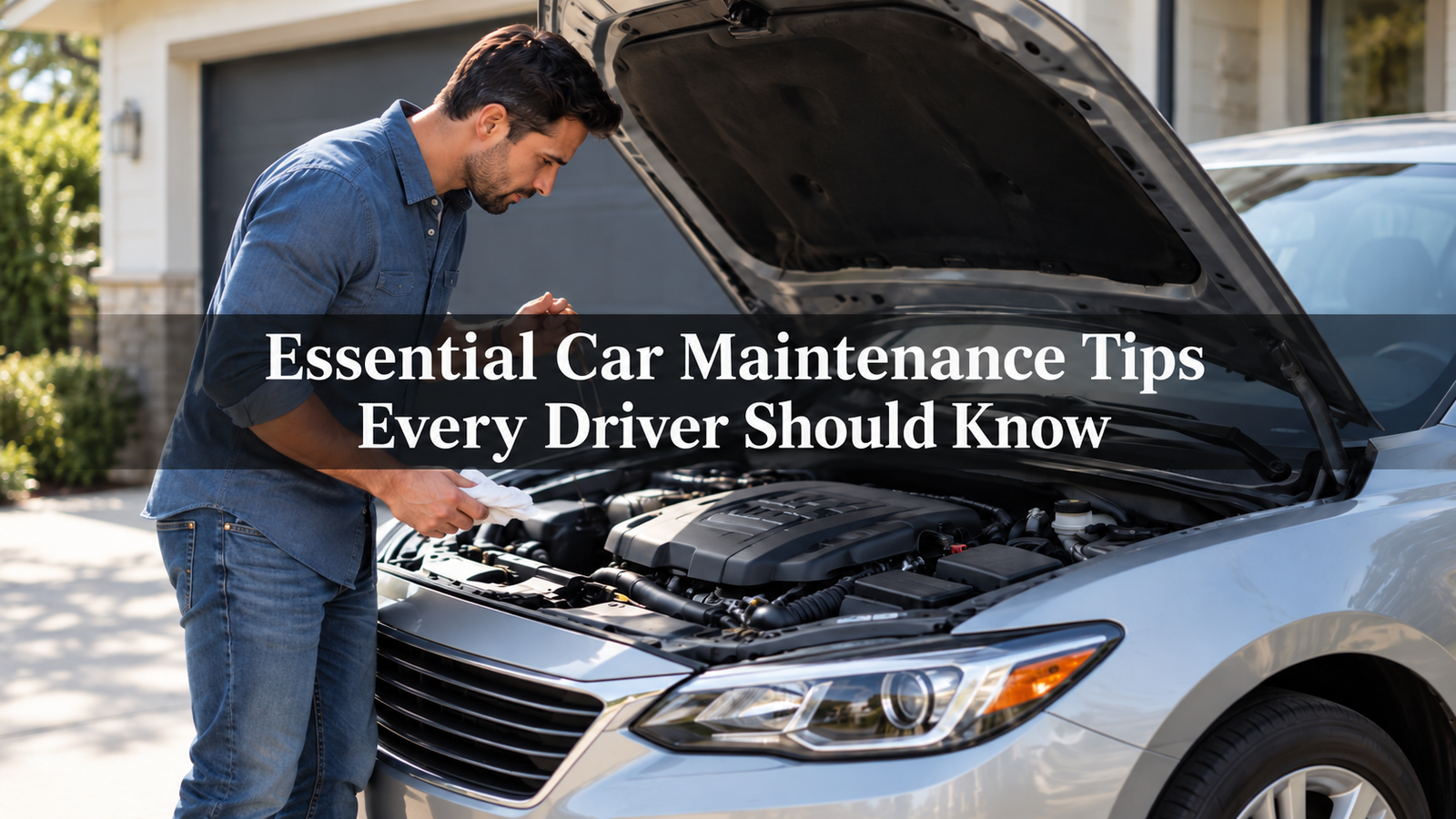
Check the oil level regularly, especially before a long journey.
Most cars have a dipstick that allows you to inspect the oil level. Park the vehicle on a level surface and allow the engine to cool before checking it.
The oil level should normally remain between the minimum and maximum markings.
If the oil level becomes too low, the engine may not receive enough lubrication. This can cause increased wear and may eventually lead to serious engine damage.
Always use the oil grade recommended by the vehicle manufacturer.
2. Change Engine Oil at the Recommended Interval
Checking oil is important, but changing it at the correct interval is equally necessary.
Old oil can contain dirt, carbon deposits, and tiny metal particles created during engine operation.
Fresh oil helps keep internal components cleaner and properly lubricated.
The correct oil change interval depends on several factors, including the vehicle, engine type, oil type, driving conditions, and manufacturer recommendations.
Some modern vehicles can travel much longer between oil changes than older cars.
Instead of following a general rule, check the owner’s manual and follow the recommended service schedule.
Cars used frequently in heavy traffic, dusty conditions, or extreme temperatures may require more frequent maintenance.
3. Pay Attention to Tire Pressure
Correct tire pressure plays a major role in safety, comfort, and fuel economy.
Underinflated tires create additional rolling resistance. This means the engine has to work harder to move the car, which can increase fuel consumption.
Low tire pressure can also cause uneven tire wear.
Overinflated tires can reduce road contact and affect ride quality.
Check tire pressure when the tires are cold and compare the readings with the manufacturer’s recommended pressure.
The recommended figure is often printed on a sticker inside the driver’s door area or listed in the owner’s manual.
Do not rely only on the maximum pressure written on the tire itself.
4. Inspect Tire Tread
Tire tread helps the vehicle maintain grip on the road.
As tires wear down, their ability to handle wet roads becomes weaker.
Inspect your tires regularly for worn tread, cracks, unusual bulges, cuts, or objects stuck in the rubber.
Uneven tread wear may indicate another problem such as incorrect wheel alignment, poor tire pressure, or worn suspension components.
If one side of the tire wears much faster than the other, it is worth having the alignment and suspension checked.
Good tires are especially important during rain because proper tread helps move water away from the contact area.
5. Rotate the Tires
Tires do not always wear at the same rate.
Depending on the vehicle layout, front and rear tires may experience different levels of wear.
Regular tire rotation can help distribute this wear more evenly.
This may improve tire life and maintain more balanced handling.
Your vehicle manufacturer may provide a recommended rotation schedule.
Some tire designs have special rotation requirements, so it is important to follow the correct pattern.
6. Check the Brakes
Brakes are among the most important safety systems in any vehicle.
Never ignore unusual brake behavior.
Common warning signs include squeaking, grinding, vibration, longer stopping distance, a soft brake pedal, or the vehicle pulling to one side during braking.
Some brake noises may be harmless in certain conditions, but persistent or unusual sounds deserve attention.
Brake pads naturally wear down with use.
If they are replaced at the correct time, the repair may remain relatively simple. If badly worn pads are ignored, they can damage other braking components and increase repair costs.
Have the braking system inspected according to the maintenance schedule and whenever you notice changes in braking performance.
7. Monitor Brake Fluid
Brake fluid transfers pressure through the hydraulic braking system.
If the brake fluid level becomes unusually low, it may indicate worn brake components or a leak.
The fluid should also remain in good condition because moisture and contamination can affect its performance over time.
Brake fluid replacement intervals vary between manufacturers.
Check the owner’s manual to see when inspection or replacement is recommended.
If you suspect a brake fluid leak, have the vehicle inspected quickly because braking problems can create serious safety risks.
8. Check the Coolant Level
The engine creates a large amount of heat while operating.
The cooling system controls this heat and helps keep the engine within a safe temperature range.
Coolant circulates through the engine and radiator to carry heat away.
Low coolant can cause overheating.
Check the coolant reservoir when the engine is completely cool.
Never open a hot radiator cap because the cooling system may be under pressure and hot fluid can cause severe burns.
Use the type of coolant recommended by the manufacturer. Mixing incompatible coolant products can sometimes cause problems.
9. Watch the Temperature Gauge
The temperature gauge is an important early warning system.
During normal operation, the engine temperature should usually remain within its normal range.
If the gauge suddenly rises toward the hot zone, the engine may be overheating.
Possible causes include low coolant, a cooling system leak, radiator problems, thermostat failure, fan problems, or water pump issues.
Continuing to drive an overheating engine can cause serious damage.
If overheating occurs, move to a safe place and switch off the engine. Allow the vehicle to cool before investigating the problem.
10. Inspect the Battery
A weak battery can leave you stranded without warning.
Check the battery terminals occasionally for corrosion, loose connections, or visible damage.
Many batteries gradually lose capacity over time.
Warning signs of a weak battery may include slow engine cranking, dim lights during startup, repeated starting difficulty, or electrical problems.
If your battery is several years old, occasional testing can help determine its condition.
Modern cars depend heavily on electronic systems, which makes a healthy battery even more important.
11. Check the Lights
Vehicle lights help you see and also help other road users see you.
Inspect headlights, brake lights, indicators, hazard lights, reversing lights, and parking lights.
A failed brake light can be especially dangerous because drivers behind you may not receive a clear warning when you slow down.
Checking lights only takes a few minutes.
It is a simple maintenance habit that can make a major difference in road safety.
12. Replace Wiper Blades When Necessary
Good visibility is essential during rain, dust, and bad weather.
Wiper blades gradually become hard, cracked, or uneven.
When this happens, they may leave streaks across the windshield or fail to remove water properly.
Replace wiper blades when they stop cleaning effectively.
Also keep the windshield washer reservoir filled with suitable washer fluid.
A clean windshield reduces eye strain and improves your ability to react to road conditions.
13. Replace the Engine Air Filter
The engine needs clean air for proper combustion.
The air filter prevents dust and debris from entering the engine.
As the filter becomes dirty, airflow may become restricted.
In certain vehicles and driving conditions, a heavily clogged filter can affect engine performance.
Drivers who frequently travel on dusty roads may need air filter inspection more often.
Replacing an air filter is usually a simple and relatively inexpensive maintenance task.
Always use a filter that matches the specifications of your vehicle.
14. Do Not Forget the Cabin Air Filter
The cabin air filter is different from the engine air filter.
Its job is to filter air entering the passenger compartment through the ventilation and air conditioning system.
Over time, it can collect dust, pollen, and other particles.
A clogged cabin filter may reduce airflow from the vents and may contribute to unpleasant smells.
Replacement frequency depends on driving conditions and manufacturer recommendations.
If you regularly drive in dusty areas, the filter may need attention sooner.
15. Check Transmission Fluid Where Applicable
Transmission fluid helps lubricate and cool important transmission components.
Maintenance requirements vary greatly between vehicles.
Some cars allow drivers to check transmission fluid easily, while others use sealed systems that require professional servicing.
Low, contaminated, or unsuitable transmission fluid may contribute to poor shifting and transmission damage.
Do not add random transmission fluid.
Different transmissions require specific fluid types.
Always follow the manufacturer’s specifications and service recommendations.
16. Pay Attention to Dashboard Warning Lights
Modern cars constantly monitor many systems.
Dashboard warning lights should not be ignored.
A warning light does not always mean that a major failure has already occurred. It usually means that the vehicle has detected something that requires attention.
The check engine light, oil warning light, battery warning, brake warning, temperature warning, and tire pressure warning all have different meanings.
If a warning light appears, consult the owner’s manual.
Some warnings allow limited driving while others indicate that you should stop the vehicle immediately.
Understanding these symbols can prevent unnecessary damage.
17. Listen for Unusual Sounds
Drivers often notice problems through sound before anything becomes visible.
A knocking sound, squealing belt, grinding brake, rattling exhaust, clicking suspension, or humming wheel can all provide useful clues.
Do not ignore a new sound simply because the car still drives normally.
Small problems are often cheaper to repair when diagnosed early.
Try to notice when the sound occurs.
Does it happen during braking, acceleration, turning, startup, or while driving over rough roads?
This information can help a technician diagnose the problem more quickly.
18. Watch for Fluid Leaks
Take a look under your parked vehicle from time to time.
A few drops of water from the air conditioning system can be normal.
However, oil, coolant, brake fluid, transmission fluid, or fuel leaks require attention.
Different fluids may have different colors, textures, and smells.
If you notice a repeated fluid stain under the car, do not simply keep refilling the system without finding the source of the leak.
Leaks usually indicate that a component, seal, hose, or connection needs repair.
19. Keep the Car Clean
Washing a vehicle is not only about appearance.
Dirt, road salt, mud, bird droppings, and other contaminants can damage paint if they remain on the surface for long periods.
Regular cleaning helps protect the bodywork.
Pay attention to the wheel arches and underbody, especially in areas where roads are treated with salt.
Keeping the interior clean also has practical benefits.
Dust can collect around switches, vents, screens, and controls.
A clean interior creates a more comfortable driving environment and makes it easier to notice damaged components.
20. Protect the Paint
Car paint protects the metal body underneath.
Small scratches and chips should be monitored because exposed metal can eventually develop corrosion.
Wax or other suitable paint protection products may help protect the surface from environmental contamination.
Whenever possible, avoid leaving a vehicle under strong sunlight for extremely long periods.
Parking in shade or using covered parking can reduce exposure to ultraviolet radiation and extreme heat.
21. Drive Smoothly
Driving habits directly affect vehicle wear.
Hard acceleration, unnecessary high engine speed, aggressive braking, and hitting potholes at high speed place additional stress on components.
Smooth driving reduces strain on the engine, transmission, brakes, tires, and suspension.
It can also improve fuel efficiency.
Being gentle with the vehicle does not mean driving slowly all the time. It means using the controls progressively and avoiding unnecessary mechanical stress.
22. Avoid Carrying Unnecessary Weight
Extra weight forces the engine and brakes to work harder.
Many drivers keep heavy objects in the trunk for months without needing them.
Removing unnecessary cargo can reduce the load on the vehicle.
Roof racks and roof boxes can also increase aerodynamic drag when they are not required.
Keeping the vehicle reasonably light can help improve efficiency and reduce unnecessary stress on mechanical components.
23. Do Not Ignore Wheel Alignment Problems
A properly aligned vehicle should track predictably on a level road.
If the steering wheel sits at an unusual angle while driving straight or the vehicle consistently pulls to one side, the alignment may need inspection.
Poor wheel alignment can cause rapid and uneven tire wear.
Potholes, curbs, accidents, and suspension wear can all affect alignment.
Fixing alignment problems early can protect your tires and improve handling.
24. Inspect Belts and Hoses
Rubber belts and hoses are essential parts of many vehicle systems.
Over time, heat and age can cause them to crack, harden, or weaken.
A damaged hose may leak coolant.
A worn drive belt may eventually break and affect important accessories or engine systems.
During routine servicing, ask the technician to inspect belts and hoses for wear.
Preventive replacement can often be cheaper and more convenient than dealing with a roadside failure.
25. Follow the Manufacturer’s Service Schedule
One of the best car maintenance tips is also one of the simplest.
Read the owner’s manual.
Every vehicle has different service requirements.
The manufacturer may recommend inspection or replacement of oil, filters, spark plugs, fluids, belts, brakes, and other components at specific mileage or time intervals.
Following this schedule creates a structured approach to maintenance.
It also reduces guesswork.
A proper service record may also support resale value and provide evidence that the vehicle has been looked after correctly.
26. Keep Maintenance Records
Create a simple record of every major service and repair.
Write down the date, mileage, type of work performed, and parts replaced.
Keep important receipts if possible.
This helps you remember when the next maintenance task is due.
Records are particularly useful for items that have long replacement intervals, such as transmission service, coolant changes, battery replacement, or spark plug replacement.
Good documentation can also be valuable when selling the vehicle.
27. Prepare Before Long Trips
Before starting a long journey, perform a basic inspection.
Check tire condition, tire pressure, oil level, coolant, lights, brakes, battery condition, and windshield washer fluid.
Look for warning lights and unusual leaks.
Make sure the spare tire or emergency tire repair equipment is available.
Long trips place the vehicle under continuous load for extended periods, so identifying a problem before departure can prevent unnecessary trouble later.
28. Keep Basic Emergency Items in the Car
Even a well maintained car can experience unexpected problems.
A few basic emergency items can be extremely useful.
Consider carrying a flashlight, tire inflator, tire pressure gauge, warning triangle, basic first aid supplies, phone charging cable, and suitable tools.
The correct equipment depends on the vehicle and local driving environment.
Preparation can make a breakdown much easier and safer to manage.
29. Learn How Your Car Normally Feels
One of the most useful skills a driver can develop is familiarity with the vehicle.
Notice how the steering feels.
Listen to the normal engine sound.
Pay attention to brake response, acceleration, gear changes, and suspension behavior.
When you know what normal operation feels like, unusual changes become easier to recognize.
A problem does not always trigger a dashboard warning immediately.
Sometimes the first sign is simply that the vehicle feels different.
30. Do Not Delay Repairs
Minor problems rarely improve on their own.
A small coolant leak may become a major overheating problem.
A worn brake pad may eventually damage the brake disc.
A weak battery may suddenly fail.
An alignment issue may destroy an expensive tire.
Early diagnosis is often one of the best ways to reduce repair costs.
If you notice a warning sign, investigate it before the issue becomes more serious.
Final Thoughts
Car maintenance does not have to be complicated.
The most important habit is consistency.
Checking oil, tires, brakes, coolant, lights, filters, battery condition, and other basic components can help keep your vehicle reliable and safe.
At the same time, drivers should understand their limits. Some maintenance tasks are simple enough to perform at home, while others require proper tools, technical knowledge, and professional inspection.
The owner’s manual should always remain your primary reference because maintenance requirements can differ between vehicles.
A car that receives regular attention usually gives fewer surprises on the road. Small checks performed today may prevent expensive repairs tomorrow.
For every driver, learning basic car maintenance is not simply about saving money. It is about protecting the vehicle, improving safety, maintaining performance, and enjoying greater confidence every time you drive.
SEO Keywords
Essential car maintenance tips, car maintenance tips for drivers, vehicle maintenance guide, basic car care tips, how to maintain a car, car maintenance checklist, engine maintenance tips, tire maintenance, brake maintenance, vehicle safety tips, car servicing guide, automotive maintenance tips, regular car maintenance, car care for beginners.
Meta Description
Discover essential car maintenance tips every driver should know. Learn how to care for your engine, tires, brakes, battery, fluids, filters, and other important vehicle components for safer and more reliable driving.